Blog

  • ‘Yeah, that’s illegal’: USPS chief says states won’t receive mail ballots unless they hand voter rolls to Trump

    ‘Yeah, that’s illegal’: USPS chief says states won’t receive mail ballots unless they hand voter rolls to Trump

    Common Dreams Logo

    This story originally appeared in Common Dreams on June 25, 2026. It is shared here under a Creative Commons (CC BY-NC-ND 3.0) license.

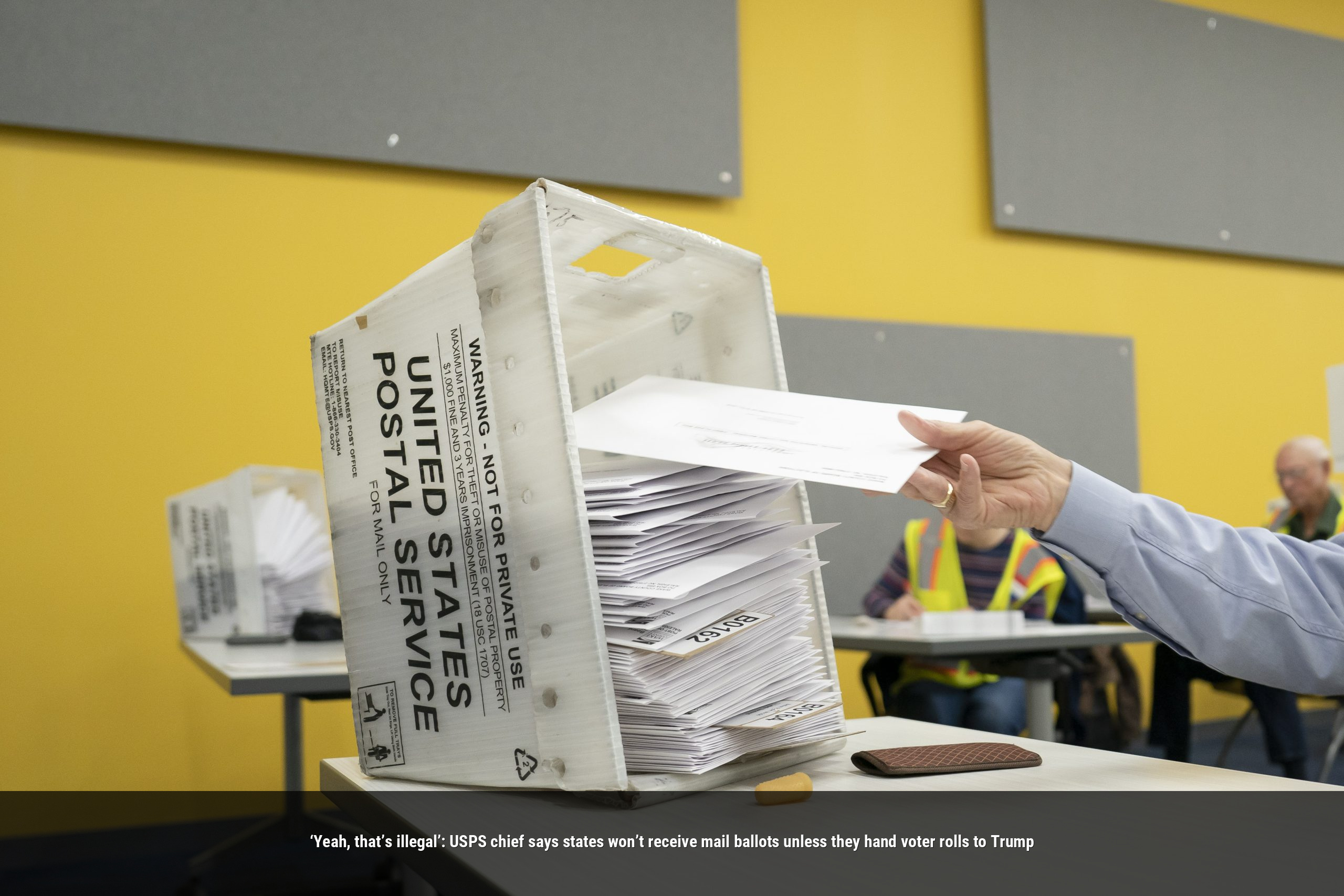
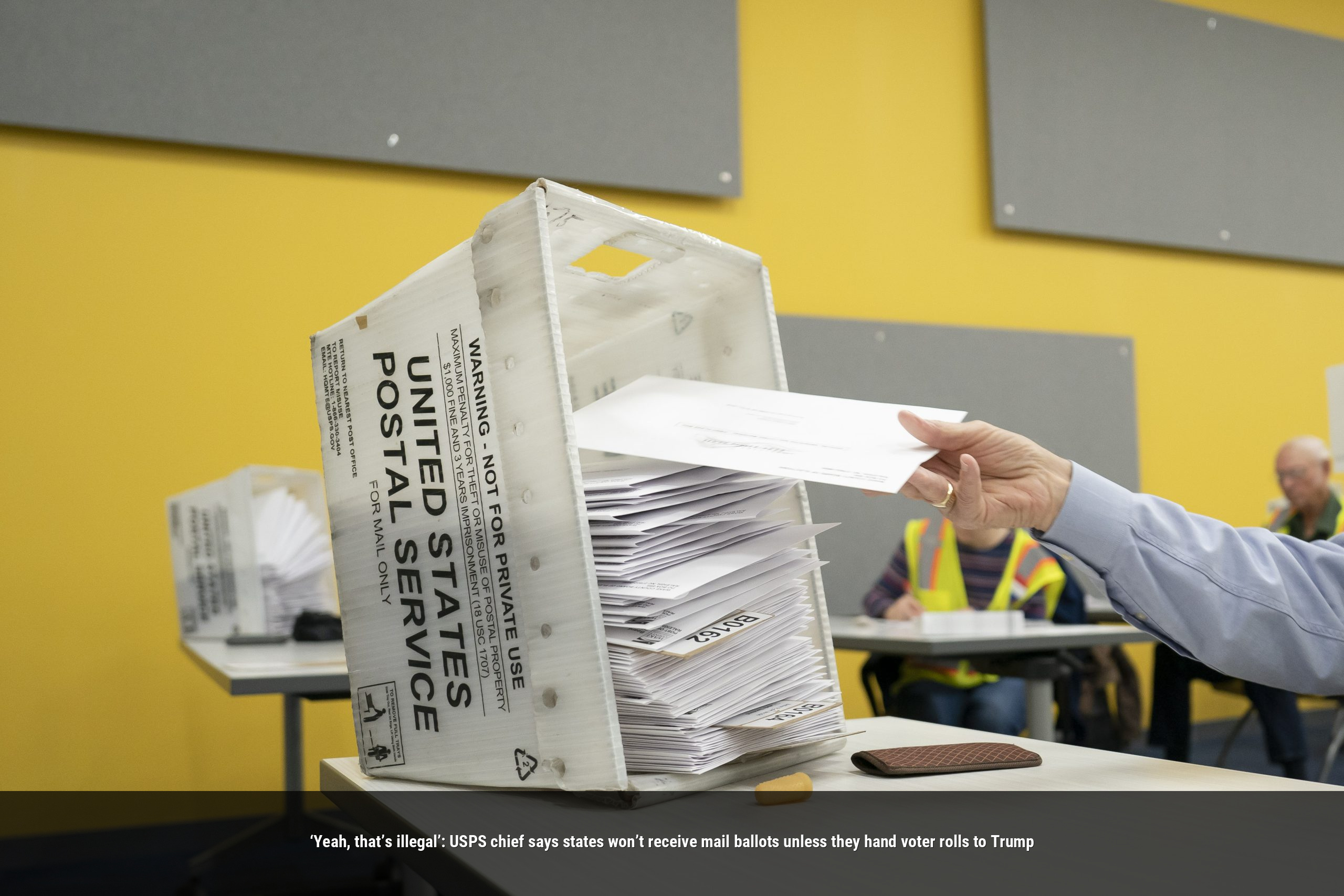
    Postmaster General David Steiner drew the ire of Democratic senators and voting rights advocates on Wednesday when he said that the US Postal Service would not deliver mail-in ballots in states that do not hand their voter files to the Trump administration.

    During a Senate Homeland Security Committee hearing, Sen. Gary Peters (D-Mich.), the panels ranking member, asked Steiner if USPS would deliver ballots in a state whose government had refused the Trump administration’s request for access to its absentee voter list.

    “Under our proposed regulation, no,” Steiner replied. “We would tell the state that we need the manifest.”

    Peters responded by accusing USPS of creating a rule that “coerces” states into handing their voter files to the federal government even though they are under no legal obligation to do so.

    “You’re making a decision that people cannot vote by mail,” Peters said. “That’s unacceptable.”

    Sen. Richard Blumenthal (D-Conn.) also sparred with Steiner during the hearing, informing the postmaster general that USPS had absolutely no role to play in determining how states conduct their elections.

    “You run the Postal Service, you deliver the mail,” Blumenthal said. “You don’t review ballots or registration. Nobody said you should… This proposed rule is bogus.”

    Blumenthal demanded Steiner commit to deliver all mail-in ballots to voters in his state regardless of whether it complied with the Trump administration’s demands, but the postmaster general said he would not make such a commitment.

    “Our proposed rule is subject to litigation,” Steiner told him. “We’ll see how that all turns out.”

    “Well, I guess we will see,” Blumenthal replied, “but it will probably be in court.”

    Some observers reacted with shock to Steiner’s willingness to go along with Trump’s latest election-rigging scheme, which they said was patently unconstitutional.

    “Yeah, that’s illegal,” said Aaron Reichlin-Melnick, senior fellow at the American Immigration Council. “The Post Office can’t refuse to deliver mail to try and get policy concessions.”

    “We have a Postmaster General who should not be in any position of trust or influence,” commented political scientist Norman Ornstein, “a disgraceful traitor to American values.”

    Illinois Gov. JB Pritzker signaled his state would challenge the proposed USPS rule.

    “Illinois expanded vote-by-mail because we believe voting should be easier, not harder,” Pritzker wrote. “Now, Trump’s handpicked Postmaster General is threatening to withhold mail ballots unless states turn over voter rolls. That’s not election security. It’s voter suppression.”

    Political scientist Robert E. Kelly argued that Trump’s attack on mail-in voting was a “deeply malign gimmick which makes it so hard to accommodate MAGA within the US political order.”

    “No one thought to use the mail as a partisan weapon,” Kelly wrote. “The laws and norms around mail are poorly known, because no one ever thought to try this gambit before. But now, because Trump insists on politicizing the bureaucracy, this whole thing will go to court just months before the election.”

    Creative Commons License

    Republish our articles for free, online or in print, under a Creative Commons license.

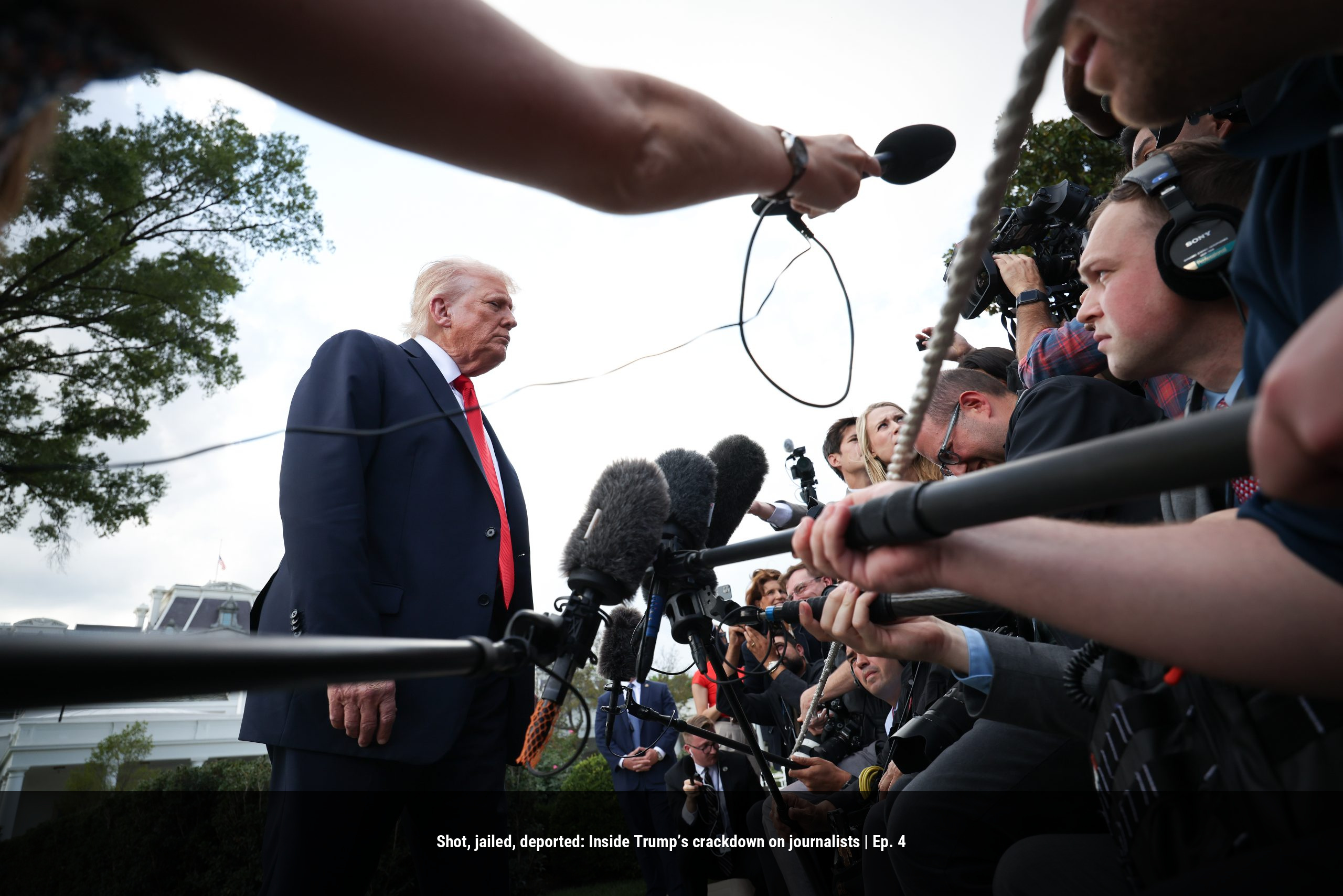
  • Shot, jailed, deported: Inside Trump’s crackdown on journalists | Ep. 4

    Shot, jailed, deported: Inside Trump’s crackdown on journalists | Ep. 4

    Transcript

    Audio Clip: By late morning, it was clear. June 6th would be no ordinary Friday in LA.

    Michael Fox: June 6th, 2025. Ice officers raid a garment factory in downtown Los Angeles. There’s another raid at a Home Depot. They detained dozens of people. The same day Los Angeles explodes in protests in response. They ripple across the city for more than a week. The first big response to the immigration crackdown in Trump’s second term. Photojournalist Nick Stern was there.

    Nick Stern: I’ve been a photojournalist for around 30 years initially in the UK and 2007, I moved to the US and became a citizen in 2019.

    Michael Fox: I spoke with him recently. He’s worked in 50 countries covering stuff like this, big protests, civil unrest. So June 6th last year, Nick said the protest was loud, noisy.

    Nick Stern: I got pepper sprayed, pepper gassed in my face, which was pretty horrific.

    Michael Fox: The next day is a Saturday. There are more ice raids and a big protest that carries into the evening, Nick’s back on the streets and he’s there throughout the day.

    Nick Stern: It was a Saturday. It was June the 7th and it was about 10 to 90 in the evening.

    Michael Fox: He told me there were a few stragglers in the protest. He was off to the side, kind of parallel with the police. And you can even see this in some cell phone footage shot and posted online from that night. Suddenly an officer turns and fires at him with a less lethal projectile.

    Nick Stern: What’s called a flashbang, which is an explosive, which embedded in my right thigh.

    Michael Fox: In this video, he kind of limps off the street. People rush to help him as he drops to the ground. There’s blood pouring from his leg and he’s rushed to the hospital and has to undergo emergency surgery. They kept him there for four days.

    Nick Stern: And I still get pain in my leg. That device was, again, 40 millimeter and about two inches long, so a pretty sizeable munition embedded in my leg.

    Michael Fox: He said at first they were actually afraid it was going to explode inside his leg. He said in the hospital during those days he had to miss his son’s graduation from high school. He had these flashbacks and nightmares almost every night that still haven’t completely gone away and he’s had to have months of treatment in particular for PTSD.

    Nick Stern: I was doing a video interview for a documentary in London and when the director asked me to explain what happened at the incident, I did in sensory terms, explaining what it felt like, what it hurt, what the air smelled like and what sounds were going on. And as I was describing to him, I broke down crying and I haven’t cried for many, many years and it was pretty much uncontrollable. When I got back to the US, I thought that I really should go and see somebody and I was diagnosed by three professionals as having post-traumatic stress disorder, PTSD.

    Michael Fox: Over the last year, he’s still living with repercussions. He still has nightmares two or three days a week and this PTSD induced anger, which he never felt this way before.

    Nick Stern: Fuck, I’ve never been angry at anything, but having this PTSD related anger, I feel like a bottle of soda that’s been shaken up with a cap that’s ready to be released.

    Michael Fox: And the thing is, this is just one story, one experience.

    Nick Stern: I’m one of dozens of journalists in Los Angeles. Every single one has been brutalized, assaulted, detained, or arrested by LAPD. And that is not just journalists. Obviously that is happening to members of the public as well. Yeah, I don’t think I know of a single journalist here in Los Angeles who hasn’t been hit by less lethal. And whilst the first time it happens to you, it’s, “Oh, I’ve been hit.” It’s almost, what the fuck? It’s almost become the normal here. We expect to be hit with less lethals now when we’re out there covering protests. But there are journalists who have been violently pushed down who like me who have been knocked down by horses who have been hit with less lethals, who have been hit with buttons and having fingers broken, finger smashed open, rigs, cracked, wrists broken and so on. And these are all people identified as journalists.

    Michael Fox: And of course, this didn’t just start with Trump. Police violence against protest has been heavy-handed for years, decades. Trump’s discourse now and also in his first term though, legitimizes the harsh actions by law enforcement.

    Nick Stern: So I think that law enforcement feel they have a get out of jail free card with this administration and that’s trickling down through the whole system.

    Michael Fox: And here’s the thing that Nick Stern told me in particular about this protest. And like I said, he’s been on the streets covering it for 20 years in Los Angeles. He said this was the first time he had seen this level of militarization of law enforcement.

    Nick Stern: That was quite a shocking sight to see in the US, supposedly one of the most wealthiest civilized countries in the world with one of the best supposed democracies that we have. So firstly, the vision, the sight of these troops and military vehicles on the street was quite shocking, but also the way in which they were reacting. Some of the places I’ve been, some of the civil unrest I’ve seen, you will see this kind of action from military forces, but that is when there is a potential civil war or an uprising or something similar to that, not what is considered to be initially a peaceful protest. Well, I have to be honest with you, Michael, what I’m seeing here is probably worse than I’ve seen in many other countries around the world. I’ve worked in Eastern Europe where you have obviously very authoritarian or you did have very authoritarian governments and secret police and so on.
    And what we’re seeing here on the streets is possibly worse than that in terms of the conduct of law enforcement, the strategy of law enforcement and the lack of accountability, I think, as well.

    Michael Fox: And for me, what’s so concerning is that this is just the tip of the iceberg in terms of the attacks on journalism and the assault on press freedom today in the United States. This is The Battle for Free Speech, a multi-part narrative podcast brought to you by The Real News. In this series, we take you on a journey to understand the important role free speech has played in US history and the fight being waged over it today. I’m your co-host, Michael Fox, and I’m so excited to be joined today by Taya Graham. She’s an investigative journalist and a Capitol Hill correspondent with the Real News. She’s also the co-host of The Real News’ Inequality Watch and the Police Accountability Report. Teya, thank you so, so, so much.

    Taya Graham: Oh, it’s an absolute pleasure to be here. Thank you for having me, Michael.

    Michael Fox: Of course. Folks, if you’ve been listening to this podcast series from the beginning, then you probably know how it works. I go out, I do a ton of reporting, bring that all back for us to discuss and this episode is no different. So today we’re going to focus the entire time on press freedom and the attacks on the press, particularly under the Trump administration. And I want to start where we left off at the top and put some context into what we heard from Nick Stern. So a few days ago I dug into the US Press Freedom Tracker. It’s an incredible online source from the freedom of the Press Foundation. It essentially tracks cases of attacks on press freedom in the US. According to the tracker, last year there were 195 assaults on journalists, most of them by law enforcement. And just to put that into perspective, that’s about double the number from 2024 before Trump’s second term and four times what it was in 2022 and 2023.

    Taya Graham: Incredible.

    Michael Fox: Now to be clear, it was even higher in 2020. Remember that was the Black Lives Matter protests, so things just exploded through the roof, but then that was also during Trump’s, that was during his first term. But this year as of mid-June, we’re on pace to break last year’s figures. There have been more than a hundred assaults on journalists, more than 30 arrests and numerous cases of equipment damage or seized and other incidents. Teya, you’ve covered police brutality a ton. What have you seen? How do violence violations against journalists fit into that? Have you seen an uptick of assaults and violations against the press in recent years or under the Trump administrations?

    Taya Graham: Oh, I’ve definitely seen an uptick in assaults against journalists. I mean, that absolutely is beyond a shadow of a doubt, but I’ve also seen it against members of the public as well also exercising their First Amendment rights. And one thing I just want people who are listening to know your average journalist, when they sign up for this job, it’s because it’s a calling. It’s because it’s a vocation. And we already know that we’re willing to go to jail for a source. We already know that. We’re going to protect that whistleblower that is helping us do that investigation. What a lot of us aren’t prepared for though is being shot in the face with a rubber bullet and being blinded in one eye or being put in jail for days at a time and no one being able to know where you are. That is something that a lot of us weren’t prepared for because we thought we were in the United States land of the free.

    Michael Fox: So important because it’s a reality and I don’t think people understand just how deep that reality goes and how much journalists have their back against the wall and how difficult this moment is because there’s so many things like you can read, oh, a journalist gets arrested or a journalist is assaulted, but there’s so many other layers, which we’re going to get into in today’s podcast, but there’s so many other layers of things that have to happen in order for all that to get pushed to the side. And like what we heard from Nick Stern at the very top, it’s a year later and he’s still suffering the consequences of being shot with a less lethal in the leg. I want to take a step back a little bit.

    Audio Clip: Reporters Without Borders is warning press freedom has fallen to its lowest level since the group began publishing its annual World Press Freedom Index 25 years ago.

    Michael Fox: It was shocking to me when in late April I saw the announcement that press freedom around the world was at a 25 year low and that the United States had dropped to 64th on the World Press Freedom Index. I mean, I don’t even have words to describe what this is. So just so people understand, the World Press Freedom Index is released from the group reporters without borders every year. They’ve been doing it for the last 25 years. They judge on five criteria, legal, security, political, social, and economic issues relating to press freedom. But in all of this, the United States is not doing well, 64th in the world. And Teya, just to give you a little context, so that’s seven countries lower than it was last year. Also, according to the index, the United States is now rated a “problematic” country with quote significant constraints on press freedom and where “self censorship is common.” The United States now ranks below Botswana, Mauritania, even Ukraine, the ivory coast and it’s a whole 12 points back from Brazil

    Taya Graham: Incredible

    Michael Fox: Now it’s been backsliding for years. When Reporters Without Borders first began to publish this, it was at number 17 so it’s fallen 47 spots since then and this huge drop clearly over the last year is directly related to the Trump administration and Trump pulling out all the stops to try and control the quote information environment in the United States today. Teya, you’re like on the ground in Washington, you’re on the ground in Baltimore. I feel like people are going on with their lives. People are getting more and less and less news from outlets. They’re getting more and more stuff from social media and you never know if it’s real or not. How are you seeing this transformation happening on the ground?

    Taya Graham: Well, I agree with you that the Trump administration should not be underestimated in the role that they have played in lowering us on that list of press freedom. But one thing that I’ve noticed as a reporter on the ground watching the industry itself is that if we don’t acknowledge the role that capitalism is playing, we’re doing ourselves a real disservice here because there has been unprecedented consolidation, but what happens is with this media consolidation, you have owners that are now billionaires with their own particular political views that are pressing down from the top onto the journalists. Journalists have to worry about getting access. If you criticize the wrong politician a litle too loudly, you’ve now lost access, whether that’s to the Oval Office or to your local city hall. So there’s access, there’s making sure that you don’t lose advertisers, there’s making sure that you don’t make the shareholders unhappy.
    So what ends up happening for, because I think someone needs to talk about what’s happening to reporters. They are getting squeezed on all sides just through the consolidation process and the overall downsizing that’s happening because as it consolidates, the number of jobs decreases so reporters are losing their jobs. As a matter of fact, local press is dying so many small newspapers and websites are being shut down, which means people aren’t going to get information. And one thing I always tell people when they have a little bit of distrust around the press, I say, “You know what? Be glad someone like me is showing up at City Hall because if you think your politicians are behaving badly while I’m watching, guess what they’re going to do when I’m not watching?” That’s right. Okay. You do need us folks on the ground.

    Michael Fox: That’s right. Throughout the lawsuits and the harassments and the attacks, the detentions, the deportations against journalists that we’re seeing from the government, the end of the day, the real goal is self-censorship. Absolutely. The real goal is to make people afraid so they will not speak out and that’s not just for the press. I mean, we’ve seen that in the last couple of episodes in this podcast already where the Trump administration is pushing against anybody it possibly can in order to try and force them to not speak out.

    Taya Graham: Absolutely.

    Michael Fox: Tay, I want to bring in someone here.

    Katherine Jacob…: My name is Katherine Jacobson and I’m the US Canada and Caribbean program coordinator at the Committee to Protect Journalists.

    Michael Fox: And I feel like her analysis is really, really important because they’re out there day after day standing up for journalists and trying to analyze what’s happening on the front lines. And she basically says that for the free press community, the second Trump administration is pretty much a worst case scenario.

    Katherine Jacob…: We’re talking about regular lawsuits being launched against news media outlets, both from the sitting president of the United States, which is absurd to think about, right, but yet happening as well as his associates when they don’t like the reporting. We’re also seeing federal communications commissions and other regulatory bodies being used or the administration trying to use them in novel ways, really pushing the bounds of what these regulatory institutions are supposed to be doing to try and shape coverage.

    Audio Clip: CBS is no good. And in fact, in honor of you, I just sued CBS today because of 60 Minutes.

    Michael Fox: I just want to give some numbers here. So Trump has filed nine different lawsuits against media outlets since 2020. He’s demanded billions of dollars for damages for what he says are false or misleading reports. A judge throughout the latest just in April, Trump had sued the Wall Street Journal for $10 billion for defamation for a story about a birthday letter from Trump to Jeffrey Epstein But this gets into kind of what you were just mentioning to you. The reality is that it doesn’t matter if Trump’s lawsuits are legitimate or not. The idea is to attack his opponents, divert the attention and make them cough up millions of dollars in legal fees and of course scare these media outlets and their journalists away from reporting critically against Trump and his government.

    Katherine Jacob…: Yeah. The lawsuits that we’re currently seeing from the Trump administration and his associates such as Cash Patel really seem like they are being deployed to silence coverage or intimidate journalists from covering certain topics, right from reporting critically on this administration. However, merely filing these lawsuits creates both an expensive and time consuming distraction from what these outlets should be doing.

    Taya Graham: It’s terrifying because on multiple levels he is intimidating not just journalists, but the people that journalists rely on. There are people in the government who are whistleblowers, who are sources. And you have seen, for example, how Secretary Hecseth has gone out of his way to try to pursue any leaks to the point where I believe he’s actually giving lie detector tests to people who worked underneath him. So this lets you know that they are incredibly serious about preventing anyone from within the government to speaking to people in the press and that’s actually something that has to happen that we don’t have a pair of magical binoculars that allows us to see inside. We have to have whistleblowers. We have to have people willing to speak to us so we can let people know what’s really going on behind the scenes. And so understandably, if you’re seeing reporters jailed, if you’re seeing reporters being taken into court, if you see reporters having their phones taken away, I believe it was a reporter at the Washington Post who had her entire house raided, had her phones taken, had her computer taken.
    Wouldn’t you be worried to speak to that next Washington Post reporter who says, “It’s okay, you can give me this information?” Well, how do I know they won’t find out it’s me? How do I know my contact information is going to be protected?

    Audio Clip: The FBI has raided the home of a Washington Post journalist who’s been covering the Trump administration’s federal government firing since he took office.

    Michael Fox: The woman that you mentioned, the Washington Post reporter, Hannah Natinson, and it was mid-January when the FBI searched her home, Northern Virginia home. They seized her watch a phone, two laptop computers. Now agents said, “Oh, we’re not after you. That’s not the focus of the investigation. You haven’t done anything wrong.” But the problem is just like what you just said, it’s chilling because someone just raided her home. FBI agents go in, they seize things, she knows they’re seeing all the documents. They said what they were really after was classified information that a source inside the Pentagon contractor had passed her. But what it really does is exactly what you were just saying, Teya, is it sends this message to other people within the Pentagon. “Don’t talk to the press, talk to the press and there will be repercussions.

    Taya Graham: Absolutely.

    Michael Fox: Taya, I have a little quiz for you.

    Taya Graham: Oh, no. No, pop quiz.

    Michael Fox: It’s okay. Pop quiz. I would not have gotten this either and it’s related to Trump’s lawsuits against media organizations. When do you think was the last time that a sitting president or any president for that matter sued a media outlet for defamation or libel?

    Taya Graham: Okay. My guess would be potential … I know there was some issue with President Obama and Fox News and so I was thinking there might have been some kerfuffle there, but in all honesty, no, I’m not sure.

    Michael Fox: It’s a little bit further back. It’s okay. I would never have guessed this either. 1912. Oh my God. Teddy Roosevelt, he sued against an editorial in a small weekly in Michigan’s upper peninsula, which called him a liar and a drunk. 1912. And of course, Trump is a big fan of Teddy Roosevelt. Remember this is the president who had the motto, walk softly and carry a big stick. So Trump likes this guy, but still we’re talking about more than 110 years ago. That was the last time that you had a president actually suing media outlets and now it’s happening all the time, plus Kash Padell and all the other folks.

    Taya Graham: I thought you were going to drag out the sedition act. I’m like, are we going back to

    Michael Fox: The

    Taya Graham: 1700s or what?

    Michael Fox: We could. We’ve talked about it in past episodes. It’s crazy that it’s like, no, it’s crazy that we actually have to be even talking about this. I mean, seriously, this is like, we should not have to talk about this in 2026.

    Taya Graham: Very true.

    Michael Fox: But it’s not just about the lawsuits. And this is something that as I’ve been digging into this episode has also been just shocking for me because the other thing that we see from Trump is this other level of attacking journalists, harassment, attacks in the press, in particular during press conferences and particularly against female journalists. Oh, yes. It’s shocking and relentless. And I was just watching some of the videos recently. He calls them names, he calls women journalists stupid.

    Speaker 7: Well, if you knew anything about what you were talking about, you do? I don’t think- Did you just tell you that? You said that it was up to secretary heads. Obnoxious reporter in the whole place. Are you stupid? Are you a stupid person? But with a corrupt reporter standing right there. Never smile. She never switches. Who are you with? I’m with ABC. You’re with who? ABC News, sir. Fakeners. ABC fake news.

    Taya Graham: Low IQ is one that he often likes to use for African-American female journalists. Actually, I’m still stunned when I think back to the National Association of Black Journalists, and I believe they had the Black journalist from Fox there, but they also had the lovely Rachel Scott and he was so incredibly rude to her, blamed her for a bit of trouble with the audio equipment, called her stupid, called her low IQ, called her an idiot. And this is just commonplace. I think recently he told a reporter quiet, Piggy.

    Michael Fox: Teya, what is Trump trying to do, do you think, with his just constant verbal assaults in particular against women? What is his goal, his end goal there?

    Taya Graham: I think to some people who support President Trump who voted for him two and three times, I think they see his bullishness, his willingness to attack as a sign of strength. I think that’s how he perceives it and I think that’s how some of the people who support and perceive it. Look at him giving it to those elites. Look at him saying what he really thinks. But in general, I think it is to sow a baseline disrespect and distrust for the media to say, “If the president doesn’t respect you, why should I? If he doesn’t listen to you, why should I? Why should I trust anything you have to say? My president just said you’re dumb and stupid and a liar and so is your organization. Why should I trust you? ” So I think it’s part of his larger movement to say, “Don’t trust anyone’s voice but

    Michael Fox: Mine.” Trump is doing the same thing online, right? He makes these attacks over social media as well. This is something that the CPJs, Catherine Jacobson also said.

    Katherine Jacob…: When you have the leader of the free world lobbying attacks on a social media platform, which he owns by the way, against the media because he doesn’t like coverage, if that’s on a dog whistle, I’m not sure what is. That really creates a permission structure for other individuals to go after journalists when they don’t like their reporting or to take other actions. Should also mention that the majority of online harassment is against women and journalists of color and journalists with non-traditional sexual orientations. And so you think about those traditionally marginalized voices that are being targeted and silenced and we really lose part of the, I think, strength of having plurality in media and having different voices and different points of view reporting on the news and what’s happening.

    Michael Fox: And of course that’s the goal. The goal is to ensure that the public is les informed. That’s why this is happening right now. You don’t want more transparency in the Pentagon. The idea right now is to make sure that there is absolutely zero transparency so they can do whatever they want, right?

    Taya Graham: Absolutely. And this lack of transparency is going to be enhanced by the fact that right now with the media consolidations that have been taking place, there are essentially media organizations waiting on Bend and for President Trump to give approval for their merger to go through. And these are billions and billions and billions of dollars that are on the line. So essentially President Trump is selling his influence and selling the benefit of his influence. If you give me loyalty, if you publicly demonstrate respect, if you say the things I want to hear, then things will go smoothly for you. So it’s an extreme form of influence peddling. And unfortunately, some of these billionaires just seem to get right on board. I mean, whether it’s Jeff Bezos in the Washington Post or David Ellison trying to do his Paramount Skydance deal or you know what? Even Ela Musk.
    I mean, even though every once in a while various drugs will kick in and he’ll say something saucy to the president on social media. In general, he had taken what was an imperfect town square and made it into a pay for place site where you got to pay for your blue check if you want any chance of your tweets being seen and has turned it into a racist bot wasteland.

    Michael Fox: Yeah, absolutely. I want to tell you a story. We’re going to visit Minneapolis, Minnesota right now. And we talked a litle bit earlier about FBI raiding a Washington Post journalist house confiscating, seizing her equipment, but we’re also seeing press being taken to jail for their reporting. And this is exactly what happened to the Emmy Award-winning journalist, Georgia Fort. She’s also the vice president of the Minnesota chapter of the National Association of Black Journalists. And so imagine this scene. It’s early morning, January 30th, cold outside Minneapolis, Minnesota. Snow is on the ground. Remember at this moment, Minnesota has been on fire for weeks after ice raids and protests and the killing of US citizens, Renee Goode and Alex Priddy. Georgia Fort is in her home and police are at her door. She goes live to thousands of followers

    Audio Clip: Agents are at my door right now. They’re saying that they were able to go before a grand jury sometime, I guess, in the last 24 hours and that they have a warrant for my arrest. I’ve talked to my attorney and I’m being advised to go with them, I guess down to Whipple.

    Michael Fox: It’s a chilling video and at one moment you can see the police actually outside.

    Audio Clip: And my children are here. They’re impacted by this. This is all stemming from the fact that I filmed a protest as a member of the media.

    Michael Fox: And when I watched this, Taya, I imagine myself in her shoes, right As the police are arriving at your home, what that means for me, what that means for my family, for my kids, they’re there to cart you off to jail for doing your job. It seriously seems like something out of a dictatorship, out of authoritarian government. The secret police are coming to round you up for speaking the truth. So they take Georgia Fort to jail. She’s arrested along with the former CNN anchor, Don Lemon on federal felony charges and they’re arrested for violating two laws. The first one, 1871, originally designed to combat the Klu Klux Klan and the other one is a 1994 law written to protect abortion clinics but which also prohibits interfering with religious worship. And the reason why this is happening is because earlier that month, January 18th, they’d covered and live streamed an anti-ICE protest inside of a church where one of the pastors was also an ICE field agency.

    Audio Clip: All right if you guys are just joining us. I am here in St. Paul in the brutal cold at a church on a summit where as you heard from organizers, the pastor is in acting leadership position of ICE.

    Michael Fox: So they were just doing their job. The video is still online and they’re talking to the people. They even speak with another pastor and yet within two weeks they were rounded up as well as several other people who had actually participated in the protest. People were clearly livid. People hear about her arrest. Holagues come out, they denounce it, they hold a protest.

    Audio Clip: Georgia Fort is in federal custody for doing her job. One of the scariest moments of my life and in my career to know that a fellow journalist, a top journalist, an award winning journalist is right now sitting in federal custody for doing her duty. And if we leave here with anything today, let’s leave here making sure that the main thing stays the main thing. Journalism is under attack. The first amendment is under attack and democracy is crumbling. Yes.

    Michael Fox: She was released later that day on bail. And as was Don Lemon and she was greeted by supporters and spoke to the press.

    Audio Clip: As I reflect as a journalist who has worked in media for more than 17 years, I leave this federal courthouse today with one question. Do we have a constitution?
    Or not?

    Michael Fox: It’s just this one example, her case again, just like Nick Stern, just like so many other people we’ve talked about. It’s one example, but here again, the goal is to chill speech, to scare reporters,
    To restrict critical reporting what people are covering. And it’s so important to understand kind of what’s not just what happens to her, but what happens later on. Because just last month there was a report that came out that she says she’s still being silenced. See, Fort is one of dozens of co-defendants arrested after that church protest. And since many of those people who were arrested are prominent community leaders since they were arrested there and the legal cases are ongoing, it means that her lawyers, Georgia Ford’s lawyers, have said that speaking with them might put her own case in jeopardy. And so it means that she has to deal with the legal fees, she has to deal with the time, but she can’t also speak with her sources. And those community leaders, I mean, you know as a community journalist, like this is everything. These are your sources.
    These are your people you go to, but now she can’t even reach back out to them because they’re also members of the same lawsuit.

    Taya Graham: I see what you’re saying.

    Michael Fox: These arrests, these attacks, all of it kind of takes time out away from your journalism. All of it kind of pushes you away from focusing on the real issues that are there.

    Audio Clip: Do we have a constitution? That is the pressing question that should be on the front of everyone’s minds.

    Michael Fox: Taya, it is very clear that there are two issues that this administration really cares about.

    Katherine Jacob…: I think at the very beginning it was campus protests and coverage of the campus protests. I’m of course referring to the Israel Gaza War and students protesting against that.

    Michael Fox: This kind of came out a litle bit when I was speaking with the CPJ’s Catherine Jacobson. She dug into this a litle bit more. That

    Katherine Jacob…: Was the initial tripwire issue and now we’re also seeing immigration being added to that and that I think the issues around immigration and customs enforcement actions and Department of Homeland Security more broadly and the way that individuals are being detained by ICE and other DHS agents on American streets without warrant.

    Michael Fox: And she said we’re seeing this slow shrinking space for free speech specifically around these two issues.
    And I think this is interesting because things happen all the time and we see them and the news goes and we don’t always put all the pieces together. But even just the people that we’ve been talking about right now, you see Nick Stern was shot covering the anti-immigration protests. Georgia Fort and Don Lemon were jailed for covering ICE protests. Most of the assaults and the arrests on journalists over the last year have all happened during the ice raids or the protests against the immigration crackdown. And that’s for journalists, but the stakes are even higher for immigrant journalists that are covering these things. Teya, I want to tell you a story that really underscores this. Mario Gebara. He’s a journalist who fled El Salvador in 2004 with his family due to political persecution. He moved to Atlanta, Georgia. He became a resident. He worked in media.
    He’s been a journalist for Spanish language outlets in 2024. He founded his own outlet, MG News. He is legally, or he was legally in the country with a work visa, though he had filed for a green card. And in recent years, he has been laser focused on immigration, in particular covering the ice raids in the Atlanta region.
    And Tea, his stuff is really local, really community-based and really good. So a bunch of his videos from earlier this year show him in his car. He’s gotten a tip that ICE agents are out and about and he goes to document and to advise the immigrant community, what’s happening? Where are people? What do you need to do? Where should you not go? He tries to identify those who have been detained. So in one video, he kind of gets out of his car and goes to a truck that’s just sitting there because the people who are inside the truck have been detained and arrested by ICE Asians. He goes to the home of Latino community members who have been picked up by ice. He talks to the families. So it’s powerful solid journalism, the journalism that we absolutely need right now, imperative journalism. And he’s doing it for the immigrant community that really, this is the place that it really matters.
    In one video, he’s talking to his followers and he says that by recording these lives, he’s letting people know about the raids that are being carried out by federal officers so that people can know the truth so they know what’s happening around them. A couple of people respond in this one live that he did saying, “Well, they’re afraid of you. ” He says, “They’re not afraid of me, but they’re afraid of being filmed. They don’t like being on camera, but they’re not afraid of me. I’m just another guy. I’m another journalist.” Anyway, fast forward to June 14th, 2025.

    Speaker 9: There’ve been rallies across the country opposing President Trump’s agenda on the day of the president’s military parade. They cap a week of demonstrations against immigration raids that began in Los Angeles and spread nationwide. Today-

    Michael Fox: This is the day of the first nationwide no king’s protest. And so these protests kind of ripple across the country. And on this day, Mario Guevara is covering a no king’s protest in Doraville. It’s a city just northeast of Atlanta, very large Latino population. And he’s detained by Doorville police on three misdemeanor charges, including unlawful assembly and being a pedestrian on the street. So clearly these are the same charges that so many free speech advocates have talked about that they just kind of lump and give you to get you off the jail and send you the jail and get you off the street. It’s stuff that many journalists in the United States are facing today. And in most cases, these charges are eventually dropped. But in Mario’s case, because he’s not a US citizen, it sets in motion this series of events that essentially have him locked up for months passed onto ice.
    And despite the fact that he is in the country legally, he spends more than a hundred days in jail and then on October 4th, 2025, after two decades, two decades in the United States, he’s deported back to El Salvador. So he was met by local media. When he arrived in Sen Salvador, he told CNN and Espanol that he could never have imagined being held in prison like a criminal for four months and then being deported. I was just another protagonist of the same stories that I’ve been covering for a long time, he said. So the committee to protect journalists followed his case closely and spoke out in his defense. And in fact, Katherine Jacobson had a lot to say about this.

    Katherine Jacob…: I think that was a shelf breaking moment and kind of this watershed moment for understanding what is happening here. The tactics we saw, the timeline of the US government trying to claim that he was here illegally and throwing in all of these facts trying to distort the case. It felt like something out of Eastern Europe, right? Out of that type of playbook, out of a hungry or during Orban type situation. And I think to realize that that was happening in the US, that this understanding of protections and freedom of speech, freedom of the press that we have so long come to enjoy could be so blatantly violated. And you’re staring at the page thinking, “Have I missed what is actually happening? Have I missed something?” And coming back to the same reality that, no, I haven’t. The government is trying to convince me that I have.
    And that’s both deeply upsetting and incredibly frustrating and angering, I think, to a certain extent.

    Michael Fox: Sadly, Mario’s case is not the only case of this. This is not the only time that this has happened. I want to take you someplace else, Nashville, Tennessee, March 4th of this year.

    Taya Graham: A Nashville Noticias reporter is in ICE attention tonight, raising questions about why she was detained in the first place. The Federal

    Michael Fox: Law Journalist Stephanie Rodriguez and her husband have just dropped off their child at a bus stop and they’re pulled over by several vehicles of ICE agents. Estephanie is from Colombia. She left Columbia in 2021 after receiving death threats because of her reporting and she is in the United States legally. She came in on asylum and she’s now applying for a green card through her husband. Like Mario Guevara, Estephanie Rodriguez covers immigration. She’s covering the arrests and the ICE cracked down on the local community in the Nashville area. She works for a Spanish language outlet called Nashville Noticias and that is literally written on the side of their car and that’s important because according to reports, this operation had been planned by ICE for some time. They literally had been tracking the movements and the patterns of Stephanie and her husband, Alejandro Medina. He spoke to press and he described getting pulled over.

    Alejandro Medin…: Tells me to roll down my window and he’s like, “Hey, look, I know you’re a US citizen. I know that’s your wife. I know y’all have a pending green card application, but she’s got to come with us.”

    Michael Fox: ICE agents, they detain Estephanie Rodriguez and she’s held for days. There’s even a period where no one knows where she is. Then they got word that she’s been transported to a jail in Alabama and then transferred to Louisiana. Oh no. For several days, she’s held in isolation. They won’t let her speak with her lawyers and her husband spoke out to a news outlet.

    Alejandro Medin…: She doesn’t get to live her normal life right now at this very moment. She’s locked up like she’s a criminal when she did everything she was supposed to do, including like we were proactive.

    Michael Fox: And you asked about the situation on the inside at jail. In her case, she did speak out about this because she said that she had been held in isolation for roughly five days. At one point they said that she had lice though that was nothing that she knew of or had ever heard of this before. And they gave her cleaning fluid, like floor cleaning fluid to pour on her head to get the ice out. And so she poured a litle bit on her head and then they said, “That’s not enough.” And they literally just dumped it on her head and her eyes were burning. And so for her, she doesn’t even believe that she had lice. And for her, this was a harassment technique against her to say, “Oh yeah, do this. Come into jail. We’re going to do what we want with you, ” essentially.
    She said they knew who she was because when she was in jail, officers there would say, “Oh, you’re the journalist.” They knew who she was. In her case, she was finally released on a $10,000 bond after 15 days in prison, but her and her lawyers are really concerned that while she’s out, it could just happen again.
    There’s nothing that’s going to stop them from doing it again. And again, this goes back, Taya, to this scare tactic of it’s not just about the arrest, it’s about we want to scare you and to stop you from doing whatever is that you’re doing. And in this case, particularly speaking to the Spanish language community about ICE raids, about what ICE is doing in that local area. So he lawyers have asked the court to prohibit immigration officials from taking any future actions against her in retaliation against her quote past speech or to chill her future speech. She wrote in a legal declaration, “I won’t stop being a reporter. I’ve wanted to do it since I was a little girl and it’s in my DNA, but with the threat of redetention hanging over me, I worry even more about reporting on ICE because I believe that reporting is what triggered my detention.

    Taya Graham: As a journalist who’s also an immigrant, she is uniquely vulnerable to this type of intimidation. But unfortunately, as a journalist who’s an immigrant, she is uniquely perfect to go into communities and be trusted. So she can go into immigrant communities and speak the language and let people know that she’s a safe person to talk to. So she’s someone uniquely predisposed with everything that’s needed to be able to go into these communities and have important conversations as well as give out information in a trusted manner, but it also makes her uniquely situated to be targeted. And so I wonder if this is not only going to have an effect on journalists who are immigrants, but on reporting around immigration and ICE in general, no matter what your citizen status might be. Because the idea of being locked up for a hundred days for being a pedestrian or lawfully or unlawfully assembling or just simply by doing your job as a journalist and speaking to people, I mean, that is horrifying.
    I’ve seen people disapear, get picked up in one state and end up in a jail in Louisiana and it is a horror story every time they come back out and they are disappeared for days if not months at a time. And most people can’t afford to bail themselves out, hire the lawyers and don’t have the knowledge or wherewithal to figure out how to find someone who’s been purposefully disappeared by your government. This wasn’t accidental, this was purposeful. They’re not making it easy for you.

    Michael Fox: That’s right. That’s right.

    Taya Graham: To find your loved one.

    Michael Fox: Exactly. The CPJ’s Catherine Jacobson said something I think is really important. And she said that what we’re seeing is a pattern.

    Katherine Jacob…: And denying that that pattern exists I think would be in a front both to logic and transparency of what’s going on.

    Michael Fox: And that’s terrifying when you think of … I mean, it goes a long hand in hand with the pattern of the disappearances and the kidnapping we’ve seen in immigrant communities all across the United States. But it goes hand in hand with that because these are journalists, these are immigrant journalists reporting on immigrant communities and they’re being picked up. And even if they’re not being deported, like in the case of Mario Gevati, he’s deported. They didn’t deport Stephanie Rodriguez, but she was locked up for more than two weeks, sent across, I don’t know how many states and she’s afraid for her job to be able to continue to do what she does. And remember, she’s someone who faced threats in Columbia. She fled Columbia because of reporting that she was doing in Columbia. And then she has to face it again in the United States, the very place where she thought that she could be free.
    At least that’s the idea of the American dream, right? Or at least that’s what it’s supposed to be.

    Taya Graham: That’s what our constitution promises us, but that’s why I say the First Amendment isn’t an enforceable right. It’s one that has to be protected every day built precedent by precedent and fought for person by person. The truth is getting squeezed out in the middle. It’s just billionaires continuing to make the narrative what they want it to be while real information and local reporting like you were describing that she was doing for Nashville becomes completely moon and is utterly destroyed.

    Michael Fox: Absolutely. Taya, I want to talk about censorship. I want to talk about this word for a second because I think this is really important. Censorship today isn’t some guy with a pen.

    Audio Clip: So I’m staking this past the censor.

    Michael Fox: It’s not mandated or addicted. It comes through the threats. It comes through the violations, the violence, the harassment, the jailings, the deportation, and the creation of trying to make people self-censor themselves That is the censorship of today. Of course, it also happens clearly with media outlets that are on board with the Trump administration and social media firms with their algorithms like we looked at in the last episode, clearly all of that. But I think people need to understand that when we talk about censorship, this is not your grandmother’s red baiting censorship. This is the censorship of today. Along with that censorship comes the gutting of access and the rolling back of transparency. And this is kind of the direction I want to go into right now because this is something that I know journalists are seeing particularly in Washington and that we’ve seen clearly around the Pentagon.

    Audio Clip: The one institution that you win the Nobel Peace Prize every single year is the United States military because we are the guarantor of the safety and security, not just of our country, but of a lot of people in this world. Last question. Yes, sir.
    Thank you.

    Katherine Jacob…: Recently coverage around the Department of Defense and the Iran War has also been increasingly difficult.

    Michael Fox: Katherine Jacobson, who I spoke with the committee to protect journalists. So the Pentagon budget is over $1 trillion a year and how is that actually being spent? She asks.

    Katherine Jacob…: I just want to remind everyone that those are American taxpayer dollars that are being spent on policy that there is little oversight to. Journalists are not able to have the kind of access that they should have to go in and ask pointed questions, right? When you restrict acces, journalists are kind of on their back heels unsure of which questions, how much they can press, that type of thing, which again is something that is very difficult to measure and quantify via data, but I think that’s what makes it so incredibly both effective and problematic

    Michael Fox: Something positive amid all of this that I want to take us to October 15th, 2025.

    Katherine Jacob…: Doves of reporters walked out of the Pentagon after refusing to agree to the new rules set by the Trump administration. Almost all knew-

    Michael Fox: It came following Defense Secretary Pete Hegset’s rollout of new media policies requiring reporters to get Pentagon approval before publishing any information. And I don’t know, this action by journalists both on the right and the left was pretty incredible. In videos, you see them walking through hallways and out the front door, they turn in their badges and they got all their things in boxes. And I feel like this moment is important because press were all standing together. There was only one news outlet, in fact, the Conservative One America News Network, which agreed to sign on to the new government restrictions. Catherine Jacobson called this all really heartening.

    Taya Graham: You know what? That is a really good sign. And I was also pleased to see that there were, let’s say, conservative or centrist news outlets that walked out. And that’s so important because sometimes I tease folks who I know are access reporters, that they have to play nice in order to get the interview. That’s just one of the things. You can’t be too critical. You have to be careful in the way you frame your criticism in order to ensure that you get a chance to interview that person again or to ever walk into that building again. So we tease access reporters a little bit, but it’s important. And for them to walk out together united is incredibly heartening because I remember when AP was originally kicked out for not wanting to call the Gulf of Mexico Gulf of America, and they said, “Well, that’s not how it is on the map.” And I wanted everyone to stand up and walk out with AP because AP is just as much of a straight shooter.
    This is what came across the wire news as you could hope for and to say, “Why couldn’t you guys band behind AP? I was disappointed then. I’m happy to see this now.”

    Michael Fox: Totally. Now, of course, what was it? The week after is when the Pentagon named a new press corps, including dozens of journalists, influencers, kind of far right media outlets, conspiracy theories. And then on June 1st of this year, Defense Secretary Pete Hegseth just announced that the Pentagon press often has now been classified and is off limits to press.

    Audio Clip: The Pentagon has banned journalists from its press office saying it is now a classified space as spokesman said it had been redesignated as a sensitive compartmented information facility because Pete Hesque’s speech writers were now sharing the room last year-

    Michael Fox: So I mean, it’s like it’s crazy when a press office-

    Taya Graham: Is off limits to press?

    Michael Fox: Is now off limits. You can no longer come in.

    Katherine Jacob…: Is both illogical, absurd, and feels a bit like we’ve crossed into a different reality, right? What is a press room if journalists are unable to enter it?

    Michael Fox: I wanted to bring in somebody here, Teya, that also gives, I think, this really important analysis and perspective for this moment. His name is Mickey Osterreicher and he worked for years as a photojournalist for decades in fact.

    Mickey Osterrei…: I am the general counsel of the National Press Photographers Association

    Michael Fox: That’s a group that’s been around since just after World War II. They advocate for visual journalists. I am a proud member of the organization, I should probably also say and he has just been dealing with so much.

    Mickey Osterrei…: What we’re seeing is officers using excessive force and unnecessary force against journalists. We’re seeing journalists arrested and detained and held.

    Michael Fox: But also I asked him what he’s been hearing from the members of his organization about the attacks. Have they been contacting him?

    Mickey Osterrei…: Yeah. I mean, when I say I hear from them every single day, I hear from them almost every single hour and that includes nighttime in particular.

    Michael Fox: It was earlier this month when we spoke, it was when protests were kind of popping off at the ice headquarters in New Jersey at Delaney Hall.

    Taya Graham: DHS is coming out swinging to defend their ice operations at a facility that’s become a flashpoint for protests. You know we’re talking about Delaney Hall in Newark.

    Michael Fox: He mentioned two people that were jailed for 24 hours. They were not allowed to communicate with anyone on the outside and he spent most of the night trying to get them out of jail.

    Mickey Osterrei…: Again, unprecedented, illegal, improper. I mean, all the words I could think of that just make me have to replace the little sign on my desk that says Banghead here, very frequently.

    Michael Fox: God. Could you ever have imagined this situation in the past?

    Mickey Osterrei…: No, I couldn’t. I mean, unfortunately what we’re seeing is right out of the playbook in those countries where we don’t have democracy, where there is no constitution in the way that we know it and certainly not a First Amendment.

    Michael Fox: And in fact, he said it’s far worse than any previous administration.

    Mickey Osterrei…: It’s not that these other administrations were perfect, but this is just beyond the pale. The question for me is at some point this is going to stop, but then what’s going to be left and how do we come back from it?

    Taya Graham: That’s the most important question. When you look back in history, let’s just grab nine eleven and then there were all these things that were put in place to protect the American people, surveillance, privacy breached in ways that previously we would’ve never allowed, but in order to protect us, these breaches had to take place.This new access to every part of our lives being put on lists, right, that had to take place. So after that, did these things go away? Did these ways of being able to access someone’s phone, putting people on terrorism lists, did it go away? No, it did not get rolled back. And that’s the thing. Once you let this start, once you let the erosion of freedom start, it is so difficult to try to push that ball back up the hill. It’s nearly impossible. Once a government takes away one of your rights, you have to fight like hell to get it back.

    Mickey Osterrei…: Unfortunately, the word unprecedented has even lost its meaning because every day there’s something that’s unprecedented. I mean, I think they need to reinvent a new word for what we’re seeing.

    Michael Fox: He said, A, the one thing is that he feels like he’s in a game of whack-a-mole where they’re just trying to put out the fires, just to do everything they possibly can. And the only entity that they can try and go to stop the fires are the courts, but even that has been largely taken over. Absolutely. I mean, forget the Supreme Court. And so the checks and balances on our system historically have been eroded. And one of the things he said, which really got me thinking is he talks about when our forefathers sat down, they drafted the Constitution, they drafted the Bill of Rights.

    Mickey Osterrei…: They were trying to anticipate everything so that there would never be a monarch.

    Taya Graham: Yes.

    Mickey Osterrei…: There would never be one person that could control everything. And I think that’s unfortunately being threatened every single day.

    Taya Graham: The founding fathers did not make the First Amendment the First Amendment because they loved journalists. They did it because they were in great fear of power and in particular tyrannical power. And they knew that journalism press freedom was one of the most important ways that you can ensure that tyranny can’t take hold. And as a reporter, I just have to say the question that always comes to me is who benefits? Who benefits when reporters are silenced? Who benefits when an investigation is never started? Who benefits when a reporter is seen to be publicly injured and taken away? Who is actually benefiting while this is happening?

    Michael Fox: That’s right. That’s right. Tay, I want to close with some thoughts from some of the people I’ve been speaking with for this episode. And this is a perfect segue, what you’ve just been speaking about to Mickey Austricher from the National Press Photographers Association. And he basically says it’s not just the administration, it’s the media landscape.

    Mickey Osterrei…: The Washington Post has no photo staff anymore. They got rid of everybody.

    Michael Fox: Immediate consolidation, ownership then taking a knee to the government and doing whatever they want.

    Mickey Osterrei…: Yes. Dismantling almost murdering, executing are the words I’ve seen in the last two days, 60 minutes, which was again, one of the last bastions of great journalism.

    Michael Fox: I asked him if he’s ever seen a moment like this in his lifetime.

    Mickey Osterrei…: No, I haven’t seen it in my lifetime. I can only imagine Walter Cronkite Murrow rolling over in their graves seeing this happen. But being called enemy of the state, things like that, it’s a clear and present danger to democracy.

    Michael Fox: Catherine Jacobson talked about how this government campaigned on supporting free speech and now they’re absolutely co-opting the language of democracy and contorting it.

    Katherine Jacob…: Contorting it, distorting it into something that is unrecognizable and I would argue bends more toward speech control and the authoritarian than anything that I would argue the founding fathers intended to have an American democracy.

    Michael Fox: Mark Steiner and I have talked about this often. It is the gutting of free speech in the name of free speech.

    Katherine Jacob…: Yeah, just I think it’s so important for Americans to understand that this sense of US exceptionalism is part of how we got here, right? Thinking that these things could never happen here and a total failure of imagination of just how bad things could get.

    Taya Graham: Absolutely. That’s exactly what I was thinking. That’s exactly what I was thinking. When you said you had asked him, “Have you ever envisioned this happening? Have you ever seen anything like this happening?” And my thought was, “Oh, well, that happens in the Philippines under the Duerte regime. And so Maria Ressa has to flee.” So that’s not going to happen in the United States or thinking of Masha Gessem from Russia essentially saying, “You all should be in hysterics right now. You should be screaming the sky is falling. I know what authoritarianism looks like. I know what fascism looks like. It’s on its way, kids. You need to prepare.” And thinking about these reporters that I’ve looked up to and listened to but thought it’s not going to happen here. And that sort of naive confidence that I had my country and you would say as a reporter, surely you’re skeptic.
    Well, I’m a skeptic, but I also a skeptic with hope that because I’ve always had the belief that our country will be able to live up to its promise. And I can proudly say that members of my family have fought for this country to live up to its promise to provide life, liberty, and happiness to all of its people. So there’s a part of me that just didn’t think it could happen here, but I’ve got to admit it. I’ve got to keep my eyes open. I’ve got to keep doing what I can to push back against it and support those who are.

    Michael Fox: That’s right. That’s right. Catherine mentioned something which got me thinking as well. She said, “We are the canary in the coal mine. Journalists are the canary in the coal mine for measuring the health and wellness of democracy. And what we’re seeing here is that this democracy needs some attention. It has some issues.

    Katherine Jacob…: And I think we all need to collectively ask, is this the path that we want to go down? Do we want a less free press? Do we want our tax dollars to be spent without any sort of accountability? Do we want to feel that something is changing in our communities and we can’t quite place our fingers on it because there are no local reporters who can cover it? ” And those are the conversations that we need to be having as a country now.

    Michael Fox: Nick Stern, the reporter, the photojournalist who I spoke with at the top, he’s the one who had the flashbang embedded into his leg. I asked him on a scale of zero to 10, what is the state of press freedom in the United States for him right now?

    Nick Stern: I would give it about a three or a four. I think it’s pretty low. It’s certainly not one or two. We can still get out of the house. We can still be there. We can still be there until they don’t want us there. That seems to be the procedure that’s going on here. You can remain here whilst we want you here.

    Michael Fox: He said, “Unfortunately, the laws don’t even matter here anymore.” And this is important because I asked him about, “Do you think things are going to get worse? The crackdown will increase.” And he said, “Look, they’re just going to keep doing what they’re doing, but it doesn’t matter what the law is. ” And there’s almost no accountability.
    And this is something that many of the people who I’ve spoken with have brought up. Federal agents, whether it’s through ICE or National Guard, there’s almost no means of holding people accountable and particularly ICE agents who literally, they don’t have name tags, they have masks on so we can’t even see who they are. That’s done as a scare tactic. It’s done as a terror tactic and it’s to ensure that there will be no repercussions for whatever they do. Absolutely.

    Nick Stern: And I think these tactics are used as a terror tactic against members of the public and the media as well, but it also prevents accountability if you cannot identify the officer that beat you, that brutalized you, that violated your constitutional rights, I think you’re less likely to file a complaint and have some positive outcome from it. So I think it’s all part of a definite tactic by them. I will say I don’t expect any special treatment other than those that are written to the Constitution, state law, et cetera, et cetera. But as journalists, if we are not out there, you do not have eyes and ears knowing what’s going on. The members of the public, the general public do not know what’s happening. And let’s face it, here in Los Angeles, we are constantly given press releases, press information from law enforcement, which is later deemed to be absolutely incorrect.
    So we as journalists need to be out there.

    Taya Graham: Like you said, the journalists are the canary in the coal mine. I guess the one thing we have on our side is that we can make sure people are seeing what’s happening to us and hopefully people are going to step forward and realize if their rights are being violated, mine are next. And who’s going to speak out for me when that journalist is gone? That’s a journalist I would’ve turned to to say, I experienced police misconduct or they took away my neighbor. And that journalist is gone now and they’re going to be sitting there saying, “I don’t feel comfortable going to that protest now. I don’t feel comfortable signing that petition now.” They’re going to be scared and with good reasons. So I really hope we can turn this around. I did like the little bit of hope you gave. I’m going to try to hold onto that.

    Michael Fox: Awesome. Teya, amazing. Thank you so much. This is so fantastic. I really appreciate it.

    Taya Graham: Oh, well, it was wonderful talking with you and I think this is such an important conversation, so thank you for having me be a part of it.

    Michael Fox: That is all for now. Thank you so much for listening. In the next episode, we take a step back and go to the streets to ask one simple but very complicated question. What actually is free speech?

    Speaker 14: What I really do think, sincerely, having now had many conversations with many different audiences about what do people think free speech means, what does it mean to them? Overwhelmingly, what I realize is that it’s because there’s a kind of narcotic effect of those words. People are kind of lulled into a sense of, “Don’t ask me about the details. I know what free speech is. ” And it’s because we think we know it so well that we don’t know anything about it.

    Michael Fox: If you enjoyed today’s podcast and you like this series, please do us a favor, go to your podcasting app and give us a like, a follow, a subscribe, or tell a friend about it and leave us a comment or a review. It really helps to spread the word about the show and the state of free speech in the United States today. Folks, if you’d like to find out more about the Battle for Free Speech and my work on other podcasts, you can find me at patreon.com/mfox. You can follow the link in the show notes. There you can also support my work, become a monthly sustainer or sign up to stay abreast of all the latest on this podcast and my other reporting across Latin America. This really helps me to continue to do this important work. Folks, also we are now on Blue Sky. Just search for the battle for free speech there.
    I’ll be posting about everything having to do with the latest on free speech and censorship today plus this show. You can find links to all the people who I spoke with today in the show notes, a huge thanks and shout out to Tea Graham for joining me in this episode today. Also, please make sure to sign up for the Real News Network’s newsletter so you never miss an episode. You can find that at therealnews.com. The Battle for Free Speech is a production of The Real News. Thanks for listening. See you next time.

    Photojournalist Nick Stern still has nightmares from the night an officer fired a flashbang into his leg as he covered the LA immigration protests. He’s one of dozens of journalists assaulted, arrested, or deported in Trump’s second term—a year that pushed the US to 64th on the World Press Freedom Index, its lowest ranking ever.

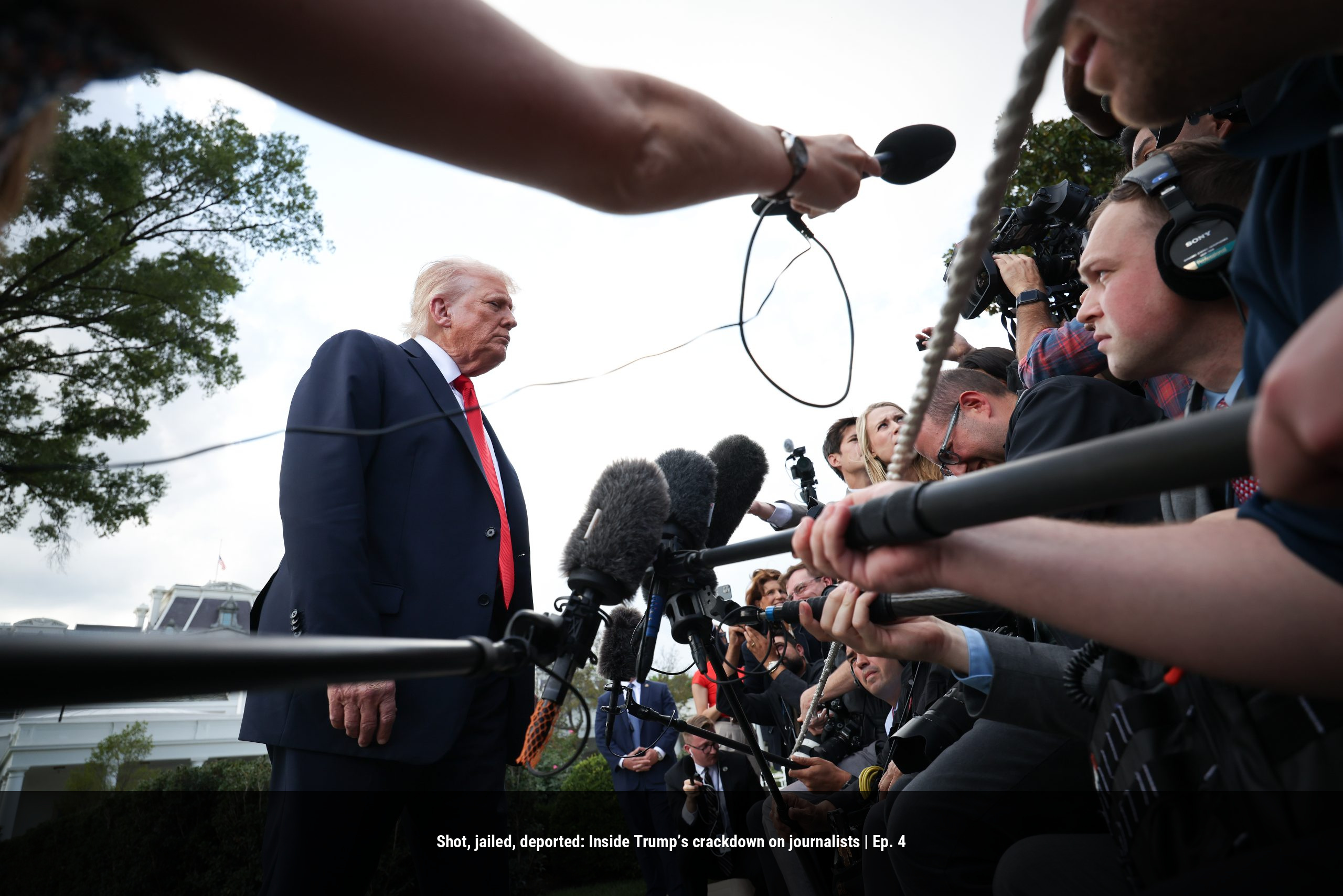
    In this episode of The Battle for Free Speech, Michael Fox is joined by Real News investigative journalist and Capitol Hill correspondent Taya Graham to map the assault on the American press: the rubber bullets and broken bones, the billion-dollar lawsuits, the FBI raids on reporters’ homes, the jailing of journalists like Georgia Fort and Don Lemon, and the deportation of immigrant reporters Mario Guevara and Estephanie Rodriguez. Featuring voices from the Committee to Protect Journalists and the National Press Photographers Association, they trace how violence, intimidation, media consolidation, and the gutting of access all serve a single goal: self-censorship — the silencing of the press in the name of free speech.

    The Battle for Free Speech is a production of The Real News Network. Hosted by Michael Fox and Marc Steiner. Theme music by Michael Fox, Jordan Klein and Daniel Nuñez. Other music from Blue Dot Sessions and Epidemic Sound. Production and Sound Design by Michael Fox and Stephen Frank. Editorial support by Kayla Rivara and Heather Gies. Research by Ben Schweiger.
    Guests

    Resources

    Creative Commons License

    Republish our articles for free, online or in print, under a Creative Commons license.

  • The Psychology of Basketball Jerseys: The Impact on Player Confidence

    The Psychology of Basketball Jerseys: The Impact on Player Confidence

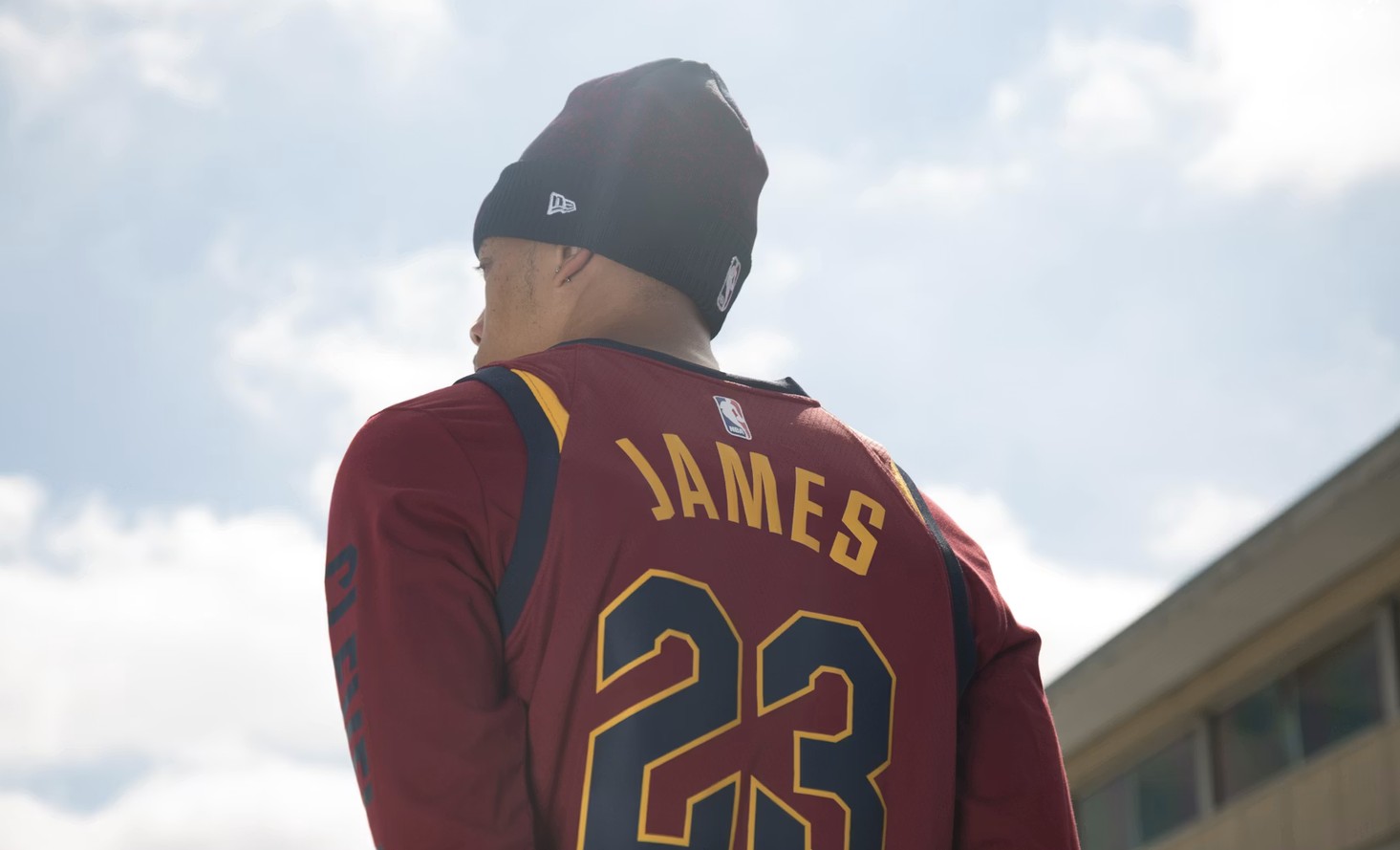
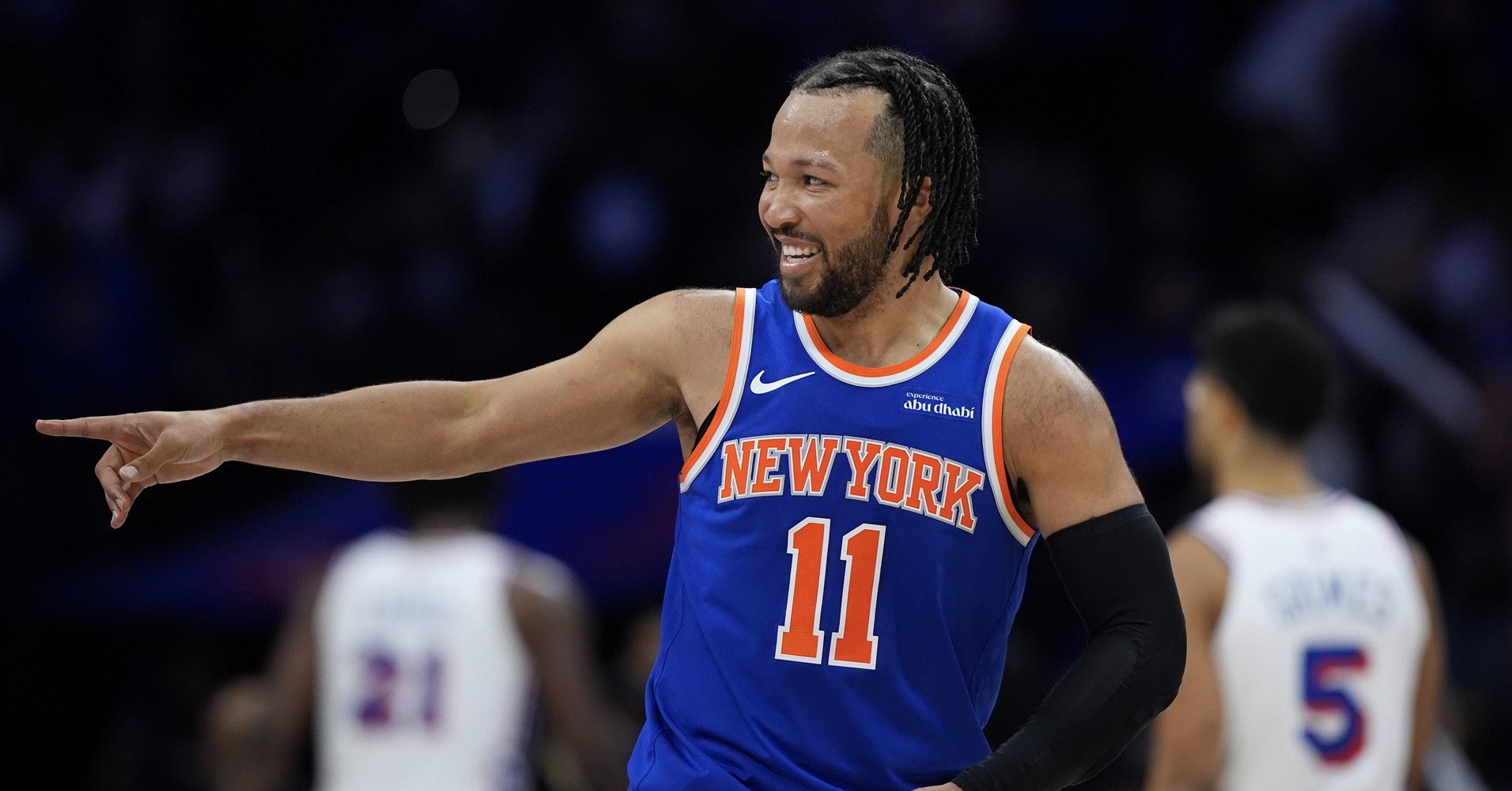
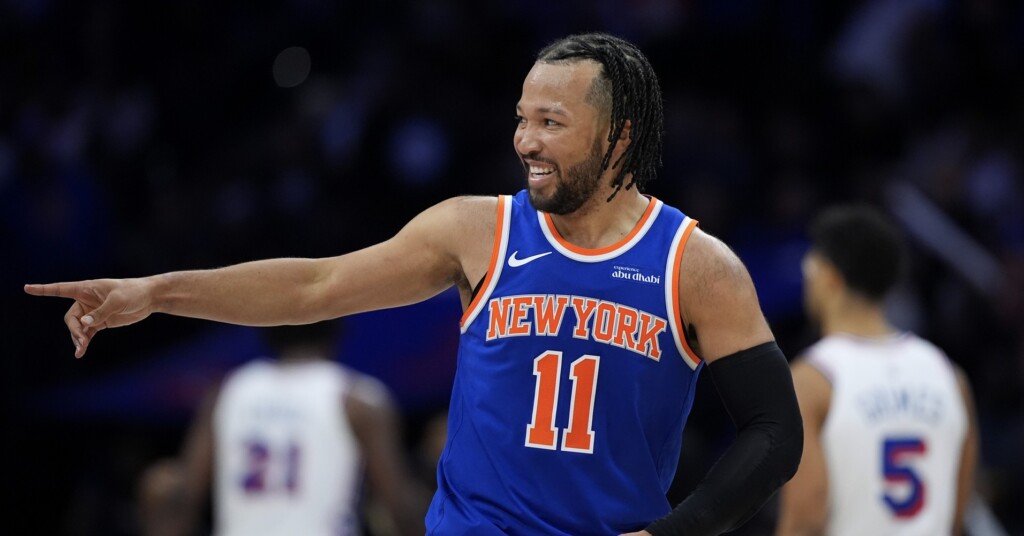
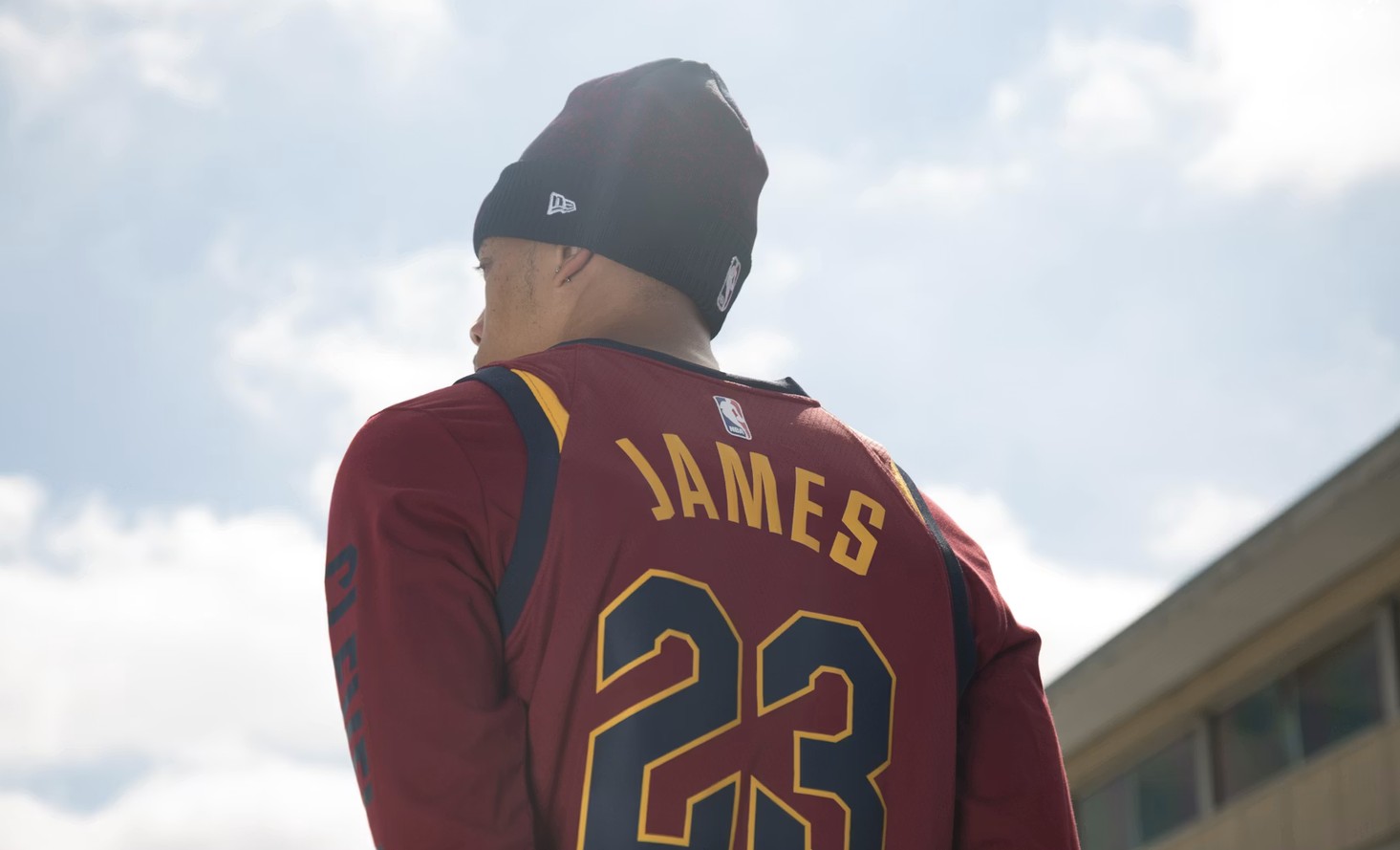
    It’s funny how a simple bit of polyester material can transport you back in time, connect you to the glory of heroes of the past. It can create a bond between player and city, fan and team. Or just think how putting on a simple jersey can make a player like Jalen Brunson, listed at just over 6ft, feel taller than Victor Wembanyama.

    It’s all down to the psychology of basketball jerseys and how they impact player confidence. It’s more than just a garment, and it’s more than the high-end materials representing millions of dollars in research. The jersey, at its core, can make a good player a great one, even if it’s just for a single game or series.

    Feeling Like a Pro Player
    Ask any former NBA player what it feels like to put on their old jersey. It envelops you with a feeling, a switch that turns game mode on. It acts like a mental signal, a Pavlovian cue that it’s time to level up.

    For the pros, it’s a core ritual component. Once you put the jersey on, you know you’re going to step on that court to represent a city, a franchise, a hungry fanbase looking to their idols to realize their dreams. When Luka put on that Lakers jersey, it instantly broke thousands of Dallas hearts, and conversely, started a love story in Los Angeles.

    For amateur players, having the real deal, just like the pros wear, makes them feel like something more. We’ve all gone through the same set of emotions. You put on that Jordan 23 retro, one of the most famous jerseys ever, and every shot will hit, you just know it. You’ll swish that game winner, just like MJ over Ehlo.

    On the flip side, a shoddy, poorly-fitted jersey can take you down a few inches. You feel like you’re part of a team that’s not taking it seriously, it’s cheap, it’s nothing like what Don?i? or Joki? wear on the court.

    The Psychology of Team Building
    The first step is feeling like a pro as an individual player. But the title of this piece includes the plural for a reason; jerseys impact player confidence at the team level, too.

    Matching uniforms builds that feeling of “us”, moving together as a single unit, passing, rotating, screening, all without putting the individual at the forefront. Uniforms don’t do it all, but they’re a first step in the team-building process for a championship team.

    For a pro player, it means finally joining an NBA franchise, and it’s for real. Putting on that jersey on draft night, it represents the thousands of hours in the gym, the sacrifices, the sheer joy of an unbelievable moment, Adam Silver announcing your name on that stage. It starts the process of becoming part of something bigger.

    On an amateur court, uniforms help players when they may not know each other very well. A cohesive jersey design that represents their club, college, or local town is a powerful signal of togetherness.

    To the outside, fans and opposing teams will see something, expect something. When you face a team that looks like a single unit, with professional jerseys, the nerves build, and the doubt creeps in.

    Jerseys Connect Players to Fans and City
    On June 4, 2026, the Houston Rockets announced new uniforms. Or rather, new old uniforms. The team is going back to ketchup-and-mustard, harking back to the glory days of Hakeem Olajuwon and Clyde Drexler.

    Clutch City, 2026 edition. The team finally listened to their fans, who have been asking, almost begging, for a switch from their unpopular designs of recent years.

    With the release, fan buzz exploded straight away. The Rockets feel like the Rockets again, whole, complete, a reparation of a bond that should never have been broken.

    The players feel it, too. Players like Kevin Durant and Amen Thompson have already given their seal of approval. And it doesn’t seem like they’re just reading off the PR script, either.

    Uniforms mean something to players, also. Even if they’re earning millions of dollars. When the design isn’t up to spec, new but for no reason other than a cheap way to make more sales, players feel it on the court.

    When there’s thought behind it, a true connection to the soul of a franchise, a respect that’s there for those that came before, it really creates something between a player and the team. It’s why the Boston Celtics haven’t changed their core design, or why the Lakers still play in their famous purple and gold.

    More Than Fabric
    Of course, there is a limit to all of this. A Jersey can’t defend a pick-and-roll or block a potential championship-winning shot (only OG Anunoby can do that).

    Yet a jersey can give that little extra boost, that 1% that makes all the difference. The best designs support movement, and they maximize breathability. But they also carry the history of a franchise, match design and quality, and give players a psychological edge over their opponent.

  • Knicks Complete Historic 29-Point Comeback in Game 4 of the NBA Finals, Move One Win From Championship Glory

    Knicks Complete Historic 29-Point Comeback in Game 4 of the NBA Finals, Move One Win From Championship Glory

    For nearly three quarters on Wednesday night, Madison Square Garden was preparing for disappointment.

    The New York Knicks looked overwhelmed. The San Antonio Spurs looked unstoppable. And a chance to take complete control of the 2026 NBA Finals appeared to be slipping away.

    Then something extraordinary happened.

    Something that will be remembered alongside the greatest moments in franchise history. The Knicks erased a stunning 29-point deficit, rallied in front of a deafening Madison Square Garden crowd, and stunned the Spurs 107-106 in Game 4 of the NBA Finals. With the victory, New York takes a commanding 3-1 series lead and moves within one win of capturing its first NBA championship since 1973.

    What unfolded inside The Garden wasn’t just another playoff comeback. It was one of the most dramatic nights the NBA Finals has ever seen.
    And for Knicks fans who have waited decades to see their team this close to a title, it felt like destiny unfolding in real time.

    Knicks vs Spurs Game 4: A Nightmare Start for New York
    Nothing about the first half suggested New York was about to make history. From the opening tip, San Antonio controlled the game.
    Victor Wembanyama dominated both ends of the floor. The Spurs moved the ball with precision. Their perimeter shooters found open looks. Their defense swarmed every Knicks possession.

    Meanwhile, New York looked tight. Shots rimmed out. Defensive rotations arrived a step late. The energy that had fueled Madison Square Garden before tipoff slowly disappeared as the Spurs continued building their lead. By late in the second quarter, the scoreboard looked almost impossible to comprehend. New York trailed by 29 points.

    Twenty-nine.

    In an NBA Finals game.

    At home.

    With a chance to put one hand on the Larry O’Brien Trophy. The Garden was stunned. Fans sat in silence. Social media was already discussing Game 5. The Spurs looked poised to tie the series and seize momentum. Instead, the deficit would become the setup for one of the greatest comebacks basketball has ever seen.

    Madison Square Garden Refused to Quit
    One of the defining characteristics of great sports venues is their ability to influence games. Madison Square Garden did exactly that Wednesday night. Even while trailing by nearly 30 points, pockets of the crowd continued searching for reasons to believe. A defensive stop generated a little noise. A transition basket generated a little more.

    Then another stop.

    Then another basket.

    And suddenly the impossible began to feel slightly less impossible.

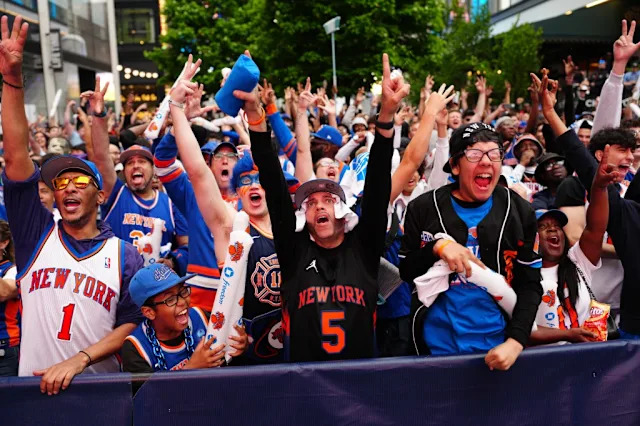
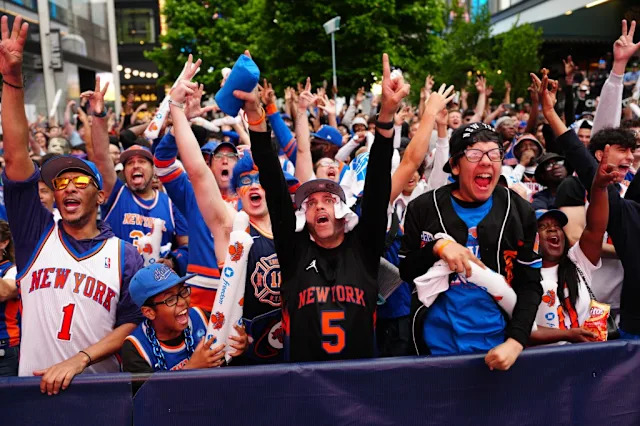
    The third quarter became a turning point. The Knicks began winning loose balls. They started forcing turnovers. The defense tightened. The rebounding improved. Most importantly, the crowd came alive. Every Spurs mistake was met with a roar. Every Knicks basket brought thousands of fans to their feet. The energy inside the building transformed completely.

    What had been a nervous, frustrated crowd evolved into a force of nature. The players felt it. The Spurs felt it. Everyone watching felt it. The comeback was no longer a fantasy. It was becoming reality.

    Celebrity Row Witnesses Knicks History
    No arena in sports combines basketball and celebrity culture quite like Madison Square Garden. Game 4 felt less like a sporting event and more like the center of the entertainment universe. Actors, musicians, comedians, business leaders, and sports legends packed Celebrity Row for what was expected to be one of the most important Knicks games in decades. Former Knicks stars filled seats throughout the building. Franchise legends watched anxiously as the current team attempted to accomplish something no Knicks squad had achieved in more than fifty years.

    As the comeback gathered momentum, cameras repeatedly captured stunned reactions from courtside celebrities. Smiles turned into disbelief. Disbelief turned into celebration.

    By the fourth quarter, everyone in the building had become part of the same experience.

    Whether they were lifelong Knicks fans or A-list celebrities, nobody wanted to sit down.

    Jalen Brunson Continues Building a Knicks Legacy
    Every championship contender eventually reaches a moment when its star player must deliver. Jalen Brunson delivered. Again. The Knicks point guard has repeatedly authored signature performances throughout New York’s playoff run, but Game 4 may ultimately rank among the most important of his career.

    What separates Brunson from many stars is his composure. While the crowd was losing its mind and the pressure reached unimaginable levels, Brunson never appeared rattled. He controlled the pace. He attacked favorable matchups. He made smart decisions. Most importantly, he made winning plays.

    As the deficit disappeared and the game tightened, Brunson became the steady hand guiding New York toward history. The deeper the playoffs go, the stronger his case becomes as one of the most impactful free-agent signings in franchise history. If the Knicks finish this championship run, Brunson’s place in New York sports lore will be secured forever.

    OG Anunoby Delivers the Defining Moment
    Every legendary comeback needs a defining image. The Knicks got theirs in the final seconds. With New York desperately searching for one final play, OG Anunoby found himself in the perfect position at the perfect time. The ball came off the rim. Anunoby reacted. No one picked him up on defense as he was the inbounder.

    The tip found the basket.

    Pandemonium followed.

    Madison Square Garden erupted instantly.

    For a franchise that has spent decades searching for championship relevance, it felt like years of frustration, heartbreak, and waiting were released in a single moment.

    Why This Win Changes Everything for the Knicks
    Beyond the emotion and the history, this victory fundamentally changes the NBA Finals. Instead of a tied series heading back to San Antonio, New York now holds a commanding 3-1 lead. Instead of facing questions about momentum, the Knicks have placed enormous pressure on the Spurs.

    Can the Knicks Finish the Job in Game 5?
    As incredible as Game 4 was, the reality is simple. The championship has not been won yet. San Antonio remains dangerous. Wembanyama remains one of the most talented players on the planet. The Spurs have spent the entire season proving they can respond to adversity. But Game 4 felt different. It felt like one of those nights that championship teams experience before finally reaching the summit.

    For one unforgettable night, New York wasn’t just the center of basketball. Madison Square Garden wasn’t just The Mecca.

    It was the center of the entire sports world.

    And now, after a historic 29-point comeback, the Knicks stand just one win away from bringing a championship back to New York City.

  • 25 Years Waiting: Will The NBA Knicks Make It To the NBA Finals at Their Home, Madison Square Garden?

    25 Years Waiting: Will The NBA Knicks Make It To the NBA Finals at Their Home, Madison Square Garden?

    You can usually tell when New York believes in a team. The noise changes and the conversations get louder. Celebrities suddenly become even more visible courtside and every sports discussion somehow finds its way back to the Knicks. The build-up around a playoff run like this often extends beyond the arena itself. Fans follow predictions, statistics, live reactions and entertainment experiences that keep the momentum going between games. That crossover between basketball passion and sports-inspired casino entertainment has become part of the wider conversation for many supporters who enjoy the excitement that comes with high-pressure moments and big sporting narratives.

    The Fans Are Driving the Hype

    Nobody does basketball anticipation quite like New York. The Knicks already have one of the loudest fan bases in the sport but a potential Finals run has pushed things into another gear. Around the city, people are talking about lineups, predictions and what a Finals appearance at Madison Square Garden could actually look like.

    And yes, the excitement is getting serious enough that conversations around crowd management and extra security are part of the picture too. This is New York after all, the concrete jungle. It’s a city filled with celebrities, diehard supporters, media attention and fans who wear their emotions openly when sports are involved.

    The emotional side of sports matters. Fans lift teams, build confidence, create pressure for opponents and turn ordinary home games into events. It is the same reason sports fans enjoy following major moments across entertainment spaces like the jackpot city online casino and sports-themed gaming experience, where basketball-inspired gameplay, momentum-driven entertainment and big-event anticipation help keep fans engaged. That connection between sports and casino entertainment is easy to understand. Fans enjoy tension, timing, momentum swings and the feeling that something dramatic could happen at any moment. Those same ingredients often shape how people interact with sports-themed casino experiences during major playoff periods.

    Brunson, Towns and Hart Are Carrying the Team

    Big playoff runs usually need players willing to step up when the spotlight becomes brighter. The Knicks have several names doing exactly that.

    Jalen Brunson has looked calm, sharp and completely comfortable handling leadership responsibilities. As a point guard, he has been playing with real control. The decision-making, the tempo, the confidence, it’s all too amazing to even look at sometimes. He gives the team direction when games start getting intense.

    Then there is Karl-Anthony Towns. At centre, he brings something the Knicks need badly: size combined with scoring ability. Big players who can shoot change the way opponents defend and Towns has that rare combination. He can use his physical presence around the basket but still stretch the floor with his shooting touch.

    Josh Hart adds another important layer. He may be smaller compared with some players around him but he’s meant to be. He finds points, creates movement and brings relentless energy into games. Sometimes teams need players who simply keep momentum alive through hustle, quick scoring bursts and strong timing. That’s him.

    That ability to perform under pressure is one reason sports and casino entertainment often attract similar audiences. Players and fans alike respond to moments where confidence, timing and fast decision-making can change the direction of a game.

    One More Win… But The West Is Still Watching

    The maths in the Eastern Conference is simple enough. The Knicks are three up in the Conference Final. One more victory and they are heading to the NBA Finals.

    That sentence alone would have sounded unbelievable to some fans not very long ago. But basketball conversations never stop at one side of the bracket. People are also watching what is happening in the Western Conference Finals, especially when the San Antonio Spurs enter the discussion alongside Victor Wembanyama. The Spurs are reportedly two up, which naturally gets fans talking about potential Finals matchups and how different styles could collide on the biggest stage.

    That is part of what makes this time of year so entertaining. Sports fans thrive on those possibilities, which is why you’ll see so many fans playing basketball-themed casino games on platforms like jackpot city, where anticipation becomes part of the entertainment. The crossover between major sporting events and casino-themed gaming experiences continues to grow whenever playoff season arrives. Fans are not only following results; they are engaging with prediction culture, themed entertainment and sports conversations that stretch far beyond game night.

    New York has waited a long time for a basketball story like this. After 25 years, a win would mean something special to New York supporters and it would quickly become one of the biggest stories in sports. For fans who enjoy the wider world of sports entertainment, from live playoff drama to themed casino experiences on platforms like jackpot city, this Knicks run already feels like a moment worth remembering.

  • No union dues for genocide: Inside the historic UAW vote to divest from Israel

    No union dues for genocide: Inside the historic UAW vote to divest from Israel

    At the 39th Constitutional Convention of the United Auto Workers (UAW) in Detroit, Michigan, union delegates debated and affirmed the aggressive direction the UAW has taken under current President Shawn Fain, supporting pushes to increase shop-floor militancy, support new organizing efforts, and take stronger stances on the political crises working people face today. Among the major developments to come out of the UAW Constitutional Convention was a historic vote to divest the union from Israel bonds, which provide financial support to Israel’s government as it continues to wage a US-backed campaign of genocidal violence and ethnic cleansing against Palestinians. In this episode, we break down this historic vote and what it means for union members with a panel of rank-and-file workers and members of Unite All Workers for Democracy (UAWD), a left-wing caucus within the UAW.

    Panelists include: Andrew Bergman, a worker at General Motors in Detroit, Michigan, a member of UAW Local 22, and co-chair of UAWD; Navruz Baum, a paralegal in New York, a member of UAW Local 2325, and a member of the UAWD Steering Committee; Margie Thornton, an attorney in Colorado, a member of UAW Local 2320, and a member of the UAWD Steering Committee; and Mike Davis, an auto parts worker in Ohio, a member of UAW Local 2021, and a member of UAWD.

    Additional links/info:

    Featured Music:

    • Jules Taylor, Working People Theme Song

    Credits:

    • Audio Post-Production: Jules Taylor
    Transcript

    The following is a rushed transcript and may contain errors. It will be updated as soon as possible.

    Maximillian Alvarez:

    All right. Welcome everyone to Working People, a podcast about the lives, jobs, dreams, and struggles of the working class today. Working People is a proud member of the Labor Radio Podcast Network and is brought to you in partnership with In These Times Magazine and the Real News Network. This show is produced by Jules Taylor and made possible by the support of listeners like you. My name is Maximillian Alvarez and we’ve got a really incredible panel of folks today with the United Auto Workers. We’re going to get a worker’s eye view of the huge changes that are happening and have been happening within the Mighty UAW. And those changes were on display earlier this month at the UAW Constitutional Convention in Detroit. As Dan DiMaggio and Jane Slaughter report at Labor Notes, “Delegates at the United Auto Workers Constitutional Convention affirmed the aggressive direction the Union has taken under President Shawn Fain, who took office in 2023 and immediately set the 400,000 member union on a new path illustrated in bold campaigns like the standup strike against the big three automakers.

    The thousand delegates who assembled in Detroit voted to increase the money designated for new organizing and to maintain dues at 2.5 hours per month in order to bulk up the strike fund. The Union is looking ahead to a projected rematch with the Big Three on Mayday 2028 when contracts covering 150,000 auto workers expire. The UAW has called on other unions to align their fights then too to build more leverage on employers and politicians and win big demands.” Now this is all of course really important for UAW members and for the labor movement writ large and we are going to talk about that with our guests today, but we’re also going to focus on another really important development that came out of the UAW’s 39th Constitutional Convention. As Shireen Akram Bouchar reports a truth out, quote, “The United Auto Workers, a union with some 400,000 active members across the US has voted to divest its estimated $400,000 from Israel bonds.

    The divestment vote makes the UAW the first major national union to vote to divest from Israel. The resolution states that the billionaire clas that profits from war funnels public money into militarism instead of healthcare, housing and education working people need. It cites the nearly three year long genocide in Gaza and the call by the Palestinian Trade Union Movement for workers internationally to act in solidarity as among the reasons for its resolution to divest from Israel bonds, which are bonds issued directly by Israel and function as loans to the Israeli government. The vote was organized by Unite All Workers for Democracy or UAWD, a left wing caucus within the UAW and UAW labor for Palestine, which is part of a broader labor for Palestine Coalition.” To talk about this historic move by the UAW and what it means for UAW members, for the labor movement, and for the Palestine solidarity movement, I am really grateful to be joined on the show by four guests today.

    Andrew Bergman is a worker at General Motors in Detroit. He’s a member of UAW Local 22 and co-chair of UAWD. Navruz Baum is a paralegal in New York, a member of UAW Local 2325 and a member of the UAWD steering committee. Margie Thornton is an attorney in Colorado, a member of UAW Local 2320 and a member of the UAWD steering committee. And Mike Davis is an auto parts worker in Ohio, a member of UAW Local 2021 and a member of UAWD. Andrew, Navruz, Margie, Mike, thank you all so much for joining me today. It’s incredible that I have you all on this panel right now. I want to start our discussion with this historic vote by the UAW and its membership to divest from Israel. So I wanted to ask you guys, as union members and as working people in America, why is this an important issue for you and what does the passing of this resolution mean to you?

    Navruz Baum:

    I would say a few things. First of all, there’s currently an ongoing genocide in Palestine and workers every day are being killed and murdered by Israel. Israel is also wreaking havoc and destruction in the entire region, bombing Lebanon, bombing Iran, bombing other countries and murdering civilians. And they’re doing this with the active assistance of the US and financial assistance from up until very recently institutions like the UAW. And so just as people of conscience, it was really important for us to not be complicit in this ongoing genocide. Secondly, as members of the working class who want better living conditions, money that goes to Israel to bomb people, bomb children in other countries is money that is not going to healthcare, to housing, to food to support us. And it’s just totally unconscionable to us that the resources, the wealth that we produce every day as workers is being appropriated to fund misery and death instead of being used to improve our own living conditions.

    And lastly, I would just say that as members of the working class, as rank and file members of the UAW, it’s really important that we have a say in how these resources are being used and that when we’re having that say, it’s driven by our values and what actually benefits us. And so we’re not content with just having some bureaucrats decide where all this money that we’ve paid in dues is invested, wherever they think makes sense per their politics or the highest return. We believe that as workers, as members of the UAW, we deserve a say in where this money goes.

    Mike Davis:

    It’s important because we’ve just spent the last three years watching a genocide be livestreamed and it’s sickening. And as Navruz said, our dues dollars are funding this and it shouldn’t be happening at all. But as far as what does it mean going forward, it means we’re on the right track, but we also have a lot more work to do. I don’t know if you read our other resolution, but it had a lot more language in there that called for work stoppages and it also called for us not to endorse politicians who take money from these type of people.

    Margie Thornton:

    I would say that there’s a mantra in the labor movement that the dudes are sacred, the members does are sacred. And we’ve seen across the globe really the working class take to the streets and protest and scream at the top of our lungs basically about where our tax dollars are going. And that doesn’t seem to have any impact, but those sacred dues, those dollars that we can decide we can have a voice. If we organize the members, we can’t decide where those go. So being able to withhold those while we can’t withhold our tax dollars is, I mean, it’s the least we can do in response to the call for solidarity.

    Andrew Bergman:

    Yeah. I think of just all these conversations I’ve had over the last year. We were working all this mandatory overtime in 2024 in my plan and we were just in the plant together, 12-hour shifts, six days a week. So we spent a lot of time together. People who don’t usually want to talk about politics, we’re talking about politics. We were talking about everything with our coworkers out there and Palestine came up a lot and I was kind of in my plan. Everyone know, that guy’s the troublemaker, that guy wants to talk about politics. But people would come up to me and be like, “What do you think about what’s going on? ” This was a live question. This is a plan in Detroit. It’s a lot of folks, it’s a majority Black folks who have definitely, I think in the working class in the United States, it’s not just on the basis of race, but a lot of people have really been subject to oppression.

    And when they watch the news, they I think and myself connect with the Palestinians who are being oppressed and are being subjugated. And so it was a regular conversation. Why is our country doing this? Why is our union actually supporting this? And we wouldn’t get into the weeds on Israel bonds. It was more just like, why aren’t we being clear? And a lot of people I think were very excited when Sean Vain took a rhetorical position on this question, but then to sort of see that not followed up with any action, and that’s something UAWD has talked about a lot, that was disappointing. So I think a lot of folks are really excited about this even who are not particularly political. And then the other thing that comes to mind is just after this happened, I was in Dearborn and we were near Local 600, there’s a big mosque right down the road.

    And a lot of the folks in that mosque are UAW members. So we were talk actually because we were doing some interviews for our social media just to connect with folks in that community about what this meant to them. And we have these really beautiful kind of passionate conversations with folks who are just like, what does it mean to be here in this country and kind of be surrounded by people and then see your union, which you’ve kind of been unsure about or hasn’t really taken the right position, but you knew it used to. It stood up for Nelson Mandela, it stood up against apartheid to take that position now. So I think it just has this emotional moral character for myself and a lot of other people separate from the important left politics. It’s just a meaningful thing at an emotional level.

    Navruz Baum:

    Something we really hold sacred in the Libor Movement is that we respect each other’s picket lines and we don’t undermine other workers. And this is a part of that because there’s been a call from the Palestinian Trade Union Movement to respect BDS and to not do financial investments or other business with Israel. And unfortunately, the UAW has been crossing that picket line for decades. And so with this vote, we’re really proud to finally be respecting the BDS call in that respect, respecting the call from the Palestinian Trade Union Movement so that we can stand in solidarity as American, Canadian and Puerto Rican workers here in the UAW with members of the working class and workers in unions in Palestine.

    Andrew Bergman:

    There’s this very well known, at least on the left, wildcat strike that forward workers, especially Arab American Ford workers led in 1973 to push for divestment from the UAW and Israel bonds. That is over 50 years ago and they succeeded in small part because they got local 600. So when I was there in Dearborn just yesterday down the road, like a five-minute walk from Local 600 and I was asking people what that resonance was, I mean, it was beautiful because on the one hand, people were very excited about it, but on the other hand, not very many people knew about that wildcat. And so I think it’s a testament both to how important that thread can be through history, but then also how little known it can become and how they kept a light on and it got passed on, but through a small group of people who kept fighting.

    And the culmination that we had last week was not just the four of us or even just UAWD or even just UAW labor for Palestine, which hopefully we’ll talk about, but it was this movement of thousands and thousands of people across the decades.

    Maximillian Alvarez:

    Well, let’s talk about that right now actually, because I really want to impress upon listeners that this was such a hard won victory that has taken decades to accomplish because we’re talking about from the public consciousness around Israel-Palestine, which changed dramatically in this country over the past three and a half years, we’re talking about the changes within the UAW itself, right? This is a very different union than the UAW that I knew when I started this show eight years ago. And of course there’s been just a global movement in solidarity with the Palestinian people, a movement to stop the genocide, to stop the occupation and to stop US support of all of it. So I wanted to ask y’all if you could talk more about that path that led to this moment and the obstacles that were overcome, the growth that had to happen in you as individuals and for your union.

    Navruz Baum:

    I can speak to my local 23, 25, and I hope that others can also speak to their locals. But in local 23, 25, we’ve definitely had a contingent of members who’ve been fighting for strong internationalist stance for standing with members of the working class around the world for many, many decades. The strength and size of that contingent has fluctuated over the years. I will say that I think post October 7th, 2023, when Israel really escalated its genocide, a new coalition, a new majority around Palestinian solidarity was formed in my local. And at first it was really hard fought and there was a lot of really incredible organizing that happened telling people why, yes, it’s difficult to take a stance on this issue. Yes, you’re going to get a lot of shit from it. A lot of people are going to yell at you. You might get doxed.

    Multiple people in my union have been the targets of online harassment campaign. Multiple people have been fired by their employers in my local coming out of those online harassment campaigns. And yet why, despite of all of that, it’s important for us to take an issue on Palestine anyways. As of now, I think that we’ve done a lot of organizing and we’ve gotten pretty used to taking pro- Palestine positions in my local. So when it came time to endorse this amendment and send it to the International UAW Convention, there was a strong majority of my local for it. There was still some arguments about whether this is the right time, whether this is really the right issue to bring to the International Convention, whether other locals are ready for it. I hope that folks from other locals can speak to that because obviously they were, but it’s definitely been a long struggle in my local.

    And I think that it’s been a microcosm of what’s been happening in our country and in the world more broadly around Palestinian solidarity. And it’s absolutely in the environment of pro- Palestine organizing in New York City where my local is, where a lot of people are members of other Palestinian solidarity organizations and have learned organizing and learned about the importance of solidarity with Palestinians through other organizations in the broader environment and also brought those politics into our local. And lastly, I would just say that watching the solidarity and actions of the global working class for Palestine, which honestly, a lot of it has gone a lot further than just divesting from Israel bonds has been an incredible and perpetual inspiration to us and also always driven home the urgency for us to also take the action that we can within our union. And I do think that Mike actually brought an amendment that would’ve gone farther and done some more of the things that workers in other unions and other countries are doing.

    So I don’t know, Mike, if you’d be done and talk a little bit about that.

    Mike Davis:

    Yeah, sure. My local actually did not pass this resolution. I wish they had. We passed the ICE resolution, but not this one, but the resolution that I read onto the floor did contain a lot heavier language and I’m hoping that when we go back to the Constitutional Convention in four years that we can try it again. I mean, the language in there about not endorsing politicians who support Israel, that’s a no-brainer to me and I really wish that we could have gotten that in there for sure, but that’s definitely got to be brought back. The clause is in there about being able to strike over genocide. A lot of that was met with talk about legality this and legality that and how we couldn’t do it because it’s not lawful. But as I made a point before, we’re the international UAW. We’re not the United States of America UAW.

    So when we’re setting policy, we need to be worried about our own moral compass. We don’t need to be worried about the moral compass of this country or that country because at the end of the day, we’re operating in multiple countries. We’re in Canada, we’re in the US and we’re in Puerto Rico. So let’s say we organize people in Bosnia and all of a sudden the Bosnian government decided they were just going to start nuking their neighbor and all of the workers said, “No, we’re not going to support that. ” The UAW as a whole, because we don’t feel that connected to Bosnia, we would say, “Absolutely, you guys strike them and we’re going to send you money.” But when we sit here and we talk about it in our own country, all of a sudden this fear comes in of what’s big daddy, Uncle Sam going to do to us.

    And I think that that was a real hangup on this convention was that you have people that are in a position of power within our union that really, really want badly to be taken seriously by the people in charge. And this war didn’t start with Trump. The war started under Biden and Sean Fain, I really feel like part of the reason that he didn’t kick back as hard as he should have on this was because he wanted to maintain that relationship with them.

    Maximillian Alvarez:

    Mike, could you say just a little bit more about that process of raising these important issues from your local and raising them up to the rest of the union? What does that look like for listeners who maybe don’t have any idea of how that works?

    Mike Davis:

    Yeah, sure. So after the locals submit all of the resolutions, and I do believe we submitted hundreds of resolutions in there, the committee who is chosen by the international staff, they go through it and they decide which ones they’re going to be presented to us. And unfortunately at this year’s convention, only five of them that were actually written by local unions were presented to us. The rest of them, if any of them wanted a chance to be heard, they had to be called out of committee and calling stuff of committee is hard. There’s a thousand delegates. We had to get 144 delegates to vote for it to come out. At the very beginning, we tried to have the rules change to lower that threshold, to bring it down from 15% down to 5% and we weren’t able to accomplish that. So then going forward, we had to get that 144 votes and with this one, we almost knew it wasn’t going to happen.

    Just the feeling in the room, the fact that no language even made it in the book regarding Palestine at all. And that’s actually helped us out because if they had even mentioned it once in there, we wouldn’t have been able to bring our resolution, but because they were just dead silent on it, we were. So thank you for ignoring us, I guess. But yeah, so once we called for it to come out of convention and we actually got to let people hear us, I think that if more of us would’ve gotten to talk, I think that we probably would’ve gotten a little closer to our goal. We only got 69 out of the 144 that we needed to get, but at least people were listening to us. They really did everything they could to make sure that this wasn’t going to be as democratic as we would like it to be.

    It really had the feeling like it was four years ago when we sat in there and we had the entire administrative caucus working against us like 40 UAWD members. And this time we went back in there and there was even fewer of us, I think there was like 25 of us delegates that were in there, UAWD. And then we had still the same amount of hatred coming to us, but it was from two different groups. We had the old guard with their like 300 or so voting bloc and then we had Sean Fane’s new administrative caucus with what, four or 500 people maybe. So we had two groups of people that were really shitting on us at this one instead of one. That was the big difference. But what really hurt though was when they shut down being able to pull things out of committee.

    Rule number nine allows us that right to pull things out of committee halfway through the second day is when they all decided the old guard and the new administrative caucus decided to work together to shut down dissent and we got most of our stuff pulled. We did get to debate ours. So I’m not that upset that we didn’t get our stuff out, but there was retiree language in there and I think that really did upset me that we had retirees that had, from their locals, they sent stuff international had taken all of their stuff and just watered it down to almost nothing and put it in there. And then they came up with this rule that the rule is if it’s in there, you can’t debate on it until it’s been brought by the committee voted down by the committee. And then once we voted it down by the committee, then we can bring the other stuff that the locals had presented.

    But by suspending rule nine before they read the retiree language, they shut down the retiree’s voice altogether and they weren’t able to bring any of their stuff to the floor. But that’s the kind of stuff that we dealt with four years ago. That’s kind of stuff that we dealt with at this one and it really was. It was, like I said, instead of one big group working against us, we had two large groups working against us and the retirees apparently.

    Margie Thornton:

    So when Mike says we were able to pull everything that we wanted to pull out, we had three priority amendments that we wanted to make sure that we at least got to speak about on the floor. We had a amendment that spoke about fighting layoffs using work sharing. That’s the first one that we tried to pull out. We did not have enough delegates stand to pull that out of committee, but we did get to read it aloud and a lot of people were interested in the language. So that was kind of the first loss, but we learned from it. And then Mike went and he tried to pull out our broader divestment amendment and we weren’t able to pull that one out. And then we had Shelly from Local 2325 as well, she pulled out our Fighting ICE Amendment, which we were able to pull out as well and we did get to debate that one.

    And I think it was interesting seeing the reaction to that one because it was probably we thought more controversial, but when people were debating the amendment, there was not a single person that stood up and disagreed with the premise of fighting ICE, or I don’t know if we can cuss on this show, but fuck ICE. Basically, we had people saying, “Fuck Ice, but is this legal?” It went back to the legality and I mean, I made a point of information like, “Who is deciding for this union our policy? Is it the lawyers or the membership?” I was ruled out of order, but people were able to hear that. I don’t know. And then we were finally able to bring out the divestment amendment with the more concise language where we were only divesting and then we were able to pull that one out. So yes, as Michael was saying, it was really a tragedy that democracy was basically democratically voted to be closed down during the convention, but we were able to pull out a lot of things from our class struggle program that we brought to the convention.

    The ICE Amendment that we brought basically would ask that we not endorse politicians who were supporting ICE. And I believe this was modeled on something that came from Local 2325. So basically it would allow a local to call a membership meeting if there’s ICE activity in the area and then that would allow them to, if the membership decided to go on strike to combat ICE. And Ruz, you can probably speak more to this than I can because it was your local that passed that.

    Navruz Baum:

    Sure. In my local, we passed a structure where we can take a vote as a membership if we want to strike against ICE if ICE is attacking our community. We are really inspired by the events in Minneapolis, seeing workers there who were trying to organize for a general strike in their city in response to the ICE attacks there. And we wanted to be ready in New York City if ICE did a similar escalation murdering people in the street wantonly like we saw in Minneapolis if that happened to us. And so we passed a resolution in my local where if there was an ICE escalation, we would immediately have a general membership meeting where we would decide what actions we want to take, for example, striking or joining a general strike movement. And as Margie and Mike said, we tried to bring this to the Constitutional Convention in our broader resolution to fight ICE, which also included endorsement criteria and some other good things.

    People were really supportive. A lot of people shared really moving stories about personal experiences with ICE, about their coworkers’ personal experience with ICE, their family’s experiences with ICE, which were all uniformly negative. Many, including us, made the argument that in the face of this crisis, we have to be using our labor power and specifically our power to withhold our labor in order to put an end to these attacks to defend ourselves and defend the working class from these attacks from this federal agency. And it was really popular with a large segment of delegates. As Mike mentioned, there’s this really procedural process where you have to get a bunch of delegates. The UAW leadership says the agenda, they excluded all of our amendments from the agenda. We had to organize to pull our amendments out of committee. We got enough delegates to stand up so that our ICE amendment was put onto the floor, which would’ve supported workers in Democratically deciding if they want to strike against ICE, even if that’s illegal as per our contracts or per the US labor law.

    And so this would’ve been really momentous I think as a first as far as I know in the labor movement on a national scale. And actually more delegates stood for our ICE Amendment than did for our divestment amendment, which just goes to show how popular it was. And we pulled them both out of committee on the second day. The debate on both were on the fourth day. And so what happened between the second day and the fourth day when divestment passed, but ICE failed is there was a lot of organizing against our ICE Amendment. I think specifically people, UAW leadership was very fearful of the legal repercussions, repercussions from the state, from the bosses if we took this sort of militant stance against ICE. And so they had their caucus meeting before the convention and they were organizing delegates hard against their ICE resolution. As Margie said, everyone got up on the mic and said, “Fuck ICE, of course, but there’s nothing we can do about it.

    ” And so that’s why I think it was so popular on the first day, even more popular event divestment. But then after they heard from their leaders and said, “No, no, no, you need to be responsible. We shouldn’t actually be taking a strong stance here.” Then it was eventually voted down while divestment, I think leadership saw that as a safer stance than illegal strikes against ICE. And so different factions didn’t organize against that. Some factions still did and then we were able to pass it.

    Andrew Bergman:

    Just to quickly add on the ICE debate, I mean, for me it was actually, I mean, divestment is an incredible win, but the debate around ICE was actually, I think, the highlight of the convention for me. It was not just speakers from UAWD and some of our allies on the left, but there was a particularly incredible speech from someone who I don’t know personally, but I know where he’s from, he’s not from the sort of old administration caucus, but sort of a cousin movement that has, I think, a very top-down perspective on how union should run. But he gave this incredible speech about how if we’re not ready to take illegal strikes in response to the repression and escalation vice, then when are we? And I think it just spoke to the whole room to know that a guy like that in addition to our forces on the left were making this stance.

    And you could tell, you could tell from the applause, you could tell from the reaction that people really bought in and then for that to then go to a vote that we estimate it was a voice vote, but probably 25, four, 75 against. I think it’s the kind of thing you’ve heard from everyone else on the call today about these kind of bureaucratic machinations and these meetings and these kind of vote whipping. I think people were sitting in their seat going, “Shit, this is right and I’m not allowed to vote yes for it. ” And I think when you have that experience, I think what we did was we moved the politics and sort of the morality of the convention floor. Most people there, I mean, Mike spoke to this, most people there are local level bureaucrats. They want jobs on staff. Most people that are not rank and file members.

    It’s not like a meeting or a shop floor discussion with your coworkers. This is people who think that they’re going to go on staff. So they’re being told, “If you don’t do this, then you don’t have that shot.” But when you tell people that and you tell people they can’t vote their conscience, I think it changes It’s their minds. So I actually think that debate was just a few hours before the divestment debate. I don’t think we win the divestment resolution by less than 40 votes. If we don’t have that debate about ICE, that shifts I think the whole sort of compass and political orientation of the convention. So I just want to really give you all a sense of what our strategy was because this actually wasn’t an accident. I mean, we did not predict all of this. We thought we were going to do worse.

    We didn’t know if we were going to get anything out of committee. So I want to be honest that we didn’t think we were going to win divestment, but we did have a strategy going in and I think everything we’ve been describing, I actually think shows that our strategy made sense, which was that we weren’t going to come with very narrow reforms. That’s something that UAWD tried four years ago and that’s something that another faction that Mike described tried this time, kind of more procedural reforms. We said we were going to come with class struggle politics. And that comes out of a year ago, as many listeners may know, there was a split in UAWD. There was a group that was more aligned with fame that tried to kill UAWD actually, which was a shame because it created a lot of acrimony. Those of us, maybe about 75% of the active members of UAW said, “You know what?

    That wasn’t legitimate. They didn’t win the vote. They broke all of our own rules. We’re going to keep moving forward.” But what we recognized was that democracy wasn’t enough. Our name is Unite All Workers for Democracy. But we realized after we sort of saw our own elected leaders get pulled in by the old guard, not necessarily because they wanted to, but because they thought that was the only path. We realized that we have to stand for more than democracy. We have to actually stand for class struggle and that a democratic union will be one where we have actual fight for worker control and we’re militant and then we can win democracy as a piece of that. And that can be a whole thing that maybe Max, you’ll ask us about at some point, but I don’t want to go into the weeds of that. I’m saying that because I want to say that when it came time for us to plan our convention strategy, we said, well, what are we going to do?

    We’re going to fight over the definition of a particular category or how a particular vote is held. We’re not against a more democratic union. We’re very much for it. But we thought that if we went narrow, people wouldn’t understand where we were coming from. So we wanted to show not only that we were class struggle unionists, but that we were also good trade unionists. And so every one of the resolutions that Margie mentioned, fighting layoffs, fighting ICE, and then fighting for Palestinian liberation, they all mention strikes and it’s not an accident. They all talk about how we build capacity. They also don’t say, “Go on strike,” because that’s silly. We know that many of our coworkers are not necessarily ready to strike, but our orientation in UAWD is that our coworkers are also not apathetic. They give a shit. It’s just that you don’t necessarily feel the protection or the sort of capacity or you don’t feel that your union has your back.

    But my experience on the shop floor when we’re working mandatory overtime or when we’re going to layoffs is lots of people were pissed off and ready to fight. They just didn’t have the organization or language to be ready to do it. And I think that differentiates us from maybe other folks in the UAW, even that we have agreement with like Fayne and his allies who want to build a fighting union, but I think it has to come from the top down because they don’t see the level of possibility within the sort of membership. And we do. We still think we have to build it. We don’t think it’s happening next year. We know it’s not necessarily soon, but we think that if we give people tools and capacity, our rank and file coworkers actually will build it. And so we said, let’s go with real provisions, not just words, not just symbols, but actions that would either create new meetings or give resources.

    Our bigger resolution that Mike mentioned about Palestine would’ve given weapons manufacturing workers the ability to strike or they would’ve given them protection, financial backing if they took a strike to not send weapons to Israel. That would either be illegal or certainly an unprotected strike. We knew that. We own that. We’re not trying to say, “Oh no, it’s legal. Let’s play a game.” No. We know that the only way that that kind of militant action happens is if people feel ready, they feel backed. They feel that if they’re retaliated against, they’ll have their salary paid until they get a new job. That’s a huge financial commitment, but if we put that finances behind our politics, we think that builds capacity. And so that was the same with the ICE resolution, that it would’ve enabled these meetings that Navruz talked about, which everyone said, “Oh, there’s illegal to have those meetings.” We said no.

    And the same with our fighting layoffs resolution. You can’t just go on a strike in response to a layoff, but if you want to actually win things like work sharing provisions, that’s where you can come up with these mid-contract strike paradigms over things like health and safety, which are protected, but you have to be strategic about orienting people to take that kind of action. So this was kind of our orientation that class struggle could actually bring not just a vibe or not just like a left flank that everyone would give the finger and vote down, but actually move the conscience even of these bureaucrats in the orientation of building a fighting union. And we actually suspected that we wouldn’t win anything, but we said if we can go in there with our small delegation and even get 50, 75 people to start thinking the same way as us, but then more importantly, not worry about the convention, focus on building at shop floors, because that’s our real orientation that we want to build shop floor movements at locals, then this can be an anchor for that.

    And I’m curious if what everyone else thinks, but I think that actually, even though we didn’t set out to win divestment, if we had not had that political orientation, the smaller but still very important symbolic divestment wouldn’t have been possible without that more political orientation.

    Maximillian Alvarez:

    Well, I could talk to you guys for hours, but I know I don’t have too much longer with you and I want to make use of the time that we’ve got. So before we wrap up, I wanted to just sort of zoom out a bit and talk about within the context of everything that y’all just said and the UAWD sort of vision of class struggle unionism, where is your sense of where the UAW is as a union coming out of this convention and where is UAWD within that?

    Andrew Bergman:

    We just wrote this analysis of the FAIN administration and I think for many of us, FAME did represent a move towards class struggle, especially early on in his term and as really one of the more militant figures in the UAW. So it’s not like we see him as our core enemy or something like that, but I think we have some really, really significant critiques and it comes up in many of the things that we’ve heard from the FAIN administration. Actually the good rhetoric, but unfortunately what we see as not really having been invested in and we also don’t think it was some sort of accident. We think that this old guard that everyone else here, I think spoke about at one moment really went ahead and reeled in after FAME was elected. It’s dangerous if you want to sit there in Solidarity House, the UAW headquarters and just kind of kick your feet up and you want to make sure your job continues a militant union is actually kind of risky.

    That’s when maybe like Mike was saying, the federal government gets involved. There are these risks that come up from that. So what we see is a tendency for these kind of bureaucratic forces to reign in anyone who’s more militant. And we think Fame kind of had an opportunity to decide, am I going to go around them? But then they might go to war with him. And we’ve sort of laid out. They started fighting, they started jabbing, they started taking out his people, undermining his campaigns. So it’s like, are you going to go to war with the bureaucracy or are you going to make peace with them? But going to war, it would have meant that he and the sort of leaders could have invested in a new layer of rank and file leaders. So just to be quick, a couple of those places are some of the things we’ve heard about organizing the South.

    There’s a sad reality right now. They’ve pulled out of most of the Southern organizing and we have UAWD members who are in Planton, Alabama who’ve seen that. They can’t get their staff person on the phone really anymore, even the folks that they liked. It’s not that the staff were bad, but they’ve been redeployed elsewhere. So what does this tell us? Well, there was this notion that you send some staff down and quickly kind of use momentum organizing to win some drive. There was one win at Volkswwagen, but then there’s another laws at Mercedes. Our view is this is going to take years probably. And I’d be curious what Mike’s think because it’s a similar thing in independent parts. These are hard drives sometimes, especially when they’re in the South, years and years of building up leaders. That takes money, that takes time, that takes creating things like educational programs, going to a night school for months.

    It’s not like a quick week long training or like a two-hour thing. We’re talking about serious leadership development, but when you invest in that, then your buddies in the bureaucracy probably say, “No, no, no, that money’s not going there. It’s supposed to go to me. ” So these are the kinds of things. The other one I think that people are familiar with is the 2028 general strike, which was supposed to be this big thing. Now they don’t even say the word general strike anymore. But UAWD’s orientation is, well, you’re never going to put a date on a calendar for a general strike anyway. General strikes happen when the working class is pissed and feels like they need to shut things down and that’s their only choice, but you can build capacity for it. So how do you do that? Well, you show up to locals, you deliver toolkits, you tell rank and file members, “Don’t worry about what your local leader says.

    I’m going to support you if you want to go on a strike to end mandatory overtime or to take action at your workplace.” But again, that’s someone like fame risking his neck. So our orientation is actually right now the UAW bureaucracy is not really our focus. This constitutional convention was actually kind of the most we’ve done. Most of our work has gone into building local chapters like Navruz talked about that are actually fighting on the shop floor over workplace issues, over overtime, even over Palestine. Palestine is a workplace issue. They’ve been censored there at many of the legal services workplaces, but it’s not that we’re uninterested in the bureaucracy. We think it’s important. We just see it as so captured right now that what we need is big sort of established local movements and then our new crop of leaders that can actually transform the UAW into a class struggle union can come from that.

    Margie Thornton:

    And I’ll just say, I do think there is a parallel between what happened at the convention and what is maybe happening in the rank and file because at the beginning of the convention, you could tell everybody was looking to the front of the room to see what they should be doing and how they should vote. But by the end of the convention, people were doing what we had been doing the whole time and I was looking at each other and seeing like we were looking at the rank and file and seeing what people were thinking, how people were moving. And I think people stopped by the end of the convention, not everybody, but enough people were, if they were voting in their conscious, they were looking at the rank and file and stopped looking at leadership to basically make their decisions for them. And so hopefully that ripples outward if we can continue organizing with the rank and file.

    Mike Davis:

    I feel like it was very telling and showing of what we’re going to be continuing to deal with is what we have been dealing with. Like I said, they had their admin caucus meeting. They decided they were interested in our class struggles and they decided they were going to vote against it. They may not be throwing their members out of the caucus when they vote against them. So their caucus may be a little more democratic than the original administrative caucus, but they’re still clicked up and they’re still battling to keep power. You’ve got the old guard fighting the new guard, the elections and the slates they’ve chosen show that. Sean Fane’s got the most interesting slate I’ve ever seen when you’re the reformist, you’re the militant one, but you’re running on a ticket with Brandon Campbell, Laura Dickerson and Dave Green doesn’t make much sense to me.

    So I think UAWD right now, we’re in a really good place. I think that we are. We only have 25 delegates there this time, but if we can move it up to a hundred next time and eventually one day maybe we’ll get on the same level as the old guard and the new administrative caucus. As far as the way that the UAW is going to go going forward, I think it’s going to be a lot of the same old. I think Sean Fane really wants to impress the establishment. He really wants to be a part of the neoliberal front. I don’t think that he really is as militant as what he says he is. If he was, then we would’ve had general strike language, actual general strike language put in there. When he’s talking about taking out the big three on May day of 28, I don’t think he’s really realizing how devastating that’s going to be for little guys like me and my plant.

    My contract’s up in June of 28 and I supply all these big three shops. So when they go out a month before my contracts up, what kind of bargaining power does that leave me with? But we’re kind of used to that. In the IPS world, we do. We feel like the bastard children of the UAW sometimes. There’s 100,000 of us. We’re one of the biggest blocks of people in it, but we are the most underrepresented group that there is. And right now with 100,000 of us and in the United States, there’s 900,000 unorganized IPS workers and you don’t see any movement on that front at all. I think that’s a lot of the disappointment that I’ve had in my region is that we had a reformist candidate, Dave Green, who came on, ran as an independent and he boasted about how he had a master’s in organizing.

    So you’d think region 2B would just be booming right now with organizing and we’re really not. My local, we’ve had a couple of organizing drives ourselves and we’ve reached out and gotten some help from the region but not a lot and the drives fall apart so quickly. As soon as the employee gets found out that he’s organizing, they get fired, whether it’s for the organizing or something else they found. We’re in Ohio, it’s an at-will state. You just got to sneeze funny and they can shitcan you. So we really do. Fostoria, Ohio is where I’m from. At one point we had over 5,000 UAW jobs, not just union jobs, but UAW jobs. We were booming economy in the 80s and then all that went away and today Fostoria has zero UAW jobs. We’ve got some steel workers and we got some farm workers, but as far as the UAW, we only have retiree shops.

    So all of those facilities though didn’t go away. They’re all sitting here. They’ve been bought by other employers. They’re creating parts in them and for some reason we’re not going after them. And they talk good game about building union density, but when you’ve got small communities like this that are right for the picking, they don’t go anywhere near them. So I’d really like to see that change. We, my local voted against the expansion of the strike fund because we even know we’re never going to see it. We’re not going to get strike pay. We’re going to be laid off. And so to go back to my membership and tell them, “Yeah, guys, I voted to up the big three strike pay,” they would be livid with me. So I didn’t do that. But I really do hope that now that they do have this powerful war chest that they go after some of these IPS places that are some of the worst offenders when it comes to the employers.

    They hire people, they pay them the worst wages, they give them no benefits, there’s zero safety in their facilities. And then when they get hurt, they get called on the cell phone on the way to the hospital in shit can’t. So those are the places we really need to be going after. These large tribes at Volkswagen and all that, they’re necessary, yes, but they cost millions and millions of dollars and a lot of times they’re not successful, but we really need to come up with a game plan to target the small shops and help guys out in IPS because they try to say they can’t at the UAW’s IPS conference last year, theme was you can’t rule without us. But I’m sorry, when you’ve got 900,000 unorganized IPS workers in the sector, they absolutely can roll without us. They don’t need us for anything and we get treated like that.

    That’s why we’re the lowest paid. That’s why we’re lowest benefits. That’s why we don’t get pensions because they can push us around. And if they decide that we’ve gotten too much in one facility or another, they just shut it down and move the jobs one city over.

    Andrew Bergman:

    What Mike is saying, I think summarizes our view that FAME I think is sort of the progressive face of the administration caucus, the old administration caucus. It’s not that it hasn’t pushed for more militancy, it’s not that his rhetoric hasn’t been better. There has been more organizing, but it’s been the same approach just kind of like with a bit more of a fighting spirit as opposed to this kind of long-term investment in the rank and file, this willingness to invest in the rank and file and maybe lose your reelection, by the way, because the old bureaucrats fight you so bad. But how are you going to get thousands of IPS workers or workers in the South ready to build long, hard campaigns? It’s probably not just through the same union car drives that have failed for decades. It’s probably not just by adding some more money.

    You’re probably going to have to commit to training. You’re probably going to have to give them more of the reigns of those campaigns and they’re probably going to have to be not just permitted, but actually encouraged to engage in more militant action while they’re fighting. That isn’t just like sign a union card drive. Actually, a lot of folks that are UAWD members are hearing want to fight against mandatory overtime in the South or in IPS and that’s their gateway into winning a union. I’m going to see Navruz, because I know you’ve been working with a lot of these folks at our organizing committee if you wanted to comment more on any of

    Navruz Baum:

    That. Yeah. We’re here tonight talking a lot about the constitutional convention, but the vast majority of UAW members weren’t even there at the convention. And so what we actually spend most of our time in UAWD doing is organizing in our locals and organizing on the shop floor. And we’ve been organizing chapters in locals across the country, in Detroit, on the West Coast, on the East Coast, in the South of workers who want to fight on the shop floor, fight their bosses in their shops and fight the ruling class on these larger issues to impact the entire working class. And there’s a lot of reasons that we’ve talked about why some people or a lot of people in UHW leadership, maybe they want to fight, but they don’t want to fight too hard. They don’t want to fight to the extent that it starts bringing in some nastier consequences, maybe some … I mean, if we do illegal strikes, the federal government will try to put top union members in jail.

    They will try to find the union, they will try to bankrupt the union. And so there’s real risks. And there’s a lot of people that myself included that think that we need to be taking these more militant tactics, that we’re facing a lot of emergencies. We’re facing an emergency in terms of thousands of UAW members being laid off and that destroying people’s livelihoods and communities. We’re facing emergencies in terms of the working class workers being deported, we’re facing the emergency of a genocide in Palestine. And these emergencies require us taking bigger risks and using more militant tactics like shutting down production or shop floor, but we’re not able to organize for that somewhere like the In Solidarity House in the top UAW leadership. And we’re able to take our argument to the Constitutional Convention and get a lot of sympathetic allies there, but not a majority because at the end of the day, the constitutional convention is also very much under the control of UAW leadership and the UAW bureaucracy and they use their tactics.

    They deploy their tactics to organize the more militant aspects of our program. So that’s why we’re very focused on organizing these local chapters on shop floor across the country and have been seeing a lot of success where workers are interested in banning together and my local banning together at other people’s locals to take a more fighting class circle stance.

    Maximillian Alvarez:

    Well, and let’s finish on that point because I know that this question can lead to another hour of podcasting, which I won’t ask y’all to do, but this is obviously the biggest question in labor and about labor right now in the year 2026 with fascism rising, climate change spiraling out of control, war and genocide funded largely by our tax dollars and supported by our military is spiraling out of control across the world. We have our first goddamn trillionaire in history now. The rich are getting richer, poor and working people are getting squashed. The cost of everything is going up. There are data centers plopping into our damn neighborhoods. We’re all getting poisoned by all this industrial runoff and yada, yada, yada. Shit is bad. To quote Malcolm Harris, “Shit is fucked up in bullshit.” And so amidst all of this, people have been asking, are unions going to be able to rise up as this working class force to help save society from apocalypse?

    And it’s a naive question, but I think it comes from a hopeful place and you guys are, we’ve been talking for the last hour about the nitty-gritty debates that happen within a union as large as the UAW when you’re talking about this. And so I guess I wanted to just end on the blunt question and any thoughts y’all wanted to share and leave listeners with. Can labor unions be more than just labor unions and should they be? I don’t

    Navruz Baum:

    Know if they can be, but they have to be. We have a lot of interests. We have a lot of needs as workers and certainly higher wages is one of them. More vacation days is good for me, but so is not being deported by ICE. So is not having my money funded genocide on the other side of the world. And the bosses have a lot of organizations. They have the Chamber of Commerce, they have their trade associations, they have the Republican and Democratic Parties and there’s not a lot of organizations in our column, in the column of the working class. And unions I think are some of the organizations that have the best shot of actually being vehicles for the working class, for us to fight for our class and our interests. There’s some headwinds. There’s a lot of labor law and other incentives for labor leaders that are designed to turn our unions against us to contain us instead of being vehicles for our fights.

    There’s also things that are special about unions. There are some of the most democratic organizations in our society. There’s some of the only organizations where I can actually get together with my coworkers and directly decide and debate and vote on how we want to use our dues dollars that we are funding the organization ourselves. It’s not funded by some billionaire foundations. And because of that, I think that we have to fight for our unions to actually represent us, to actually represent the interests of the working class.

    Andrew Bergman:

    Yeah. I would say, I mean, as Navruz put it very eloquently, my summary of the answer to your question is yes, unequivocally we need to be more than just focus on some narrow notion of workplaces. And for UAWD, we talked a little bit about the split. Our orientation since then was class struggle unionism for a reason. We actually don’t even think we’re going to be the best labor unions. We don’t even think we’re going to be successful labor unions unless we become class struggle unions. Because as all these crises you’re talking about occur, and as Navru said, nobody just cares narrowly about what … It’s like, “Oh, I got paid more, but I don’t have a house because it got destroyed in the flood.” Okay, nobody thinks this way. We don’t categorize our lives up into little buckets and then say, “Well, it’s great that my union did this over here, but I literally don’t have a place to live.” So we understand that fighting for the working class and as a class means that our institutions need to understand that the class struggle is the path as well.

    And so our orientation when we adopted this idea of class drug unions and we have five principles, militancy, democracy, independence, working class solidarity and worker control. And the last one sounds, for some folks on the left, they’re like, “Oh, you can’t talk about worker control. That’s scary. That sounds ideological, but it’s totally not my experience.” When we were in mandatory overtime, folks were piss that we didn’t have control over the clock when we were … They could move the leave time on the board. You could be there and it could say we were going to be there for a nine and then it would get raised to a 10 or a 12. We didn’t have any control over that. That is enraging in the same way that it’s enraging, that you don’t have control over where your dues go. You also don’t have control over if you can have a data center down the street, that you don’t have control over how to clean your water or how you get electric.

    I don’t think that it makes any sense to think of these things as separate. So we use worker control, sure, as a little bit of a lightning rod, but also because I think it actually speaks to most people. And in my experiences, it speaks to my coworkers, not just coworkers on the left who are revolutionary socialists like me, like coworkers who just are pissed off but want to fight. And so yeah, I think if we … Our sort of motto is it’s us versus them. And if our unions don’t start operating that way, I actually think, and this will be sad, but I think it’s happened throughout history that workers and members in the world class will actually toss unions to the side and build new institutions that can accomplish this task because people will need to. But I think our hope in UAWD is that instead of that, we transform the UAW so it can be the fighting working class institution that it’s capable of being.

    And then we won’t have to do this sort of awful rejiggering and refiguring out. We’ll actually just have our union be our fighting force and it’ll be us, not just staff or not just folks sitting at headquarters.

    Mike Davis:

    Yeah. And I want to agree with Andrew’s point here that a lot of people in our union, they forgot why we have the union. And a lot of people in this country have forgot why we have a union, where it all started and what kind of stuff we were doing before we had a union. When we had a disagreement with the boss, we’d show up at their house and kick the shit out of the guy. And if he had a problem with us taking over his facility, he would send our men in to shoot us and to get us off of his property. So we came up with this whole deal to do it, but the corporations are just taking advantage of it. They bought off our politicians, they bought off our Supreme Court. They’re doing everything they can to fuck with the unions and to keep them as powerless as possible.

    And meanwhile, our unions in this country are giving us the whole, “Oh, there’s nothing we can do about it. It’s illegal.” Everything they’re doing is illegal back to Palestine, the Lehi Act, they’re not allowed to be selling these arms there. The president may have the discretion to look over and see if they’re doing this wrong or doing that wrong, but Congress could have called them out on it. And the only reason our Congress and our Senate hasn’t called them out on it is because they’re taking money from Israel too. They’re either blackmailed by them, they’re bride by them, or they’re terrified that they’re going to put millions of dollars up against them in a race. So we really need fighting institutions. We need our unions to wake the hell up because as Andrew said, if we get to a point where the unions have to go away and something else has to be created to fight for us, it’s going to go back to what it was before.

    It’s not going to be even more parliamentary procedure. This really is like our John Brown moment. The union needs to be John Brown to prevent the Civil War from happening, but as long as they just keep on going down the road that it should, everything’s going to keep blowing up and it is. It’s going to end up a catastrophe. Corporate America has absolutely just run them up and they’re completely out of control. And until we get a hook on them, until they’re A, either not people that can donate unlimited amounts of money to our politicians or B, at least put a cap on it so we can keep it down to a couple grand per corporation. If you’re a corporation, great, you get to donate, but we all get to donate the same and it’s got to be something that I can afford, that you can afford that not just them, not just Elon Musk and all of his friends.

    For Elon Musk To be able to put $250 million into an election, that’s criminal. That’s criminal right there. He’s paying off these politicians so he can get all these subsidies back and he is. He’s not paying any taxes. We’re paying him to sit here and rip us off and that’s their whole game that they’re playing. It’s the entire establishments game. I want to go more into this, but I want to talk about oil. Oil. We pay for oil to leave our country. We say, oh, we’re making money off of taxes from the oil leaving. Let’s say we make 20 billion off taxes, but then we give them a $50 billion subsidy. So we just paid them 30 billion to take our oil off of our laps, but it’s still okay because the government’s making money off of it in the form of the taxes at the pump.

    So we’re paying somebody to take our oil from us and then we’ve got to pay for it to come back in the form of gasoline, but it’s all okay because the government makes a couple dollars off of it. Those kind of resources should belong to us. They shouldn’t just belong to whatever billionaire corporation comes along, grabs them and does what they want. But sorry, I know it’s way off topic. I just had to say it.

    Andrew Bergman:

    Hey, worker control goes way beyond the simple little things that happen on the shop floor. Worker control means something global and international. It’s a good example.

    Margie Thornton:

    I think the divestment vote kind of encapsulates the labor movement right now because our leadership is afraid. Our leadership is comfortable with the status quo. And I watched grown men stand up next to other men trying to pull them down to sit back down during the divestment vote. So there’s a lot of fight in the rank and file. Our leadership, maybe not, but the rank and file, the membership, they’re ready to fight. So I think there is hope. I think the unions can be what they’re supposed to be for the working class.

    Maximillian Alvarez:

    All right, gang, that’s going to wrap things up for us today. I want to thank our guests, Andrew Bergman, a worker at General Motors in Detroit, a member of UAW Local 22 and a co-chair of UAWD, Navruz Baum, a paralegal in New York, a member of UAW Local 2325 and a member of the UAWD Steering Committee, Margie Thornton, an attorney in Colorado, a member of UAW Local 2320, and a member of the UAWD Steering Committee and Mike Davis, an auto parts worker in Ohio, a member of UAW Local 2021, and a member of UAWD. And of course, I want to thank you all for listening and I want to thank you for caring. We’ll see y’all back here next time for another episode of Working People. And in the meantime, please go explore all the great work that we’re doing at the Real News Network, where we do grassroots reporting that lifts up the voices and stories from the front lines of struggle.

    Check us out across our YouTube channel, our podcast feeds, our website, and our different social media pages and help us do more work like this by going to the realnews.com/donate and becoming a supporter today. I promise you guys, it really makes a difference. I’m Maximillian Alvarez. Take care of yourselves and take care of each other. Solidarity forever.

    Creative Commons License

    Republish our articles for free, online or in print, under a Creative Commons license.

  • ‘Yeah, that’s illegal’: USPS chief says states won’t receive mail ballots unless they hand voter rolls to Trump

    ‘Yeah, that’s illegal’: USPS chief says states won’t receive mail ballots unless they hand voter rolls to Trump

    Common Dreams Logo

    This story originally appeared in Common Dreams on June 25, 2026. It is shared here under a Creative Commons (CC BY-NC-ND 3.0) license.

    Postmaster General David Steiner drew the ire of Democratic senators and voting rights advocates on Wednesday when he said that the US Postal Service would not deliver mail-in ballots in states that do not hand their voter files to the Trump administration.

    During a Senate Homeland Security Committee hearing, Sen. Gary Peters (D-Mich.), the panels ranking member, asked Steiner if USPS would deliver ballots in a state whose government had refused the Trump administration’s request for access to its absentee voter list.

    “Under our proposed regulation, no,” Steiner replied. “We would tell the state that we need the manifest.”

    Peters responded by accusing USPS of creating a rule that “coerces” states into handing their voter files to the federal government even though they are under no legal obligation to do so.

    “You’re making a decision that people cannot vote by mail,” Peters said. “That’s unacceptable.”

    Sen. Richard Blumenthal (D-Conn.) also sparred with Steiner during the hearing, informing the postmaster general that USPS had absolutely no role to play in determining how states conduct their elections.

    “You run the Postal Service, you deliver the mail,” Blumenthal said. “You don’t review ballots or registration. Nobody said you should… This proposed rule is bogus.”

    Blumenthal demanded Steiner commit to deliver all mail-in ballots to voters in his state regardless of whether it complied with the Trump administration’s demands, but the postmaster general said he would not make such a commitment.

    “Our proposed rule is subject to litigation,” Steiner told him. “We’ll see how that all turns out.”

    “Well, I guess we will see,” Blumenthal replied, “but it will probably be in court.”

    Some observers reacted with shock to Steiner’s willingness to go along with Trump’s latest election-rigging scheme, which they said was patently unconstitutional.

    “Yeah, that’s illegal,” said Aaron Reichlin-Melnick, senior fellow at the American Immigration Council. “The Post Office can’t refuse to deliver mail to try and get policy concessions.”

    “We have a Postmaster General who should not be in any position of trust or influence,” commented political scientist Norman Ornstein, “a disgraceful traitor to American values.”

    Illinois Gov. JB Pritzker signaled his state would challenge the proposed USPS rule.

    “Illinois expanded vote-by-mail because we believe voting should be easier, not harder,” Pritzker wrote. “Now, Trump’s handpicked Postmaster General is threatening to withhold mail ballots unless states turn over voter rolls. That’s not election security. It’s voter suppression.”

    Political scientist Robert E. Kelly argued that Trump’s attack on mail-in voting was a “deeply malign gimmick which makes it so hard to accommodate MAGA within the US political order.”

    “No one thought to use the mail as a partisan weapon,” Kelly wrote. “The laws and norms around mail are poorly known, because no one ever thought to try this gambit before. But now, because Trump insists on politicizing the bureaucracy, this whole thing will go to court just months before the election.”

    Creative Commons License

    Republish our articles for free, online or in print, under a Creative Commons license.

  • Shot, jailed, deported: Inside Trump’s crackdown on journalists | Ep. 4

    Shot, jailed, deported: Inside Trump’s crackdown on journalists | Ep. 4

    Transcript

    Audio Clip: By late morning, it was clear. June 6th would be no ordinary Friday in LA.

    Michael Fox: June 6th, 2025. Ice officers raid a garment factory in downtown Los Angeles. There’s another raid at a Home Depot. They detained dozens of people. The same day Los Angeles explodes in protests in response. They ripple across the city for more than a week. The first big response to the immigration crackdown in Trump’s second term. Photojournalist Nick Stern was there.

    Nick Stern: I’ve been a photojournalist for around 30 years initially in the UK and 2007, I moved to the US and became a citizen in 2019.

    Michael Fox: I spoke with him recently. He’s worked in 50 countries covering stuff like this, big protests, civil unrest. So June 6th last year, Nick said the protest was loud, noisy.

    Nick Stern: I got pepper sprayed, pepper gassed in my face, which was pretty horrific.

    Michael Fox: The next day is a Saturday. There are more ice raids and a big protest that carries into the evening, Nick’s back on the streets and he’s there throughout the day.

    Nick Stern: It was a Saturday. It was June the 7th and it was about 10 to 90 in the evening.

    Michael Fox: He told me there were a few stragglers in the protest. He was off to the side, kind of parallel with the police. And you can even see this in some cell phone footage shot and posted online from that night. Suddenly an officer turns and fires at him with a less lethal projectile.

    Nick Stern: What’s called a flashbang, which is an explosive, which embedded in my right thigh.

    Michael Fox: In this video, he kind of limps off the street. People rush to help him as he drops to the ground. There’s blood pouring from his leg and he’s rushed to the hospital and has to undergo emergency surgery. They kept him there for four days.

    Nick Stern: And I still get pain in my leg. That device was, again, 40 millimeter and about two inches long, so a pretty sizeable munition embedded in my leg.

    Michael Fox: He said at first they were actually afraid it was going to explode inside his leg. He said in the hospital during those days he had to miss his son’s graduation from high school. He had these flashbacks and nightmares almost every night that still haven’t completely gone away and he’s had to have months of treatment in particular for PTSD.

    Nick Stern: I was doing a video interview for a documentary in London and when the director asked me to explain what happened at the incident, I did in sensory terms, explaining what it felt like, what it hurt, what the air smelled like and what sounds were going on. And as I was describing to him, I broke down crying and I haven’t cried for many, many years and it was pretty much uncontrollable. When I got back to the US, I thought that I really should go and see somebody and I was diagnosed by three professionals as having post-traumatic stress disorder, PTSD.

    Michael Fox: Over the last year, he’s still living with repercussions. He still has nightmares two or three days a week and this PTSD induced anger, which he never felt this way before.

    Nick Stern: Fuck, I’ve never been angry at anything, but having this PTSD related anger, I feel like a bottle of soda that’s been shaken up with a cap that’s ready to be released.

    Michael Fox: And the thing is, this is just one story, one experience.

    Nick Stern: I’m one of dozens of journalists in Los Angeles. Every single one has been brutalized, assaulted, detained, or arrested by LAPD. And that is not just journalists. Obviously that is happening to members of the public as well. Yeah, I don’t think I know of a single journalist here in Los Angeles who hasn’t been hit by less lethal. And whilst the first time it happens to you, it’s, “Oh, I’ve been hit.” It’s almost, what the fuck? It’s almost become the normal here. We expect to be hit with less lethals now when we’re out there covering protests. But there are journalists who have been violently pushed down who like me who have been knocked down by horses who have been hit with less lethals, who have been hit with buttons and having fingers broken, finger smashed open, rigs, cracked, wrists broken and so on. And these are all people identified as journalists.

    Michael Fox: And of course, this didn’t just start with Trump. Police violence against protest has been heavy-handed for years, decades. Trump’s discourse now and also in his first term though, legitimizes the harsh actions by law enforcement.

    Nick Stern: So I think that law enforcement feel they have a get out of jail free card with this administration and that’s trickling down through the whole system.

    Michael Fox: And here’s the thing that Nick Stern told me in particular about this protest. And like I said, he’s been on the streets covering it for 20 years in Los Angeles. He said this was the first time he had seen this level of militarization of law enforcement.

    Nick Stern: That was quite a shocking sight to see in the US, supposedly one of the most wealthiest civilized countries in the world with one of the best supposed democracies that we have. So firstly, the vision, the sight of these troops and military vehicles on the street was quite shocking, but also the way in which they were reacting. Some of the places I’ve been, some of the civil unrest I’ve seen, you will see this kind of action from military forces, but that is when there is a potential civil war or an uprising or something similar to that, not what is considered to be initially a peaceful protest. Well, I have to be honest with you, Michael, what I’m seeing here is probably worse than I’ve seen in many other countries around the world. I’ve worked in Eastern Europe where you have obviously very authoritarian or you did have very authoritarian governments and secret police and so on.
    And what we’re seeing here on the streets is possibly worse than that in terms of the conduct of law enforcement, the strategy of law enforcement and the lack of accountability, I think, as well.

    Michael Fox: And for me, what’s so concerning is that this is just the tip of the iceberg in terms of the attacks on journalism and the assault on press freedom today in the United States. This is The Battle for Free Speech, a multi-part narrative podcast brought to you by The Real News. In this series, we take you on a journey to understand the important role free speech has played in US history and the fight being waged over it today. I’m your co-host, Michael Fox, and I’m so excited to be joined today by Taya Graham. She’s an investigative journalist and a Capitol Hill correspondent with the Real News. She’s also the co-host of The Real News’ Inequality Watch and the Police Accountability Report. Teya, thank you so, so, so much.

    Taya Graham: Oh, it’s an absolute pleasure to be here. Thank you for having me, Michael.

    Michael Fox: Of course. Folks, if you’ve been listening to this podcast series from the beginning, then you probably know how it works. I go out, I do a ton of reporting, bring that all back for us to discuss and this episode is no different. So today we’re going to focus the entire time on press freedom and the attacks on the press, particularly under the Trump administration. And I want to start where we left off at the top and put some context into what we heard from Nick Stern. So a few days ago I dug into the US Press Freedom Tracker. It’s an incredible online source from the freedom of the Press Foundation. It essentially tracks cases of attacks on press freedom in the US. According to the tracker, last year there were 195 assaults on journalists, most of them by law enforcement. And just to put that into perspective, that’s about double the number from 2024 before Trump’s second term and four times what it was in 2022 and 2023.

    Taya Graham: Incredible.

    Michael Fox: Now to be clear, it was even higher in 2020. Remember that was the Black Lives Matter protests, so things just exploded through the roof, but then that was also during Trump’s, that was during his first term. But this year as of mid-June, we’re on pace to break last year’s figures. There have been more than a hundred assaults on journalists, more than 30 arrests and numerous cases of equipment damage or seized and other incidents. Teya, you’ve covered police brutality a ton. What have you seen? How do violence violations against journalists fit into that? Have you seen an uptick of assaults and violations against the press in recent years or under the Trump administrations?

    Taya Graham: Oh, I’ve definitely seen an uptick in assaults against journalists. I mean, that absolutely is beyond a shadow of a doubt, but I’ve also seen it against members of the public as well also exercising their First Amendment rights. And one thing I just want people who are listening to know your average journalist, when they sign up for this job, it’s because it’s a calling. It’s because it’s a vocation. And we already know that we’re willing to go to jail for a source. We already know that. We’re going to protect that whistleblower that is helping us do that investigation. What a lot of us aren’t prepared for though is being shot in the face with a rubber bullet and being blinded in one eye or being put in jail for days at a time and no one being able to know where you are. That is something that a lot of us weren’t prepared for because we thought we were in the United States land of the free.

    Michael Fox: So important because it’s a reality and I don’t think people understand just how deep that reality goes and how much journalists have their back against the wall and how difficult this moment is because there’s so many things like you can read, oh, a journalist gets arrested or a journalist is assaulted, but there’s so many other layers, which we’re going to get into in today’s podcast, but there’s so many other layers of things that have to happen in order for all that to get pushed to the side. And like what we heard from Nick Stern at the very top, it’s a year later and he’s still suffering the consequences of being shot with a less lethal in the leg. I want to take a step back a little bit.

    Audio Clip: Reporters Without Borders is warning press freedom has fallen to its lowest level since the group began publishing its annual World Press Freedom Index 25 years ago.

    Michael Fox: It was shocking to me when in late April I saw the announcement that press freedom around the world was at a 25 year low and that the United States had dropped to 64th on the World Press Freedom Index. I mean, I don’t even have words to describe what this is. So just so people understand, the World Press Freedom Index is released from the group reporters without borders every year. They’ve been doing it for the last 25 years. They judge on five criteria, legal, security, political, social, and economic issues relating to press freedom. But in all of this, the United States is not doing well, 64th in the world. And Teya, just to give you a little context, so that’s seven countries lower than it was last year. Also, according to the index, the United States is now rated a “problematic” country with quote significant constraints on press freedom and where “self censorship is common.” The United States now ranks below Botswana, Mauritania, even Ukraine, the ivory coast and it’s a whole 12 points back from Brazil

    Taya Graham: Incredible

    Michael Fox: Now it’s been backsliding for years. When Reporters Without Borders first began to publish this, it was at number 17 so it’s fallen 47 spots since then and this huge drop clearly over the last year is directly related to the Trump administration and Trump pulling out all the stops to try and control the quote information environment in the United States today. Teya, you’re like on the ground in Washington, you’re on the ground in Baltimore. I feel like people are going on with their lives. People are getting more and less and less news from outlets. They’re getting more and more stuff from social media and you never know if it’s real or not. How are you seeing this transformation happening on the ground?

    Taya Graham: Well, I agree with you that the Trump administration should not be underestimated in the role that they have played in lowering us on that list of press freedom. But one thing that I’ve noticed as a reporter on the ground watching the industry itself is that if we don’t acknowledge the role that capitalism is playing, we’re doing ourselves a real disservice here because there has been unprecedented consolidation, but what happens is with this media consolidation, you have owners that are now billionaires with their own particular political views that are pressing down from the top onto the journalists. Journalists have to worry about getting access. If you criticize the wrong politician a litle too loudly, you’ve now lost access, whether that’s to the Oval Office or to your local city hall. So there’s access, there’s making sure that you don’t lose advertisers, there’s making sure that you don’t make the shareholders unhappy.
    So what ends up happening for, because I think someone needs to talk about what’s happening to reporters. They are getting squeezed on all sides just through the consolidation process and the overall downsizing that’s happening because as it consolidates, the number of jobs decreases so reporters are losing their jobs. As a matter of fact, local press is dying so many small newspapers and websites are being shut down, which means people aren’t going to get information. And one thing I always tell people when they have a little bit of distrust around the press, I say, “You know what? Be glad someone like me is showing up at City Hall because if you think your politicians are behaving badly while I’m watching, guess what they’re going to do when I’m not watching?” That’s right. Okay. You do need us folks on the ground.

    Michael Fox: That’s right. Throughout the lawsuits and the harassments and the attacks, the detentions, the deportations against journalists that we’re seeing from the government, the end of the day, the real goal is self-censorship. Absolutely. The real goal is to make people afraid so they will not speak out and that’s not just for the press. I mean, we’ve seen that in the last couple of episodes in this podcast already where the Trump administration is pushing against anybody it possibly can in order to try and force them to not speak out.

    Taya Graham: Absolutely.

    Michael Fox: Tay, I want to bring in someone here.

    Katherine Jacob…: My name is Katherine Jacobson and I’m the US Canada and Caribbean program coordinator at the Committee to Protect Journalists.

    Michael Fox: And I feel like her analysis is really, really important because they’re out there day after day standing up for journalists and trying to analyze what’s happening on the front lines. And she basically says that for the free press community, the second Trump administration is pretty much a worst case scenario.

    Katherine Jacob…: We’re talking about regular lawsuits being launched against news media outlets, both from the sitting president of the United States, which is absurd to think about, right, but yet happening as well as his associates when they don’t like the reporting. We’re also seeing federal communications commissions and other regulatory bodies being used or the administration trying to use them in novel ways, really pushing the bounds of what these regulatory institutions are supposed to be doing to try and shape coverage.

    Audio Clip: CBS is no good. And in fact, in honor of you, I just sued CBS today because of 60 Minutes.

    Michael Fox: I just want to give some numbers here. So Trump has filed nine different lawsuits against media outlets since 2020. He’s demanded billions of dollars for damages for what he says are false or misleading reports. A judge throughout the latest just in April, Trump had sued the Wall Street Journal for $10 billion for defamation for a story about a birthday letter from Trump to Jeffrey Epstein But this gets into kind of what you were just mentioning to you. The reality is that it doesn’t matter if Trump’s lawsuits are legitimate or not. The idea is to attack his opponents, divert the attention and make them cough up millions of dollars in legal fees and of course scare these media outlets and their journalists away from reporting critically against Trump and his government.

    Katherine Jacob…: Yeah. The lawsuits that we’re currently seeing from the Trump administration and his associates such as Cash Patel really seem like they are being deployed to silence coverage or intimidate journalists from covering certain topics, right from reporting critically on this administration. However, merely filing these lawsuits creates both an expensive and time consuming distraction from what these outlets should be doing.

    Taya Graham: It’s terrifying because on multiple levels he is intimidating not just journalists, but the people that journalists rely on. There are people in the government who are whistleblowers, who are sources. And you have seen, for example, how Secretary Hecseth has gone out of his way to try to pursue any leaks to the point where I believe he’s actually giving lie detector tests to people who worked underneath him. So this lets you know that they are incredibly serious about preventing anyone from within the government to speaking to people in the press and that’s actually something that has to happen that we don’t have a pair of magical binoculars that allows us to see inside. We have to have whistleblowers. We have to have people willing to speak to us so we can let people know what’s really going on behind the scenes. And so understandably, if you’re seeing reporters jailed, if you’re seeing reporters being taken into court, if you see reporters having their phones taken away, I believe it was a reporter at the Washington Post who had her entire house raided, had her phones taken, had her computer taken.
    Wouldn’t you be worried to speak to that next Washington Post reporter who says, “It’s okay, you can give me this information?” Well, how do I know they won’t find out it’s me? How do I know my contact information is going to be protected?

    Audio Clip: The FBI has raided the home of a Washington Post journalist who’s been covering the Trump administration’s federal government firing since he took office.

    Michael Fox: The woman that you mentioned, the Washington Post reporter, Hannah Natinson, and it was mid-January when the FBI searched her home, Northern Virginia home. They seized her watch a phone, two laptop computers. Now agents said, “Oh, we’re not after you. That’s not the focus of the investigation. You haven’t done anything wrong.” But the problem is just like what you just said, it’s chilling because someone just raided her home. FBI agents go in, they seize things, she knows they’re seeing all the documents. They said what they were really after was classified information that a source inside the Pentagon contractor had passed her. But what it really does is exactly what you were just saying, Teya, is it sends this message to other people within the Pentagon. “Don’t talk to the press, talk to the press and there will be repercussions.

    Taya Graham: Absolutely.

    Michael Fox: Taya, I have a little quiz for you.

    Taya Graham: Oh, no. No, pop quiz.

    Michael Fox: It’s okay. Pop quiz. I would not have gotten this either and it’s related to Trump’s lawsuits against media organizations. When do you think was the last time that a sitting president or any president for that matter sued a media outlet for defamation or libel?

    Taya Graham: Okay. My guess would be potential … I know there was some issue with President Obama and Fox News and so I was thinking there might have been some kerfuffle there, but in all honesty, no, I’m not sure.

    Michael Fox: It’s a little bit further back. It’s okay. I would never have guessed this either. 1912. Oh my God. Teddy Roosevelt, he sued against an editorial in a small weekly in Michigan’s upper peninsula, which called him a liar and a drunk. 1912. And of course, Trump is a big fan of Teddy Roosevelt. Remember this is the president who had the motto, walk softly and carry a big stick. So Trump likes this guy, but still we’re talking about more than 110 years ago. That was the last time that you had a president actually suing media outlets and now it’s happening all the time, plus Kash Padell and all the other folks.

    Taya Graham: I thought you were going to drag out the sedition act. I’m like, are we going back to

    Michael Fox: The

    Taya Graham: 1700s or what?

    Michael Fox: We could. We’ve talked about it in past episodes. It’s crazy that it’s like, no, it’s crazy that we actually have to be even talking about this. I mean, seriously, this is like, we should not have to talk about this in 2026.

    Taya Graham: Very true.

    Michael Fox: But it’s not just about the lawsuits. And this is something that as I’ve been digging into this episode has also been just shocking for me because the other thing that we see from Trump is this other level of attacking journalists, harassment, attacks in the press, in particular during press conferences and particularly against female journalists. Oh, yes. It’s shocking and relentless. And I was just watching some of the videos recently. He calls them names, he calls women journalists stupid.

    Speaker 7: Well, if you knew anything about what you were talking about, you do? I don’t think- Did you just tell you that? You said that it was up to secretary heads. Obnoxious reporter in the whole place. Are you stupid? Are you a stupid person? But with a corrupt reporter standing right there. Never smile. She never switches. Who are you with? I’m with ABC. You’re with who? ABC News, sir. Fakeners. ABC fake news.

    Taya Graham: Low IQ is one that he often likes to use for African-American female journalists. Actually, I’m still stunned when I think back to the National Association of Black Journalists, and I believe they had the Black journalist from Fox there, but they also had the lovely Rachel Scott and he was so incredibly rude to her, blamed her for a bit of trouble with the audio equipment, called her stupid, called her low IQ, called her an idiot. And this is just commonplace. I think recently he told a reporter quiet, Piggy.

    Michael Fox: Teya, what is Trump trying to do, do you think, with his just constant verbal assaults in particular against women? What is his goal, his end goal there?

    Taya Graham: I think to some people who support President Trump who voted for him two and three times, I think they see his bullishness, his willingness to attack as a sign of strength. I think that’s how he perceives it and I think that’s how some of the people who support and perceive it. Look at him giving it to those elites. Look at him saying what he really thinks. But in general, I think it is to sow a baseline disrespect and distrust for the media to say, “If the president doesn’t respect you, why should I? If he doesn’t listen to you, why should I? Why should I trust anything you have to say? My president just said you’re dumb and stupid and a liar and so is your organization. Why should I trust you? ” So I think it’s part of his larger movement to say, “Don’t trust anyone’s voice but

    Michael Fox: Mine.” Trump is doing the same thing online, right? He makes these attacks over social media as well. This is something that the CPJs, Catherine Jacobson also said.

    Katherine Jacob…: When you have the leader of the free world lobbying attacks on a social media platform, which he owns by the way, against the media because he doesn’t like coverage, if that’s on a dog whistle, I’m not sure what is. That really creates a permission structure for other individuals to go after journalists when they don’t like their reporting or to take other actions. Should also mention that the majority of online harassment is against women and journalists of color and journalists with non-traditional sexual orientations. And so you think about those traditionally marginalized voices that are being targeted and silenced and we really lose part of the, I think, strength of having plurality in media and having different voices and different points of view reporting on the news and what’s happening.

    Michael Fox: And of course that’s the goal. The goal is to ensure that the public is les informed. That’s why this is happening right now. You don’t want more transparency in the Pentagon. The idea right now is to make sure that there is absolutely zero transparency so they can do whatever they want, right?

    Taya Graham: Absolutely. And this lack of transparency is going to be enhanced by the fact that right now with the media consolidations that have been taking place, there are essentially media organizations waiting on Bend and for President Trump to give approval for their merger to go through. And these are billions and billions and billions of dollars that are on the line. So essentially President Trump is selling his influence and selling the benefit of his influence. If you give me loyalty, if you publicly demonstrate respect, if you say the things I want to hear, then things will go smoothly for you. So it’s an extreme form of influence peddling. And unfortunately, some of these billionaires just seem to get right on board. I mean, whether it’s Jeff Bezos in the Washington Post or David Ellison trying to do his Paramount Skydance deal or you know what? Even Ela Musk.
    I mean, even though every once in a while various drugs will kick in and he’ll say something saucy to the president on social media. In general, he had taken what was an imperfect town square and made it into a pay for place site where you got to pay for your blue check if you want any chance of your tweets being seen and has turned it into a racist bot wasteland.

    Michael Fox: Yeah, absolutely. I want to tell you a story. We’re going to visit Minneapolis, Minnesota right now. And we talked a litle bit earlier about FBI raiding a Washington Post journalist house confiscating, seizing her equipment, but we’re also seeing press being taken to jail for their reporting. And this is exactly what happened to the Emmy Award-winning journalist, Georgia Fort. She’s also the vice president of the Minnesota chapter of the National Association of Black Journalists. And so imagine this scene. It’s early morning, January 30th, cold outside Minneapolis, Minnesota. Snow is on the ground. Remember at this moment, Minnesota has been on fire for weeks after ice raids and protests and the killing of US citizens, Renee Goode and Alex Priddy. Georgia Fort is in her home and police are at her door. She goes live to thousands of followers

    Audio Clip: Agents are at my door right now. They’re saying that they were able to go before a grand jury sometime, I guess, in the last 24 hours and that they have a warrant for my arrest. I’ve talked to my attorney and I’m being advised to go with them, I guess down to Whipple.

    Michael Fox: It’s a chilling video and at one moment you can see the police actually outside.

    Audio Clip: And my children are here. They’re impacted by this. This is all stemming from the fact that I filmed a protest as a member of the media.

    Michael Fox: And when I watched this, Taya, I imagine myself in her shoes, right As the police are arriving at your home, what that means for me, what that means for my family, for my kids, they’re there to cart you off to jail for doing your job. It seriously seems like something out of a dictatorship, out of authoritarian government. The secret police are coming to round you up for speaking the truth. So they take Georgia Fort to jail. She’s arrested along with the former CNN anchor, Don Lemon on federal felony charges and they’re arrested for violating two laws. The first one, 1871, originally designed to combat the Klu Klux Klan and the other one is a 1994 law written to protect abortion clinics but which also prohibits interfering with religious worship. And the reason why this is happening is because earlier that month, January 18th, they’d covered and live streamed an anti-ICE protest inside of a church where one of the pastors was also an ICE field agency.

    Audio Clip: All right if you guys are just joining us. I am here in St. Paul in the brutal cold at a church on a summit where as you heard from organizers, the pastor is in acting leadership position of ICE.

    Michael Fox: So they were just doing their job. The video is still online and they’re talking to the people. They even speak with another pastor and yet within two weeks they were rounded up as well as several other people who had actually participated in the protest. People were clearly livid. People hear about her arrest. Holagues come out, they denounce it, they hold a protest.

    Audio Clip: Georgia Fort is in federal custody for doing her job. One of the scariest moments of my life and in my career to know that a fellow journalist, a top journalist, an award winning journalist is right now sitting in federal custody for doing her duty. And if we leave here with anything today, let’s leave here making sure that the main thing stays the main thing. Journalism is under attack. The first amendment is under attack and democracy is crumbling. Yes.

    Michael Fox: She was released later that day on bail. And as was Don Lemon and she was greeted by supporters and spoke to the press.

    Audio Clip: As I reflect as a journalist who has worked in media for more than 17 years, I leave this federal courthouse today with one question. Do we have a constitution?
    Or not?

    Michael Fox: It’s just this one example, her case again, just like Nick Stern, just like so many other people we’ve talked about. It’s one example, but here again, the goal is to chill speech, to scare reporters,
    To restrict critical reporting what people are covering. And it’s so important to understand kind of what’s not just what happens to her, but what happens later on. Because just last month there was a report that came out that she says she’s still being silenced. See, Fort is one of dozens of co-defendants arrested after that church protest. And since many of those people who were arrested are prominent community leaders since they were arrested there and the legal cases are ongoing, it means that her lawyers, Georgia Ford’s lawyers, have said that speaking with them might put her own case in jeopardy. And so it means that she has to deal with the legal fees, she has to deal with the time, but she can’t also speak with her sources. And those community leaders, I mean, you know as a community journalist, like this is everything. These are your sources.
    These are your people you go to, but now she can’t even reach back out to them because they’re also members of the same lawsuit.

    Taya Graham: I see what you’re saying.

    Michael Fox: These arrests, these attacks, all of it kind of takes time out away from your journalism. All of it kind of pushes you away from focusing on the real issues that are there.

    Audio Clip: Do we have a constitution? That is the pressing question that should be on the front of everyone’s minds.

    Michael Fox: Taya, it is very clear that there are two issues that this administration really cares about.

    Katherine Jacob…: I think at the very beginning it was campus protests and coverage of the campus protests. I’m of course referring to the Israel Gaza War and students protesting against that.

    Michael Fox: This kind of came out a litle bit when I was speaking with the CPJ’s Catherine Jacobson. She dug into this a litle bit more. That

    Katherine Jacob…: Was the initial tripwire issue and now we’re also seeing immigration being added to that and that I think the issues around immigration and customs enforcement actions and Department of Homeland Security more broadly and the way that individuals are being detained by ICE and other DHS agents on American streets without warrant.

    Michael Fox: And she said we’re seeing this slow shrinking space for free speech specifically around these two issues.
    And I think this is interesting because things happen all the time and we see them and the news goes and we don’t always put all the pieces together. But even just the people that we’ve been talking about right now, you see Nick Stern was shot covering the anti-immigration protests. Georgia Fort and Don Lemon were jailed for covering ICE protests. Most of the assaults and the arrests on journalists over the last year have all happened during the ice raids or the protests against the immigration crackdown. And that’s for journalists, but the stakes are even higher for immigrant journalists that are covering these things. Teya, I want to tell you a story that really underscores this. Mario Gebara. He’s a journalist who fled El Salvador in 2004 with his family due to political persecution. He moved to Atlanta, Georgia. He became a resident. He worked in media.
    He’s been a journalist for Spanish language outlets in 2024. He founded his own outlet, MG News. He is legally, or he was legally in the country with a work visa, though he had filed for a green card. And in recent years, he has been laser focused on immigration, in particular covering the ice raids in the Atlanta region.
    And Tea, his stuff is really local, really community-based and really good. So a bunch of his videos from earlier this year show him in his car. He’s gotten a tip that ICE agents are out and about and he goes to document and to advise the immigrant community, what’s happening? Where are people? What do you need to do? Where should you not go? He tries to identify those who have been detained. So in one video, he kind of gets out of his car and goes to a truck that’s just sitting there because the people who are inside the truck have been detained and arrested by ICE Asians. He goes to the home of Latino community members who have been picked up by ice. He talks to the families. So it’s powerful solid journalism, the journalism that we absolutely need right now, imperative journalism. And he’s doing it for the immigrant community that really, this is the place that it really matters.
    In one video, he’s talking to his followers and he says that by recording these lives, he’s letting people know about the raids that are being carried out by federal officers so that people can know the truth so they know what’s happening around them. A couple of people respond in this one live that he did saying, “Well, they’re afraid of you. ” He says, “They’re not afraid of me, but they’re afraid of being filmed. They don’t like being on camera, but they’re not afraid of me. I’m just another guy. I’m another journalist.” Anyway, fast forward to June 14th, 2025.

    Speaker 9: There’ve been rallies across the country opposing President Trump’s agenda on the day of the president’s military parade. They cap a week of demonstrations against immigration raids that began in Los Angeles and spread nationwide. Today-

    Michael Fox: This is the day of the first nationwide no king’s protest. And so these protests kind of ripple across the country. And on this day, Mario Guevara is covering a no king’s protest in Doraville. It’s a city just northeast of Atlanta, very large Latino population. And he’s detained by Doorville police on three misdemeanor charges, including unlawful assembly and being a pedestrian on the street. So clearly these are the same charges that so many free speech advocates have talked about that they just kind of lump and give you to get you off the jail and send you the jail and get you off the street. It’s stuff that many journalists in the United States are facing today. And in most cases, these charges are eventually dropped. But in Mario’s case, because he’s not a US citizen, it sets in motion this series of events that essentially have him locked up for months passed onto ice.
    And despite the fact that he is in the country legally, he spends more than a hundred days in jail and then on October 4th, 2025, after two decades, two decades in the United States, he’s deported back to El Salvador. So he was met by local media. When he arrived in Sen Salvador, he told CNN and Espanol that he could never have imagined being held in prison like a criminal for four months and then being deported. I was just another protagonist of the same stories that I’ve been covering for a long time, he said. So the committee to protect journalists followed his case closely and spoke out in his defense. And in fact, Katherine Jacobson had a lot to say about this.

    Katherine Jacob…: I think that was a shelf breaking moment and kind of this watershed moment for understanding what is happening here. The tactics we saw, the timeline of the US government trying to claim that he was here illegally and throwing in all of these facts trying to distort the case. It felt like something out of Eastern Europe, right? Out of that type of playbook, out of a hungry or during Orban type situation. And I think to realize that that was happening in the US, that this understanding of protections and freedom of speech, freedom of the press that we have so long come to enjoy could be so blatantly violated. And you’re staring at the page thinking, “Have I missed what is actually happening? Have I missed something?” And coming back to the same reality that, no, I haven’t. The government is trying to convince me that I have.
    And that’s both deeply upsetting and incredibly frustrating and angering, I think, to a certain extent.

    Michael Fox: Sadly, Mario’s case is not the only case of this. This is not the only time that this has happened. I want to take you someplace else, Nashville, Tennessee, March 4th of this year.

    Taya Graham: A Nashville Noticias reporter is in ICE attention tonight, raising questions about why she was detained in the first place. The Federal

    Michael Fox: Law Journalist Stephanie Rodriguez and her husband have just dropped off their child at a bus stop and they’re pulled over by several vehicles of ICE agents. Estephanie is from Colombia. She left Columbia in 2021 after receiving death threats because of her reporting and she is in the United States legally. She came in on asylum and she’s now applying for a green card through her husband. Like Mario Guevara, Estephanie Rodriguez covers immigration. She’s covering the arrests and the ICE cracked down on the local community in the Nashville area. She works for a Spanish language outlet called Nashville Noticias and that is literally written on the side of their car and that’s important because according to reports, this operation had been planned by ICE for some time. They literally had been tracking the movements and the patterns of Stephanie and her husband, Alejandro Medina. He spoke to press and he described getting pulled over.

    Alejandro Medin…: Tells me to roll down my window and he’s like, “Hey, look, I know you’re a US citizen. I know that’s your wife. I know y’all have a pending green card application, but she’s got to come with us.”

    Michael Fox: ICE agents, they detain Estephanie Rodriguez and she’s held for days. There’s even a period where no one knows where she is. Then they got word that she’s been transported to a jail in Alabama and then transferred to Louisiana. Oh no. For several days, she’s held in isolation. They won’t let her speak with her lawyers and her husband spoke out to a news outlet.

    Alejandro Medin…: She doesn’t get to live her normal life right now at this very moment. She’s locked up like she’s a criminal when she did everything she was supposed to do, including like we were proactive.

    Michael Fox: And you asked about the situation on the inside at jail. In her case, she did speak out about this because she said that she had been held in isolation for roughly five days. At one point they said that she had lice though that was nothing that she knew of or had ever heard of this before. And they gave her cleaning fluid, like floor cleaning fluid to pour on her head to get the ice out. And so she poured a litle bit on her head and then they said, “That’s not enough.” And they literally just dumped it on her head and her eyes were burning. And so for her, she doesn’t even believe that she had lice. And for her, this was a harassment technique against her to say, “Oh yeah, do this. Come into jail. We’re going to do what we want with you, ” essentially.
    She said they knew who she was because when she was in jail, officers there would say, “Oh, you’re the journalist.” They knew who she was. In her case, she was finally released on a $10,000 bond after 15 days in prison, but her and her lawyers are really concerned that while she’s out, it could just happen again.
    There’s nothing that’s going to stop them from doing it again. And again, this goes back, Taya, to this scare tactic of it’s not just about the arrest, it’s about we want to scare you and to stop you from doing whatever is that you’re doing. And in this case, particularly speaking to the Spanish language community about ICE raids, about what ICE is doing in that local area. So he lawyers have asked the court to prohibit immigration officials from taking any future actions against her in retaliation against her quote past speech or to chill her future speech. She wrote in a legal declaration, “I won’t stop being a reporter. I’ve wanted to do it since I was a little girl and it’s in my DNA, but with the threat of redetention hanging over me, I worry even more about reporting on ICE because I believe that reporting is what triggered my detention.

    Taya Graham: As a journalist who’s also an immigrant, she is uniquely vulnerable to this type of intimidation. But unfortunately, as a journalist who’s an immigrant, she is uniquely perfect to go into communities and be trusted. So she can go into immigrant communities and speak the language and let people know that she’s a safe person to talk to. So she’s someone uniquely predisposed with everything that’s needed to be able to go into these communities and have important conversations as well as give out information in a trusted manner, but it also makes her uniquely situated to be targeted. And so I wonder if this is not only going to have an effect on journalists who are immigrants, but on reporting around immigration and ICE in general, no matter what your citizen status might be. Because the idea of being locked up for a hundred days for being a pedestrian or lawfully or unlawfully assembling or just simply by doing your job as a journalist and speaking to people, I mean, that is horrifying.
    I’ve seen people disapear, get picked up in one state and end up in a jail in Louisiana and it is a horror story every time they come back out and they are disappeared for days if not months at a time. And most people can’t afford to bail themselves out, hire the lawyers and don’t have the knowledge or wherewithal to figure out how to find someone who’s been purposefully disappeared by your government. This wasn’t accidental, this was purposeful. They’re not making it easy for you.

    Michael Fox: That’s right. That’s right.

    Taya Graham: To find your loved one.

    Michael Fox: Exactly. The CPJ’s Catherine Jacobson said something I think is really important. And she said that what we’re seeing is a pattern.

    Katherine Jacob…: And denying that that pattern exists I think would be in a front both to logic and transparency of what’s going on.

    Michael Fox: And that’s terrifying when you think of … I mean, it goes a long hand in hand with the pattern of the disappearances and the kidnapping we’ve seen in immigrant communities all across the United States. But it goes hand in hand with that because these are journalists, these are immigrant journalists reporting on immigrant communities and they’re being picked up. And even if they’re not being deported, like in the case of Mario Gevati, he’s deported. They didn’t deport Stephanie Rodriguez, but she was locked up for more than two weeks, sent across, I don’t know how many states and she’s afraid for her job to be able to continue to do what she does. And remember, she’s someone who faced threats in Columbia. She fled Columbia because of reporting that she was doing in Columbia. And then she has to face it again in the United States, the very place where she thought that she could be free.
    At least that’s the idea of the American dream, right? Or at least that’s what it’s supposed to be.

    Taya Graham: That’s what our constitution promises us, but that’s why I say the First Amendment isn’t an enforceable right. It’s one that has to be protected every day built precedent by precedent and fought for person by person. The truth is getting squeezed out in the middle. It’s just billionaires continuing to make the narrative what they want it to be while real information and local reporting like you were describing that she was doing for Nashville becomes completely moon and is utterly destroyed.

    Michael Fox: Absolutely. Taya, I want to talk about censorship. I want to talk about this word for a second because I think this is really important. Censorship today isn’t some guy with a pen.

    Audio Clip: So I’m staking this past the censor.

    Michael Fox: It’s not mandated or addicted. It comes through the threats. It comes through the violations, the violence, the harassment, the jailings, the deportation, and the creation of trying to make people self-censor themselves That is the censorship of today. Of course, it also happens clearly with media outlets that are on board with the Trump administration and social media firms with their algorithms like we looked at in the last episode, clearly all of that. But I think people need to understand that when we talk about censorship, this is not your grandmother’s red baiting censorship. This is the censorship of today. Along with that censorship comes the gutting of access and the rolling back of transparency. And this is kind of the direction I want to go into right now because this is something that I know journalists are seeing particularly in Washington and that we’ve seen clearly around the Pentagon.

    Audio Clip: The one institution that you win the Nobel Peace Prize every single year is the United States military because we are the guarantor of the safety and security, not just of our country, but of a lot of people in this world. Last question. Yes, sir.
    Thank you.

    Katherine Jacob…: Recently coverage around the Department of Defense and the Iran War has also been increasingly difficult.

    Michael Fox: Katherine Jacobson, who I spoke with the committee to protect journalists. So the Pentagon budget is over $1 trillion a year and how is that actually being spent? She asks.

    Katherine Jacob…: I just want to remind everyone that those are American taxpayer dollars that are being spent on policy that there is little oversight to. Journalists are not able to have the kind of access that they should have to go in and ask pointed questions, right? When you restrict acces, journalists are kind of on their back heels unsure of which questions, how much they can press, that type of thing, which again is something that is very difficult to measure and quantify via data, but I think that’s what makes it so incredibly both effective and problematic

    Michael Fox: Something positive amid all of this that I want to take us to October 15th, 2025.

    Katherine Jacob…: Doves of reporters walked out of the Pentagon after refusing to agree to the new rules set by the Trump administration. Almost all knew-

    Michael Fox: It came following Defense Secretary Pete Hegset’s rollout of new media policies requiring reporters to get Pentagon approval before publishing any information. And I don’t know, this action by journalists both on the right and the left was pretty incredible. In videos, you see them walking through hallways and out the front door, they turn in their badges and they got all their things in boxes. And I feel like this moment is important because press were all standing together. There was only one news outlet, in fact, the Conservative One America News Network, which agreed to sign on to the new government restrictions. Catherine Jacobson called this all really heartening.

    Taya Graham: You know what? That is a really good sign. And I was also pleased to see that there were, let’s say, conservative or centrist news outlets that walked out. And that’s so important because sometimes I tease folks who I know are access reporters, that they have to play nice in order to get the interview. That’s just one of the things. You can’t be too critical. You have to be careful in the way you frame your criticism in order to ensure that you get a chance to interview that person again or to ever walk into that building again. So we tease access reporters a little bit, but it’s important. And for them to walk out together united is incredibly heartening because I remember when AP was originally kicked out for not wanting to call the Gulf of Mexico Gulf of America, and they said, “Well, that’s not how it is on the map.” And I wanted everyone to stand up and walk out with AP because AP is just as much of a straight shooter.
    This is what came across the wire news as you could hope for and to say, “Why couldn’t you guys band behind AP? I was disappointed then. I’m happy to see this now.”

    Michael Fox: Totally. Now, of course, what was it? The week after is when the Pentagon named a new press corps, including dozens of journalists, influencers, kind of far right media outlets, conspiracy theories. And then on June 1st of this year, Defense Secretary Pete Hegseth just announced that the Pentagon press often has now been classified and is off limits to press.

    Audio Clip: The Pentagon has banned journalists from its press office saying it is now a classified space as spokesman said it had been redesignated as a sensitive compartmented information facility because Pete Hesque’s speech writers were now sharing the room last year-

    Michael Fox: So I mean, it’s like it’s crazy when a press office-

    Taya Graham: Is off limits to press?

    Michael Fox: Is now off limits. You can no longer come in.

    Katherine Jacob…: Is both illogical, absurd, and feels a bit like we’ve crossed into a different reality, right? What is a press room if journalists are unable to enter it?

    Michael Fox: I wanted to bring in somebody here, Teya, that also gives, I think, this really important analysis and perspective for this moment. His name is Mickey Osterreicher and he worked for years as a photojournalist for decades in fact.

    Mickey Osterrei…: I am the general counsel of the National Press Photographers Association

    Michael Fox: That’s a group that’s been around since just after World War II. They advocate for visual journalists. I am a proud member of the organization, I should probably also say and he has just been dealing with so much.

    Mickey Osterrei…: What we’re seeing is officers using excessive force and unnecessary force against journalists. We’re seeing journalists arrested and detained and held.

    Michael Fox: But also I asked him what he’s been hearing from the members of his organization about the attacks. Have they been contacting him?

    Mickey Osterrei…: Yeah. I mean, when I say I hear from them every single day, I hear from them almost every single hour and that includes nighttime in particular.

    Michael Fox: It was earlier this month when we spoke, it was when protests were kind of popping off at the ice headquarters in New Jersey at Delaney Hall.

    Taya Graham: DHS is coming out swinging to defend their ice operations at a facility that’s become a flashpoint for protests. You know we’re talking about Delaney Hall in Newark.

    Michael Fox: He mentioned two people that were jailed for 24 hours. They were not allowed to communicate with anyone on the outside and he spent most of the night trying to get them out of jail.

    Mickey Osterrei…: Again, unprecedented, illegal, improper. I mean, all the words I could think of that just make me have to replace the little sign on my desk that says Banghead here, very frequently.

    Michael Fox: God. Could you ever have imagined this situation in the past?

    Mickey Osterrei…: No, I couldn’t. I mean, unfortunately what we’re seeing is right out of the playbook in those countries where we don’t have democracy, where there is no constitution in the way that we know it and certainly not a First Amendment.

    Michael Fox: And in fact, he said it’s far worse than any previous administration.

    Mickey Osterrei…: It’s not that these other administrations were perfect, but this is just beyond the pale. The question for me is at some point this is going to stop, but then what’s going to be left and how do we come back from it?

    Taya Graham: That’s the most important question. When you look back in history, let’s just grab nine eleven and then there were all these things that were put in place to protect the American people, surveillance, privacy breached in ways that previously we would’ve never allowed, but in order to protect us, these breaches had to take place.This new access to every part of our lives being put on lists, right, that had to take place. So after that, did these things go away? Did these ways of being able to access someone’s phone, putting people on terrorism lists, did it go away? No, it did not get rolled back. And that’s the thing. Once you let this start, once you let the erosion of freedom start, it is so difficult to try to push that ball back up the hill. It’s nearly impossible. Once a government takes away one of your rights, you have to fight like hell to get it back.

    Mickey Osterrei…: Unfortunately, the word unprecedented has even lost its meaning because every day there’s something that’s unprecedented. I mean, I think they need to reinvent a new word for what we’re seeing.

    Michael Fox: He said, A, the one thing is that he feels like he’s in a game of whack-a-mole where they’re just trying to put out the fires, just to do everything they possibly can. And the only entity that they can try and go to stop the fires are the courts, but even that has been largely taken over. Absolutely. I mean, forget the Supreme Court. And so the checks and balances on our system historically have been eroded. And one of the things he said, which really got me thinking is he talks about when our forefathers sat down, they drafted the Constitution, they drafted the Bill of Rights.

    Mickey Osterrei…: They were trying to anticipate everything so that there would never be a monarch.

    Taya Graham: Yes.

    Mickey Osterrei…: There would never be one person that could control everything. And I think that’s unfortunately being threatened every single day.

    Taya Graham: The founding fathers did not make the First Amendment the First Amendment because they loved journalists. They did it because they were in great fear of power and in particular tyrannical power. And they knew that journalism press freedom was one of the most important ways that you can ensure that tyranny can’t take hold. And as a reporter, I just have to say the question that always comes to me is who benefits? Who benefits when reporters are silenced? Who benefits when an investigation is never started? Who benefits when a reporter is seen to be publicly injured and taken away? Who is actually benefiting while this is happening?

    Michael Fox: That’s right. That’s right. Tay, I want to close with some thoughts from some of the people I’ve been speaking with for this episode. And this is a perfect segue, what you’ve just been speaking about to Mickey Austricher from the National Press Photographers Association. And he basically says it’s not just the administration, it’s the media landscape.

    Mickey Osterrei…: The Washington Post has no photo staff anymore. They got rid of everybody.

    Michael Fox: Immediate consolidation, ownership then taking a knee to the government and doing whatever they want.

    Mickey Osterrei…: Yes. Dismantling almost murdering, executing are the words I’ve seen in the last two days, 60 minutes, which was again, one of the last bastions of great journalism.

    Michael Fox: I asked him if he’s ever seen a moment like this in his lifetime.

    Mickey Osterrei…: No, I haven’t seen it in my lifetime. I can only imagine Walter Cronkite Murrow rolling over in their graves seeing this happen. But being called enemy of the state, things like that, it’s a clear and present danger to democracy.

    Michael Fox: Catherine Jacobson talked about how this government campaigned on supporting free speech and now they’re absolutely co-opting the language of democracy and contorting it.

    Katherine Jacob…: Contorting it, distorting it into something that is unrecognizable and I would argue bends more toward speech control and the authoritarian than anything that I would argue the founding fathers intended to have an American democracy.

    Michael Fox: Mark Steiner and I have talked about this often. It is the gutting of free speech in the name of free speech.

    Katherine Jacob…: Yeah, just I think it’s so important for Americans to understand that this sense of US exceptionalism is part of how we got here, right? Thinking that these things could never happen here and a total failure of imagination of just how bad things could get.

    Taya Graham: Absolutely. That’s exactly what I was thinking. That’s exactly what I was thinking. When you said you had asked him, “Have you ever envisioned this happening? Have you ever seen anything like this happening?” And my thought was, “Oh, well, that happens in the Philippines under the Duerte regime. And so Maria Ressa has to flee.” So that’s not going to happen in the United States or thinking of Masha Gessem from Russia essentially saying, “You all should be in hysterics right now. You should be screaming the sky is falling. I know what authoritarianism looks like. I know what fascism looks like. It’s on its way, kids. You need to prepare.” And thinking about these reporters that I’ve looked up to and listened to but thought it’s not going to happen here. And that sort of naive confidence that I had my country and you would say as a reporter, surely you’re skeptic.
    Well, I’m a skeptic, but I also a skeptic with hope that because I’ve always had the belief that our country will be able to live up to its promise. And I can proudly say that members of my family have fought for this country to live up to its promise to provide life, liberty, and happiness to all of its people. So there’s a part of me that just didn’t think it could happen here, but I’ve got to admit it. I’ve got to keep my eyes open. I’ve got to keep doing what I can to push back against it and support those who are.

    Michael Fox: That’s right. That’s right. Catherine mentioned something which got me thinking as well. She said, “We are the canary in the coal mine. Journalists are the canary in the coal mine for measuring the health and wellness of democracy. And what we’re seeing here is that this democracy needs some attention. It has some issues.

    Katherine Jacob…: And I think we all need to collectively ask, is this the path that we want to go down? Do we want a less free press? Do we want our tax dollars to be spent without any sort of accountability? Do we want to feel that something is changing in our communities and we can’t quite place our fingers on it because there are no local reporters who can cover it? ” And those are the conversations that we need to be having as a country now.

    Michael Fox: Nick Stern, the reporter, the photojournalist who I spoke with at the top, he’s the one who had the flashbang embedded into his leg. I asked him on a scale of zero to 10, what is the state of press freedom in the United States for him right now?

    Nick Stern: I would give it about a three or a four. I think it’s pretty low. It’s certainly not one or two. We can still get out of the house. We can still be there. We can still be there until they don’t want us there. That seems to be the procedure that’s going on here. You can remain here whilst we want you here.

    Michael Fox: He said, “Unfortunately, the laws don’t even matter here anymore.” And this is important because I asked him about, “Do you think things are going to get worse? The crackdown will increase.” And he said, “Look, they’re just going to keep doing what they’re doing, but it doesn’t matter what the law is. ” And there’s almost no accountability.
    And this is something that many of the people who I’ve spoken with have brought up. Federal agents, whether it’s through ICE or National Guard, there’s almost no means of holding people accountable and particularly ICE agents who literally, they don’t have name tags, they have masks on so we can’t even see who they are. That’s done as a scare tactic. It’s done as a terror tactic and it’s to ensure that there will be no repercussions for whatever they do. Absolutely.

    Nick Stern: And I think these tactics are used as a terror tactic against members of the public and the media as well, but it also prevents accountability if you cannot identify the officer that beat you, that brutalized you, that violated your constitutional rights, I think you’re less likely to file a complaint and have some positive outcome from it. So I think it’s all part of a definite tactic by them. I will say I don’t expect any special treatment other than those that are written to the Constitution, state law, et cetera, et cetera. But as journalists, if we are not out there, you do not have eyes and ears knowing what’s going on. The members of the public, the general public do not know what’s happening. And let’s face it, here in Los Angeles, we are constantly given press releases, press information from law enforcement, which is later deemed to be absolutely incorrect.
    So we as journalists need to be out there.

    Taya Graham: Like you said, the journalists are the canary in the coal mine. I guess the one thing we have on our side is that we can make sure people are seeing what’s happening to us and hopefully people are going to step forward and realize if their rights are being violated, mine are next. And who’s going to speak out for me when that journalist is gone? That’s a journalist I would’ve turned to to say, I experienced police misconduct or they took away my neighbor. And that journalist is gone now and they’re going to be sitting there saying, “I don’t feel comfortable going to that protest now. I don’t feel comfortable signing that petition now.” They’re going to be scared and with good reasons. So I really hope we can turn this around. I did like the little bit of hope you gave. I’m going to try to hold onto that.

    Michael Fox: Awesome. Teya, amazing. Thank you so much. This is so fantastic. I really appreciate it.

    Taya Graham: Oh, well, it was wonderful talking with you and I think this is such an important conversation, so thank you for having me be a part of it.

    Michael Fox: That is all for now. Thank you so much for listening. In the next episode, we take a step back and go to the streets to ask one simple but very complicated question. What actually is free speech?

    Speaker 14: What I really do think, sincerely, having now had many conversations with many different audiences about what do people think free speech means, what does it mean to them? Overwhelmingly, what I realize is that it’s because there’s a kind of narcotic effect of those words. People are kind of lulled into a sense of, “Don’t ask me about the details. I know what free speech is. ” And it’s because we think we know it so well that we don’t know anything about it.

    Michael Fox: If you enjoyed today’s podcast and you like this series, please do us a favor, go to your podcasting app and give us a like, a follow, a subscribe, or tell a friend about it and leave us a comment or a review. It really helps to spread the word about the show and the state of free speech in the United States today. Folks, if you’d like to find out more about the Battle for Free Speech and my work on other podcasts, you can find me at patreon.com/mfox. You can follow the link in the show notes. There you can also support my work, become a monthly sustainer or sign up to stay abreast of all the latest on this podcast and my other reporting across Latin America. This really helps me to continue to do this important work. Folks, also we are now on Blue Sky. Just search for the battle for free speech there.
    I’ll be posting about everything having to do with the latest on free speech and censorship today plus this show. You can find links to all the people who I spoke with today in the show notes, a huge thanks and shout out to Tea Graham for joining me in this episode today. Also, please make sure to sign up for the Real News Network’s newsletter so you never miss an episode. You can find that at therealnews.com. The Battle for Free Speech is a production of The Real News. Thanks for listening. See you next time.

    Photojournalist Nick Stern still has nightmares from the night an officer fired a flashbang into his leg as he covered the LA immigration protests. He’s one of dozens of journalists assaulted, arrested, or deported in Trump’s second term—a year that pushed the US to 64th on the World Press Freedom Index, its lowest ranking ever.

    In this episode of The Battle for Free Speech, Michael Fox is joined by Real News investigative journalist and Capitol Hill correspondent Taya Graham to map the assault on the American press: the rubber bullets and broken bones, the billion-dollar lawsuits, the FBI raids on reporters’ homes, the jailing of journalists like Georgia Fort and Don Lemon, and the deportation of immigrant reporters Mario Guevara and Estephanie Rodriguez. Featuring voices from the Committee to Protect Journalists and the National Press Photographers Association, they trace how violence, intimidation, media consolidation, and the gutting of access all serve a single goal: self-censorship — the silencing of the press in the name of free speech.

    The Battle for Free Speech is a production of The Real News Network. Hosted by Michael Fox and Marc Steiner. Theme music by Michael Fox, Jordan Klein and Daniel Nuñez. Other music from Blue Dot Sessions and Epidemic Sound. Production and Sound Design by Michael Fox and Stephen Frank. Editorial support by Kayla Rivara and Heather Gies. Research by Ben Schweiger.

    Guests

    Resources

    Creative Commons License

    Republish our articles for free, online or in print, under a Creative Commons license.

  • The Psychology of Basketball Jerseys: The Impact on Player Confidence

    The Psychology of Basketball Jerseys: The Impact on Player Confidence

    It’s funny how a simple bit of polyester material can transport you back in time, connect you to the glory of heroes of the past. It can create a bond between player and city, fan and team. Or just think how putting on a simple jersey can make a player like Jalen Brunson, listed at just over 6ft, feel taller than Victor Wembanyama.

    It’s all down to the psychology of basketball jerseys and how they impact player confidence. It’s more than just a garment, and it’s more than the high-end materials representing millions of dollars in research. The jersey, at its core, can make a good player a great one, even if it’s just for a single game or series.

    Feeling Like a Pro Player
    Ask any former NBA player what it feels like to put on their old jersey. It envelops you with a feeling, a switch that turns game mode on. It acts like a mental signal, a Pavlovian cue that it’s time to level up.

    For the pros, it’s a core ritual component. Once you put the jersey on, you know you’re going to step on that court to represent a city, a franchise, a hungry fanbase looking to their idols to realize their dreams. When Luka put on that Lakers jersey, it instantly broke thousands of Dallas hearts, and conversely, started a love story in Los Angeles.

    For amateur players, having the real deal, just like the pros wear, makes them feel like something more. We’ve all gone through the same set of emotions. You put on that Jordan 23 retro, one of the most famous jerseys ever, and every shot will hit, you just know it. You’ll swish that game winner, just like MJ over Ehlo.

    On the flip side, a shoddy, poorly-fitted jersey can take you down a few inches. You feel like you’re part of a team that’s not taking it seriously, it’s cheap, it’s nothing like what Don?i? or Joki? wear on the court.

    The Psychology of Team Building
    The first step is feeling like a pro as an individual player. But the title of this piece includes the plural for a reason; jerseys impact player confidence at the team level, too.

    Matching uniforms builds that feeling of “us”, moving together as a single unit, passing, rotating, screening, all without putting the individual at the forefront. Uniforms don’t do it all, but they’re a first step in the team-building process for a championship team.

    For a pro player, it means finally joining an NBA franchise, and it’s for real. Putting on that jersey on draft night, it represents the thousands of hours in the gym, the sacrifices, the sheer joy of an unbelievable moment, Adam Silver announcing your name on that stage. It starts the process of becoming part of something bigger.

    On an amateur court, uniforms help players when they may not know each other very well. A cohesive jersey design that represents their club, college, or local town is a powerful signal of togetherness.

    To the outside, fans and opposing teams will see something, expect something. When you face a team that looks like a single unit, with professional jerseys, the nerves build, and the doubt creeps in.

    Jerseys Connect Players to Fans and City
    On June 4, 2026, the Houston Rockets announced new uniforms. Or rather, new old uniforms. The team is going back to ketchup-and-mustard, harking back to the glory days of Hakeem Olajuwon and Clyde Drexler.

    Clutch City, 2026 edition. The team finally listened to their fans, who have been asking, almost begging, for a switch from their unpopular designs of recent years.

    With the release, fan buzz exploded straight away. The Rockets feel like the Rockets again, whole, complete, a reparation of a bond that should never have been broken.

    The players feel it, too. Players like Kevin Durant and Amen Thompson have already given their seal of approval. And it doesn’t seem like they’re just reading off the PR script, either.

    Uniforms mean something to players, also. Even if they’re earning millions of dollars. When the design isn’t up to spec, new but for no reason other than a cheap way to make more sales, players feel it on the court.

    When there’s thought behind it, a true connection to the soul of a franchise, a respect that’s there for those that came before, it really creates something between a player and the team. It’s why the Boston Celtics haven’t changed their core design, or why the Lakers still play in their famous purple and gold.

    More Than Fabric
    Of course, there is a limit to all of this. A Jersey can’t defend a pick-and-roll or block a potential championship-winning shot (only OG Anunoby can do that).

    Yet a jersey can give that little extra boost, that 1% that makes all the difference. The best designs support movement, and they maximize breathability. But they also carry the history of a franchise, match design and quality, and give players a psychological edge over their opponent.

  • Knicks Complete Historic 29-Point Comeback in Game 4 of the NBA Finals, Move One Win From Championship Glory

    Knicks Complete Historic 29-Point Comeback in Game 4 of the NBA Finals, Move One Win From Championship Glory

    For nearly three quarters on Wednesday night, Madison Square Garden was preparing for disappointment.

    The New York Knicks looked overwhelmed. The San Antonio Spurs looked unstoppable. And a chance to take complete control of the 2026 NBA Finals appeared to be slipping away.

    Then something extraordinary happened.

    Something that will be remembered alongside the greatest moments in franchise history. The Knicks erased a stunning 29-point deficit, rallied in front of a deafening Madison Square Garden crowd, and stunned the Spurs 107-106 in Game 4 of the NBA Finals. With the victory, New York takes a commanding 3-1 series lead and moves within one win of capturing its first NBA championship since 1973.

    What unfolded inside The Garden wasn’t just another playoff comeback. It was one of the most dramatic nights the NBA Finals has ever seen.
    And for Knicks fans who have waited decades to see their team this close to a title, it felt like destiny unfolding in real time.

    Knicks vs Spurs Game 4: A Nightmare Start for New York
    Nothing about the first half suggested New York was about to make history. From the opening tip, San Antonio controlled the game.
    Victor Wembanyama dominated both ends of the floor. The Spurs moved the ball with precision. Their perimeter shooters found open looks. Their defense swarmed every Knicks possession.

    Meanwhile, New York looked tight. Shots rimmed out. Defensive rotations arrived a step late. The energy that had fueled Madison Square Garden before tipoff slowly disappeared as the Spurs continued building their lead. By late in the second quarter, the scoreboard looked almost impossible to comprehend. New York trailed by 29 points.

    Twenty-nine.

    In an NBA Finals game.

    At home.

    With a chance to put one hand on the Larry O’Brien Trophy. The Garden was stunned. Fans sat in silence. Social media was already discussing Game 5. The Spurs looked poised to tie the series and seize momentum. Instead, the deficit would become the setup for one of the greatest comebacks basketball has ever seen.

    Madison Square Garden Refused to Quit
    One of the defining characteristics of great sports venues is their ability to influence games. Madison Square Garden did exactly that Wednesday night. Even while trailing by nearly 30 points, pockets of the crowd continued searching for reasons to believe. A defensive stop generated a little noise. A transition basket generated a little more.

    Then another stop.

    Then another basket.

    And suddenly the impossible began to feel slightly less impossible.

    The third quarter became a turning point. The Knicks began winning loose balls. They started forcing turnovers. The defense tightened. The rebounding improved. Most importantly, the crowd came alive. Every Spurs mistake was met with a roar. Every Knicks basket brought thousands of fans to their feet. The energy inside the building transformed completely.

    What had been a nervous, frustrated crowd evolved into a force of nature. The players felt it. The Spurs felt it. Everyone watching felt it. The comeback was no longer a fantasy. It was becoming reality.

    Celebrity Row Witnesses Knicks History
    No arena in sports combines basketball and celebrity culture quite like Madison Square Garden. Game 4 felt less like a sporting event and more like the center of the entertainment universe. Actors, musicians, comedians, business leaders, and sports legends packed Celebrity Row for what was expected to be one of the most important Knicks games in decades. Former Knicks stars filled seats throughout the building. Franchise legends watched anxiously as the current team attempted to accomplish something no Knicks squad had achieved in more than fifty years.

    As the comeback gathered momentum, cameras repeatedly captured stunned reactions from courtside celebrities. Smiles turned into disbelief. Disbelief turned into celebration.

    By the fourth quarter, everyone in the building had become part of the same experience.

    Whether they were lifelong Knicks fans or A-list celebrities, nobody wanted to sit down.

    Jalen Brunson Continues Building a Knicks Legacy
    Every championship contender eventually reaches a moment when its star player must deliver. Jalen Brunson delivered. Again. The Knicks point guard has repeatedly authored signature performances throughout New York’s playoff run, but Game 4 may ultimately rank among the most important of his career.

    What separates Brunson from many stars is his composure. While the crowd was losing its mind and the pressure reached unimaginable levels, Brunson never appeared rattled. He controlled the pace. He attacked favorable matchups. He made smart decisions. Most importantly, he made winning plays.

    As the deficit disappeared and the game tightened, Brunson became the steady hand guiding New York toward history. The deeper the playoffs go, the stronger his case becomes as one of the most impactful free-agent signings in franchise history. If the Knicks finish this championship run, Brunson’s place in New York sports lore will be secured forever.

    OG Anunoby Delivers the Defining Moment
    Every legendary comeback needs a defining image. The Knicks got theirs in the final seconds. With New York desperately searching for one final play, OG Anunoby found himself in the perfect position at the perfect time. The ball came off the rim. Anunoby reacted. No one picked him up on defense as he was the inbounder.

    The tip found the basket.

    Pandemonium followed.

    Madison Square Garden erupted instantly.

    For a franchise that has spent decades searching for championship relevance, it felt like years of frustration, heartbreak, and waiting were released in a single moment.

    Why This Win Changes Everything for the Knicks
    Beyond the emotion and the history, this victory fundamentally changes the NBA Finals. Instead of a tied series heading back to San Antonio, New York now holds a commanding 3-1 lead. Instead of facing questions about momentum, the Knicks have placed enormous pressure on the Spurs.

    Can the Knicks Finish the Job in Game 5?
    As incredible as Game 4 was, the reality is simple. The championship has not been won yet. San Antonio remains dangerous. Wembanyama remains one of the most talented players on the planet. The Spurs have spent the entire season proving they can respond to adversity. But Game 4 felt different. It felt like one of those nights that championship teams experience before finally reaching the summit.

    For one unforgettable night, New York wasn’t just the center of basketball. Madison Square Garden wasn’t just The Mecca.

    It was the center of the entire sports world.

    And now, after a historic 29-point comeback, the Knicks stand just one win away from bringing a championship back to New York City.